
Reviewed · COOKING CLASSES
Small-Group Farm Tour & Balinese Cooking Class in Ubud with Kadek
Fresh ingredients make the lesson memorable. This five-hour Ubud experience combines a working farm visit with a hands-on Balinese cooking class, so you learn where the food begins before sitting down to eat it. I especially like the chance to gather ingredients yourself and the personal attention of a small class led by Kadek.
I also like the traditional outdoor kitchen and the useful recipe book you take home. You are not simply watching a chef prepare lunch. You handle spices, vegetables, and cooking steps, then eat the meal you helped make. The main consideration is the heat and muddy farm ground, so this suits you best if you are happy walking outdoors in practical clothes rather than expecting a polished restaurant classroom.
In This Review
- Key details at a glance
- Why this Ubud cooking class feels different
- Starting with Kadek and the farm walk
- Cooking in the outdoor community kitchen
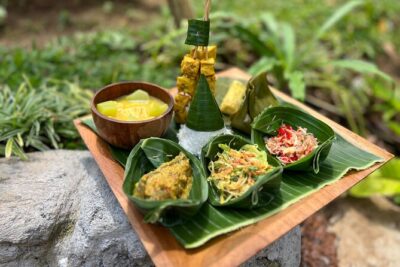
- The meal you helped prepare
- What the $49 price really includes
- Transport and timing from Ubud
- Practical clothing and comfort advice
- Who will enjoy this experience most
- The strongest parts of the experience
- Booking, cancellation, and final decision
- FAQ
- How long does the farm tour and cooking class last?
- Is hotel pickup included?
- Where do I meet if my hotel is outside the included Ubud areas?
- How many people can join the experience?
- Is the cooking class suitable for vegetarians?
- Can I report allergies or dietary restrictions?
- What dishes might I prepare?
- Does Kadek eat the meal with the group?
- What happens if bad weather cancels the activity?
Key details at a glance
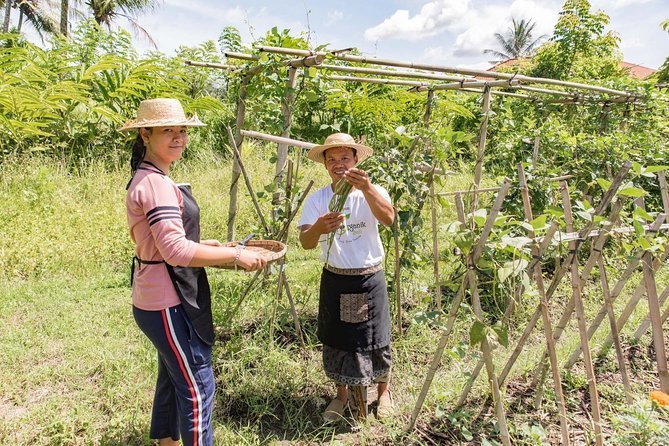
- Farm-to-table format: Walk through the farm with Kadek and collect ingredients such as beans and lemongrass before cooking.
- Two-hour cooking lesson: Prepare two or three Balinese dishes in a traditional outdoor community kitchen.
- Personal setting: The experience is limited to a maximum of 10 people, with a private-class feel and direct instructor attention.
- Meal included: Eat the food you prepare, followed by kolak and Balinese coffee or lemongrass tea.
- Ubud pickup: Round-trip hotel transport is included from selected Ubud areas, while those staying elsewhere meet at Maybank Gianyar.
- Good value at $49: The price covers transport from eligible Ubud hotels, ingredients, the class, meal, local alcohol, taxes, and gratuities.
Why this Ubud cooking class feels different
Many cooking classes begin with a chopping board and a pile of ingredients. This one starts outside, on a local farm. That small change gives the meal more meaning. You see the plants, pick some of what you will use, and then carry those ingredients into the kitchen.
I like that the experience connects food with ordinary daily work in Bali. You are not only learning that lemongrass or coconut belongs in a dish. You are seeing the ingredients in their growing environment, handling them at the source, and then using them in a meal.
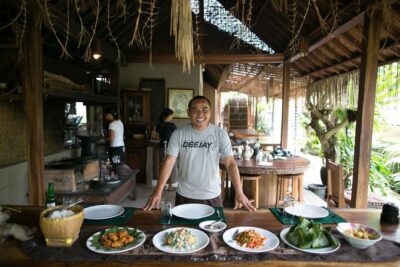
The setting also keeps the class grounded. You cook in an outdoor community kitchen built in a traditional Balinese style. It is not designed as a glossy demonstration studio, and that is part of the appeal. The cooking feels closer to a home meal than a formal culinary course.
At the same time, you should set realistic expectations. The farm is a working outdoor area, not a landscaped garden attraction. Expect tall plants, muddy ground, heat, and a little mess. Bring sunscreen, bug spray, a hand towel or tissues, and shoes that can cope with walking and cooking.
More Cooking Classes in Ubud
- Ubud Cooking Class Bali with Balinese Chef
★ 5.0 · 1,609 reviews - PRIVATE Authentic Balinese Cooking Class in Ubud at Putu’s Home
★ 5.0 · 644 reviews - Balinese Ubud cooking school (9 Dish Cooking and Market Tour)
★ 5.0 · 540 reviews
Starting with Kadek and the farm walk
Your time with Kadek begins with an introduction to how the local farm works. The farm visit takes about 30 to 45 minutes, giving you enough time to look around without turning the day into a long agricultural tour.
You will walk through tall bushes and muddy land while gathering ingredients for the meal. Beans and lemongrass are specifically included among the produce you may collect. The exact ingredients and menu can vary, so you should think of this as a practical farm visit rather than a fixed list of crops.
Straw hats are provided, which is a welcome touch in Bali’s heat. Still, a hat does not replace sunscreen or water, and light clothing will make the walk more comfortable. Clothes may pick up mud, so this is not the morning for your best resort outfit.
The farm walk is especially useful for families, couples, and anyone who wants a little context before cooking. Children may enjoy the collecting element, though adults should decide if the outdoor conditions suit younger children. The activity is interactive, but it is not described as an easy, paved stroll.
After the walk, Kadek provides a refreshing drink and wet towels. This pause matters. Bali can feel hot even during a short outdoor activity, and the chance to cool your face before working over a stove makes the transition into the kitchen much more pleasant.
Cooking in the outdoor community kitchen
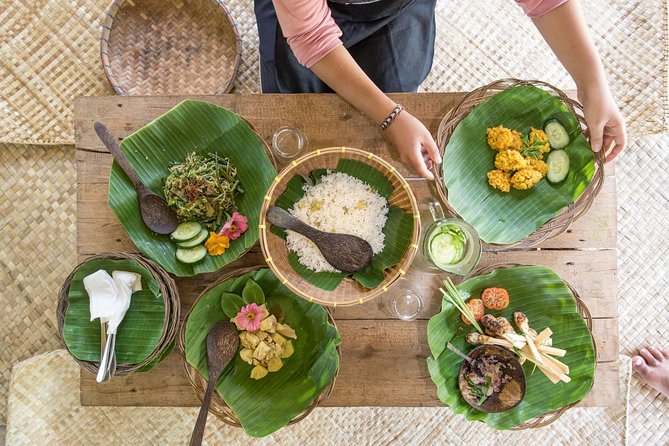
The cooking class lasts about two hours. That is enough time to work through several dishes without reducing the lesson to a quick demonstration. You can expect to prepare two or three authentic Balinese dishes, with the class focused on participation rather than simply watching.
The menu may include:
- Nasi sela: Rice cooked with sweet potato.
- Garang asem: Chicken prepared with Balinese spices.
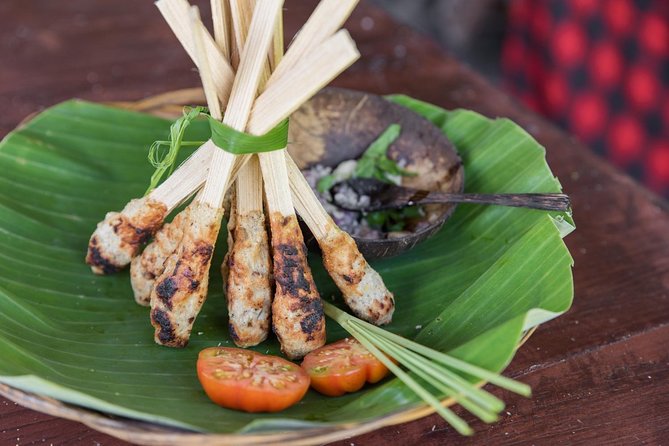
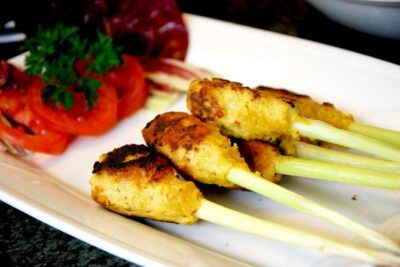
- Tuna satay: Fish kebabs in a traditional Balinese style.
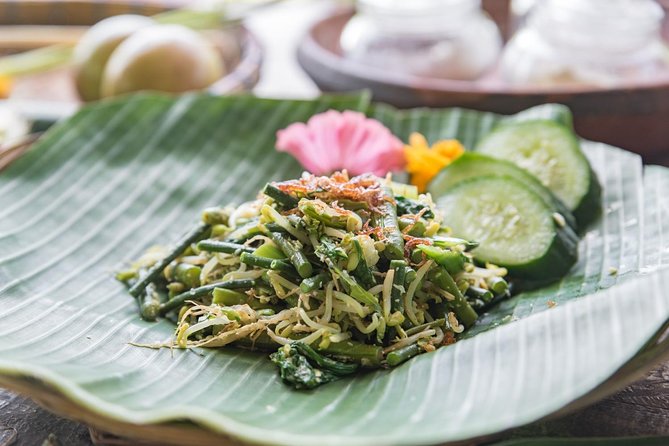
- Sayur urab: Green vegetables with coconut and spices.
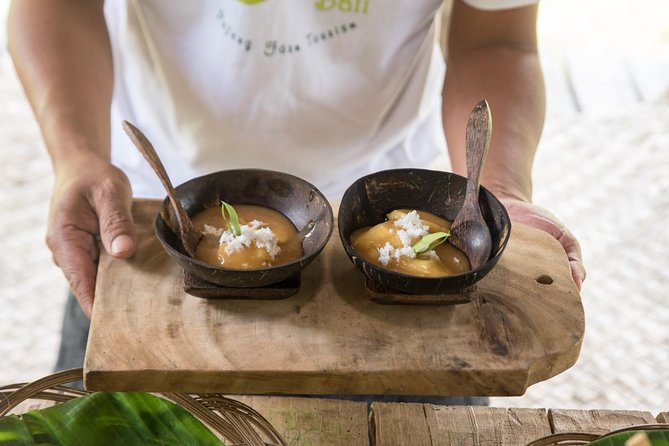
- Kolak: A banana dessert served at the end.
This mix gives you a useful taste of Balinese cooking. You get rice, meat or fish, vegetables, spice, coconut, and dessert, rather than one isolated recipe. The dishes also show how Balinese meals often balance several preparations on the same plate.
I like the range because it gives you something practical to repeat at home. Nasi sela and sayur urab may be especially approachable for a home kitchen, while garang asem and tuna satay offer a clearer taste of local seasoning. The class is not presented as advanced chef training, so it should suit beginners who want to cook real food without feeling tested.
Kadek leads the cooking in the kitchen, and the small format allows questions and correction as you work. The experience is described as shared and limited to 10 people. That is not the same as a one-on-one lesson, but it is far more personal than a large cooking demonstration.
One point to know in advance: Kadek does not join you for the final meal. He first offers the food to Mother Nature as part of a personal ritual. You are asked not to wait for him to finish before eating, so the meal may begin while he completes that offering.
For some people, this will be one of the most meaningful parts of the experience because it shows a living cultural practice rather than a staged performance. Others may find the arrangement slightly unusual if they expected the instructor to sit down and dine with them. Knowing this ahead of time prevents confusion.
The meal you helped prepare
The final meal is the payoff, but it is also part of the lesson. You sit down to eat the food prepared during the class, which gives you a chance to taste the balance of spices and understand how the dishes work together.
The meal ends with kolak, a banana dessert, along with Balinese coffee or lemongrass tea. Local alcohol, listed as one or two glasses, is also included. If you do not drink, the experience still includes plenty of food and nonalcoholic drink options.
I find the home-cooked format more useful than a restaurant meal because you can connect each flavor to a step you performed. If a dish tastes hot, fragrant, sweet, or coconut-heavy, you know which ingredients created that result. That makes it easier to recreate later.
You receive a small recipe book to take home. It is an important inclusion at this price because the class does not end when you leave Ubud. The booklet gives you a way to repeat the dishes and keep the memory tied to an actual kitchen task, rather than just a photograph of lunch.
Dietary needs should be given when you book. A vegetarian option is available, but it must be requested in advance. Allergies, restrictions, and cooking preferences should also be shared early so the kitchen can plan properly.
A few more Ubud trips worth weighing up
- Balinese Farm Cooking Class by Pemulan Bali
★ 5.0 · 410 reviews - From Ubud: Authentic Bali Farm Cooking School & Organic Farm
★ 5.0 · 122 reviews - Balinese Cooking Class at Organic Farm
★ 5.0 · 51 reviews - Farm-to-Table Balinese Cooking Experience
★ 4.0 · 3 reviews
What the $49 price really includes
At $49 per person, this is a good-value half-day experience if you can use the included Ubud transport. You are paying for a farm tour, a cooking lesson lasting about two hours, the meal, ingredients, a recipe book, local alcohol, taxes, handling charges, and gratuities.
The transport adds real value. Getting to a farm outside central Ubud can otherwise involve arranging a car and negotiating a fare. Pickup and drop-off are included if you stay in the eligible Ubud areas around Hanoman Street, Monkey Forest Street, or Jl. Raya Ubud.
The value is less straightforward if you stay outside those areas. Pickup and drop-off are not included for hotels beyond the stated Ubud zones. In that case, you need to make your own way to the meeting point at Maybank Gianyar, on Jl. Raya Ubud No. 115 in Petulu, Gianyar.
The activity begins and ends at the meeting point when hotel transport does not apply. Check this detail carefully before booking, since the meeting arrangement can affect both your cost and your morning schedule.
The price also includes gratuities, so you do not need to calculate an extra tip at the end. That makes budgeting simple. With the meal, transport for eligible hotels, and cooking materials included, the fee compares well with a standard restaurant meal plus a separate guided activity.
Transport and timing from Ubud
The full experience lasts about five hours. That includes the farm walk, refreshment break, cooking session, and meal, but the precise pickup time is not provided in the details here. Your confirmation should supply the final schedule.
Hotel pickup is only available from Ubud hotels in the named areas. If you are staying somewhere else in Bali, do not assume a paid transfer can be added automatically. The stated alternative is to meet at Maybank Gianyar.
The meeting point is near public transportation, though the experience itself includes transport only for eligible Ubud hotel locations. Confirm your pickup address at booking, especially if your accommodation uses a broad Ubud label but sits outside the included streets.
Round-trip transport is particularly helpful for a morning or midday class because you can focus on the food instead of finding the farm. It also removes some uncertainty from returning after the meal and local drinks.
Practical clothing and comfort advice
Treat this as an outdoor activity first and a cooking class second. Wear clothes that can handle heat, splashes, and mud. Comfortable walking shoes are essential, and sandals that offer little grip may be a poor choice on wet or muddy ground.
Bring sunscreen and insect repellent. A hand towel or tissues are also recommended, even though wet towels are provided after the farm walk. The straw hats help with sun exposure, but you will still be outside for the opening part of the experience.
The cooking takes place outdoors, so conditions may affect the day. The activity requires good weather. If poor weather causes cancellation, you will be offered another date or a full refund.
This is worth considering when planning a tightly packed Ubud itinerary. The experience takes around five hours, and the outdoor format means it is best placed on a day when you can accept a slower pace and possible weather changes.
Who will enjoy this experience most
I would recommend this class to you if you want food, culture, and a little rural activity in the same outing. It is especially well suited to couples, honeymooners, small groups of friends, and curious first-time visitors who want more than a restaurant tasting.
The hands-on format also suits beginners. You do not need to arrive with advanced cooking skills. The focus is on accessible Balinese dishes, direct instruction, and eating the result.
It can be a strong choice for vegetarians, provided you request the vegetarian menu in advance. The class may also work for people with food restrictions, but you must share those details before the activity rather than waiting until the kitchen begins.
You may want to choose another activity if you dislike heat, mud, insects, outdoor kitchens, or shared cooking. This is not a quiet indoor lesson, and the farm walk is not optional decoration. It is a central part of the experience.
The class is limited to 10 people, but it is still described as a shared experience. If you want a completely private meal with the instructor, the detail about Kadek completing his nature offering before eating may also matter to your decision.
The strongest parts of the experience
The best feature is the connection between the farm and the plate. You pick ingredients, prepare them, and eat them within the same five-hour outing. That sequence gives the class a clear purpose and helps the food stay in your memory.
The setting is another major strength. A traditional outdoor community kitchen feels more genuine than a classroom built only for demonstrations. You get a better sense of how cooking fits into everyday community life.
The people running the experience also seem to bring a light, youthful energy to the day. Apung may assist as the guide, while Kadek leads in the kitchen. That division can be helpful, since one person can manage the outing while Kadek concentrates on cooking.
The food receives the highest praise in the available feedback. The meal is described as delicious, and the experience has been called a favorite part of a honeymoon in Bali. That is meaningful because the food is not an afterthought here. It is the result of your work.
Booking, cancellation, and final decision
Confirmation is sent within 48 hours, subject to availability. Free cancellation is available up to 24 hours before the start time for a full refund. Changes or cancellations made less than 24 hours before the start time are not accepted for a refund.
I would book this experience if you value authentic food preparation, a small setting, and a farm visit that leads directly to lunch. At $49, the combination of transport from selected Ubud hotels, instruction, food, drinks, and a recipe book is strong.
I would pause if you want an air-conditioned classroom, a perfectly clean walking route, or a fixed restaurant-style schedule. For everyone else, this is a warm, practical introduction to Balinese food, with enough culture and personal contact to make the half-day feel worthwhile.
FAQ
How long does the farm tour and cooking class last?
The full experience lasts approximately five hours. The farm walk takes about 30 to 45 minutes, and the cooking class lasts about two hours, with time also allowed for refreshments and the meal.
Is hotel pickup included?
Round-trip pickup and drop-off are included only for hotels in the specified Ubud areas around Hanoman Street, Monkey Forest Street, and Jl. Raya Ubud.
Where do I meet if my hotel is outside the included Ubud areas?
You meet at Maybank KCP Gianyar, Jl. Raya Ubud No. 115, Petulu, Kecamatan Ubud, Kabupaten Gianyar, Bali 80571, Indonesia.
How many people can join the experience?
The activity has a maximum of 10 participants and is described as a small-group shared experience.
Is the cooking class suitable for vegetarians?
Yes. A vegetarian option is available, but you must request it when booking.
Can I report allergies or dietary restrictions?
Yes. You should advise the provider of allergies, dietary restrictions, and cooking preferences at the time of booking.
What dishes might I prepare?
Possible dishes include nasi sela, garang asem, tuna satay, sayur urab, and kolak. The class includes two or three dishes, and the exact selection may vary.
Does Kadek eat the meal with the group?
No. Kadek first offers the meal to Mother Nature as part of a personal ritual. You do not need to wait for him before beginning your meal.
What happens if bad weather cancels the activity?
If poor weather causes cancellation, you will be offered a different date or a full refund.
Just added around Ubud
- Kintamani Batur Jeep Sunrise Tour★ 5.0 · 3 reviews
- Bali Downhill Cycling and White Water Rafting★ 5.0 · 3 reviews
- Ubud Highlights Rice Terraces, Temple, Waterfall & Monkeys forest★ 5.0 · 3 reviews
- Bali ATV Quad Bike & Ayung River Rafting Combo with Lunch★ 5.0 · 3 reviews
- Half Day Uluwatu Temple Sunset, Kecak Dance and Seafood Dinner★ 3.5 · 3 reviews
- Blue Lagoon Snorkeling and Lunch with Tukad Cepung Waterfall★ 5.0 · 3 reviews
- Ancien Wisdom and Culture tour★ 5.0 · 3 reviews
- Full-Day Tour in Nusa Penida Island + Snorkeling Experience★ 5.0 · 3 reviews
Cooking Classes, compared.
PRIVATE Authentic Balinese Cooking Class in Ubud at Putu’s Home
Read our review →
Balinese Ubud cooking school (9 Dish Cooking and Market Tour)
Read our review →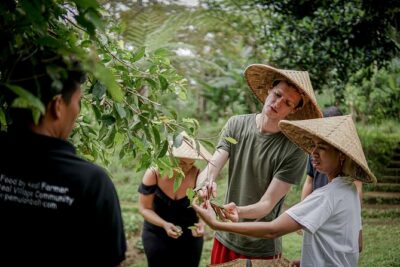
PRIVATE Balinese Cooking Class in Ubud with Dewa with Transfers
Read our review →Browse the lists this tour appears in