
Reviewed · COOKING CLASSES
Balinese Ubud cooking school (9 Dish Cooking and Market Tour)
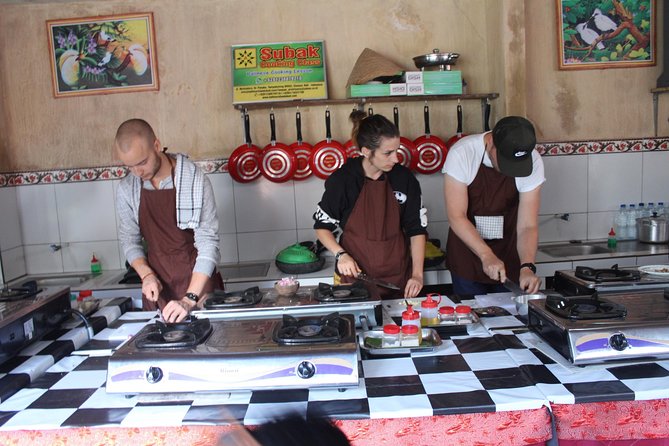
Great food can explain a place. This roughly five-hour Ubud experience combines a local market visit, rice-paddy stop, Balinese home setting, and a cooking lesson built around nine traditional dishes. I like the unusually large menu and the friendly teaching style praised by guests, especially instructors such as Yogi, Putu, and Gus. I also like that you can choose regular or vegetarian recipes and take the recipes home. The main catch is transport: the cooking school is outside central Ubud, and the morning outing can involve a long drive.
At $58, this is not the cheapest cooking lesson in Bali, but it offers more than a kitchen class. You get food, market time, cultural explanation, transport within Ubud, and a full meal. I would confirm the pickup arrangement carefully, since the included pickup applies to Ubud only and one unhappy participant reported a long transfer and confusion over meeting at Ubud Palace.
In This Review
- Key points to know before booking
- A cooking class with a full Balinese menu
- Choosing between the regular and vegetarian menus
- The morning market visit and rice-paddy stop
- The Balinese house and cooking-school setting
- Instructors who make the class work
- What lunch is really like
- Morning or afternoon: which schedule suits you?
- Is $58 good value in Ubud?
- Who will enjoy this experience most?
- Should you book the Ubud nine-dish class?
- FAQ
- How long does the Balinese cooking experience last?
- Where does the tour start and finish?
- Is pickup included?
- Does every tour include a market visit?
- What dishes are included on the regular menu?
- Is there a vegetarian menu?
- Are food, water, and cooking equipment included?
- How many people can join the class?
Key points to know before booking
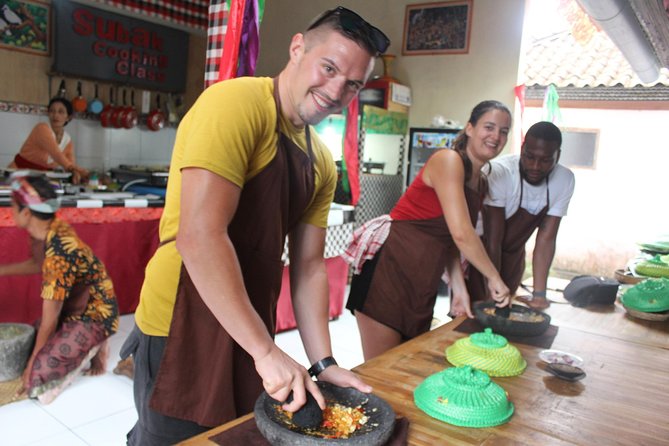
- Nine dishes instead of a short demonstration: You prepare a full Balinese menu, including soup, satay, lawar, sambal, a spice paste, and dessert.
- Morning means market and rice paddies: The morning option includes a local market visit and a stop to learn about rice growing in Bali.
- Afternoon means offering-making: The afternoon program does not include the traditional market visit, but it includes making a Balinese offering.
- Regular and vegetarian menus are available: Chicken dishes become tofu or tempeh preparations, so the class works well for mixed groups.
- A small group keeps the class personal: The maximum is 14 people, with individual cooking stations reported by several participants.
- Bring an appetite: You eat the dishes you prepare, and leftover food may be available to take back to your hotel.
A cooking class with a full Balinese menu
Many cooking classes stop after three or four dishes. This one aims much higher. The regular menu includes ten named preparations if you count the rice served alongside the main courses, while the experience is promoted as a nine-dish class. Either way, you will cook far more than a token curry and spring roll.
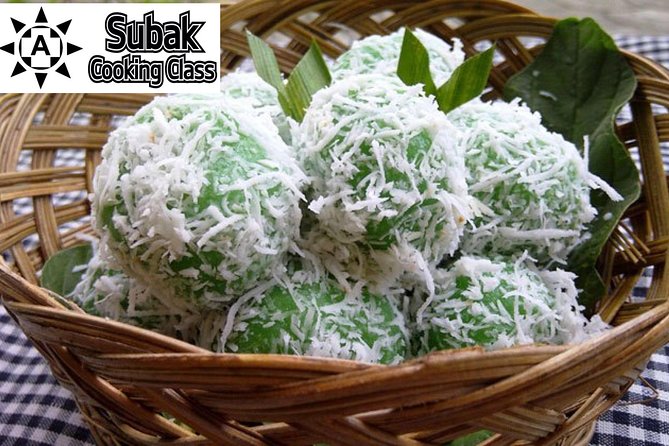
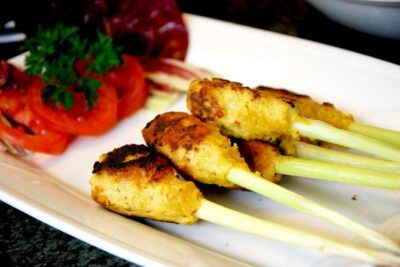
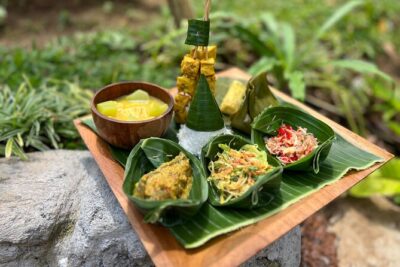
The regular menu includes Soup Sayur Bali, a Balinese vegetable soup; Ayam Santan Bumbu Bali, chicken with coconut milk and Balinese seasoning; sweet fried tempe; Sate Lilit Bali, minced chicken satay; and Pepes Ayam, chicken cooked in banana leaf. You also prepare Lawar Bali, Sambal Matah, Base Gede, and Klepon Cake.
The menu is useful because it covers several basic techniques and flavors. You work with vegetables, coconut milk, a spice paste, raw sambal, skewered meat, banana leaf, tempe, and sticky rice flour. You are not simply repeating one method nine times.
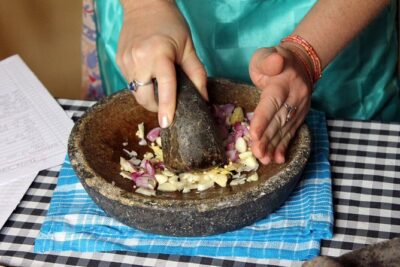
The regular menu is also a good introduction to the structure of Balinese food. Base Gede is the basic spice paste that supports many local dishes. Sambal Matah brings raw shallot, chili, herbs, and coconut oil to the table. Lawar shows how vegetables and Balinese spices can form a substantial side dish rather than a decorative garnish.
You should expect plenty of food. Several people found the final meal so generous that they could not finish it. The school may let you pack up leftovers, which is a welcome touch after several hours of cooking and tasting.
More Cooking Classes in Ubud
- Ubud Cooking Class Bali with Balinese Chef
★ 5.0 · 1,609 reviews - PRIVATE Authentic Balinese Cooking Class in Ubud at Putu’s Home
★ 5.0 · 644 reviews - Balinese Farm Cooking Class by Pemulan Bali
★ 5.0 · 410 reviews
Choosing between the regular and vegetarian menus
You need to select your menu when booking. The vegetarian version is not an afterthought. It swaps the chicken dishes for tofu and tempeh preparations while keeping the overall shape of the meal.
The vegetarian menu includes vegetable soup, tofu with Balinese sauce, sweet tempe, tempeh satay with peanut sauce, tofu cooked in banana leaf, lawar, sambal matah, base gede, klepon, and white rice.
That makes this a sensible choice for couples or families with different diets. The group can learn the same general techniques while cooking different main ingredients. Several participants also noted that the staff adapted well to meat and vegetarian preferences.
You should still be clear about your choice before the class begins. The information provided lists regular and vegetarian menus, but it does not promise adaptations for every allergy or dietary restriction. If you have a serious allergy, ask the operator before paying.
The food can be spicy, though one participant specifically noted that the dishes could be prepared with less spice. It is worth telling the instructor your preference early. Balinese food gets much of its character from chili, but a cooking lesson should leave you able to enjoy your lunch.
The morning market visit and rice-paddy stop
Choose the morning class if the market matters to you. The traditional market visit is offered only with the morning program, and it gives the cooking lesson a useful opening chapter.
Your local guide explains how people buy and sell ingredients, then points out fruits, vegetables, spices, cakes, and other foods. The market is also a chance to taste unfamiliar local fruit and sweets. One participant enjoyed seeing flower temple offerings being assembled, a small detail that connects food shopping with daily religious life.
This is not just a shopping stop for the school’s ingredients. It helps you recognize what you will later use in the kitchen. A market visit can make a spice paste feel less abstract when you have just seen the raw ingredients in their everyday setting.
The experience also includes a rice-paddy visit on the morning option. You learn how rice is grown in Bali, how many kinds of rice are used, and how long the harvest cycle takes. Some people also enjoyed the views toward a volcano from the rice fields.
Keep your expectations practical. The stop is described as a visit and learning opportunity, not a long agricultural tour. You may get photographs and a short explanation rather than a detailed farm lesson. Still, it adds useful local context before the cooking starts.
The morning schedule can also mean extra time in the vehicle. The school is outside central Ubud, and one participant reported a drive of about 50 minutes after meeting at Ubud Palace. That complaint conflicts with the many positive accounts of well-run transport, but it points to a real planning issue: ask exactly where you will be collected and how long the transfer may take.
The Balinese house and cooking-school setting
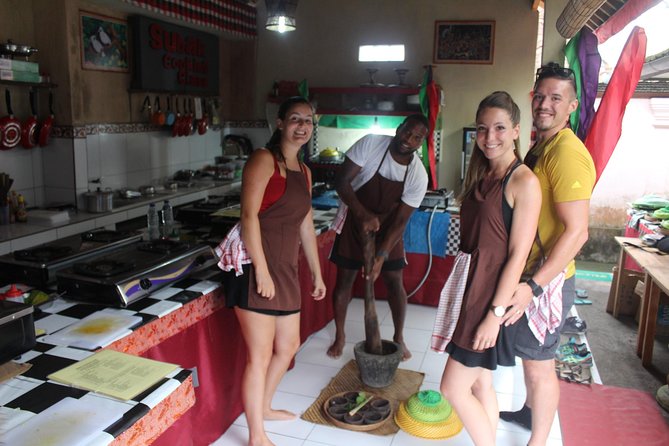
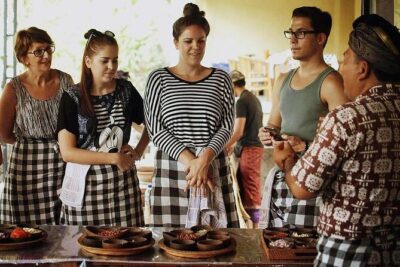
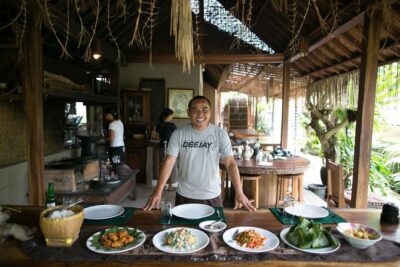
The class takes place in a Balinese home that has been arranged for cooking instruction. This setting gives the experience a more local feel than a modern hotel kitchen, while still providing the equipment needed for a group lesson.
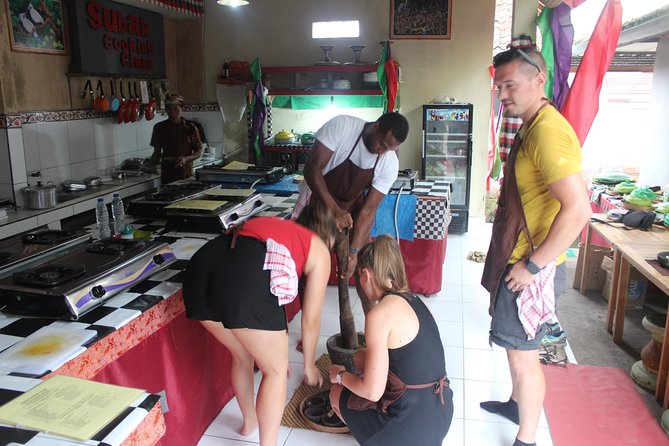
The kitchen staff prepare ingredients in advance, which keeps the five-hour schedule manageable. This also explains the one serious criticism: one participant felt that too much preparation had already been done and that there was not enough actual cooking.
The tradeoff is clear. Prepped ingredients let you cook nine dishes in one session, but you may not chop every onion, grind every spice, or complete each stage from start to finish. If you want a slow, technical lesson focused on knife work and ingredient preparation, this may feel rushed.
On the other hand, the arrangement appears to leave participants with plenty to do. Several people described cooking at their own station, often working as couples, with staff nearby to help. The instructors guide each step, and the kitchen team handles cleanup. For most visitors, that is a sensible balance between hands-on work and a relaxed holiday meal.
The group limit is 14 people. That is not a private lesson, but it is small enough to keep the class workable if the stations are arranged well. One pair found that cooking at a shared table with individual stoves still felt personal.
A few more Ubud trips worth weighing up
- Balinese Cooking class with traditional morning market visit
★ 5.0 · 161 reviews - PRIVATE Ubud Market Tour & Balinese Cooking Class with Putu
★ 5.0 · 125 reviews - Ubud Cooking Class with Optional Market Visit Pickup Included
★ 5.0 · 70 reviews - Balinese Cooking Class with Traditional Market Tour
★ 5.0 · 66 reviews
Instructors who make the class work
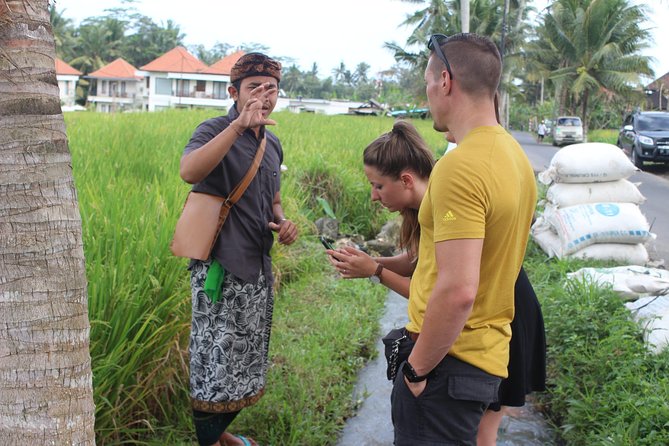
The strongest part of this experience is the teaching. Yogi is repeatedly described as funny, warm, and clear in his instructions. Putu is praised for making the afternoon enjoyable, while Gus is noted for explaining both cooking and Balinese culture.
The staff also use humor and simple guidance to keep the class moving. English-speaking instruction is available, and several people found the explanations easy to follow. You do not need prior cooking experience.
The personalities matter because nine dishes could quickly become a production line. A good instructor keeps the pace lively while explaining why the ingredients are used. The best accounts describe a class that felt social without losing the practical cooking lesson.
You should not expect a private chef at your elbow for every minute. The class may include several pairs or small groups working at once, and one dissatisfied participant found it hard to hear because of conversations in the kitchen. If hearing every word is important to you, stand close to the instructor and ask questions when needed.
The provider describes a Balinese local guide, driver, host, and cooking teacher as part of the experience. Names can vary by date, but Yogi, Putu, Gus, Tata, Wayan, and Harry are among the people praised in the accounts provided. Tata was specifically appreciated for explaining ingredients, culture, and local customs during the drive and market visit.
What lunch is really like
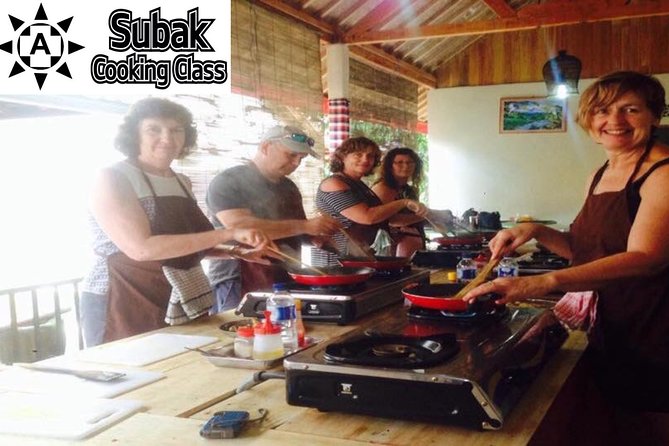
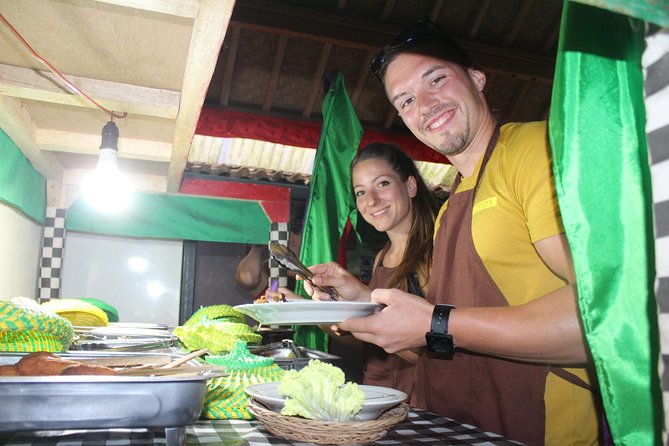
The meal at the end is not a small sample plate. You sit down to eat the food prepared during the class, with white rice served alongside the main courses.
This is where the large menu pays off. You can compare the chicken, tofu, tempeh, vegetables, sambal, satay, and dessert in one sitting. Several people described the meal as fresh, filling, and better than expected.
The format also works well for families. Cooking together gives children and adults a shared task, while the final meal gives everyone a reason to try unfamiliar dishes. One family particularly enjoyed the humor, practical tips, and chance to recreate the food at home.
The experience includes bottled water, food tasting, and lunch or dinner depending on the selected time. Alcoholic drinks cost extra. Bring an appetite, but not an unrealistic one. Nine dishes create a serious amount of food, and you may want to save room for Klepon, the small sticky rice-flour dessert filled with palm sugar.
Morning or afternoon: which schedule suits you?
The morning option is the better choice if you want the widest cultural program. It includes the local market and rice-paddy visit, followed by the cooking lesson and meal.
The afternoon option includes making a Balinese offering instead of the traditional market visit. That gives you a closer look at another part of Balinese daily practice, but you give up the chance to shop and taste at the market.
I would choose the morning program for a first visit to Bali, especially if you want food, farming, shopping, and local customs in one outing. Choose afternoon if you have already visited markets or prefer a later start. The supplied information does not state the exact start times, so check the time offered for your date.
Both versions last about five hours and end back at the meeting point. The listed start point is Ubud Palace on Jalan Raya Ubud. Pickup and drop-off are included in the Ubud area, while transport from outside Ubud may cost extra.
Is $58 good value in Ubud?
At $58, the price makes sense if you use the full program. You are paying for a five-hour activity, a market or offering experience, transport within Ubud, local guiding, cooking instruction, equipment, bottled water, tasting, a large meal, and recipe copies.
The comparison is not with a one-hour demonstration. It is with a half-day outing plus lunch, and the class offers more food preparation than many competitors. If you are interested in Balinese cuisine, the recipes alone add lasting value because you can use them at home.
The value is weaker if you mainly want a quick cooking lesson in central Ubud. In that case, the drive and market time may feel like extras you did not request. The price also requires attention to transport. Pickup outside Ubud brings an additional charge, and you should carry cash for that possibility.
A practical warning comes from one account involving a driver from Nusa Dua. The passenger felt uneasy about the driving and was asked to pay for a toll road, with confusion over the change. That is not enough to dismiss the whole operation, especially given the many positive transport accounts, but confirm any optional road charges before agreeing.
Who will enjoy this experience most?
I would recommend this class to food lovers who want to understand how Balinese dishes fit together, not just eat them. It is also a good match for couples, families, and mixed vegetarian and meat-eating groups.
You will get the most from it if you enjoy social classes and do not mind working alongside other people. The group can reach 14 participants, and the cooking stations may be shared by couples.
This is less suitable if you want a quiet private lesson, a highly technical chef’s course, or complete control over every preparation step. The prepped ingredients save time, but they also limit how much of the early kitchen work you perform.
Bring your booking confirmation, camera, and normal comfortable clothing. The instructions specifically ask you to show your reservation and bring cash if you are staying outside Ubud and need additional transport.
Should you book the Ubud nine-dish class?
I would book it if you want a generous meal, a broad menu, and a half-day look at Balinese food culture. The strongest reasons are the nine preparations, the warm instructors, the choice of vegetarian menu, and the morning combination of market and rice paddies.
I would choose the morning class for the fullest outing and the afternoon class only if making a traditional offering appeals more than visiting a market. Before booking, confirm your pickup point, extra transport cost, menu choice, and spice preference.
The class is not perfect. The drive can be longer than expected, and the kitchen may feel noisy or partly pre-prepared. But for a visitor who wants practical recipes, local food, and a substantial meal rather than a polished hotel demonstration, it offers good value at $58.
FAQ
How long does the Balinese cooking experience last?
The experience lasts approximately five hours, including the cultural stops, cooking lesson, and meal.
Where does the tour start and finish?
The listed meeting point is Ubud Palace, F7V7+72R, Jalan Raya Ubud No. 8, Ubud. The activity ends back at the meeting point.
Is pickup included?
Pickup and drop-off are included for stays in the Ubud area. Transport from outside Ubud may involve an additional charge, and you should request it in advance.
Does every tour include a market visit?
No. The traditional market visit is provided only with the morning class. The afternoon option includes making a Balinese offering instead.
What dishes are included on the regular menu?
The regular menu includes Balinese vegetable soup, chicken with coconut milk and Balinese seasoning, sweet fried tempe, chicken satay, chicken cooked in banana leaf, lawar, sambal matah, base gede spice paste, klepon cake, and white rice.
Is there a vegetarian menu?
Yes. The vegetarian menu includes vegetable soup, tofu with Balinese sauce, sweet tempe, tempeh satay with peanut sauce, tofu cooked in banana leaf, lawar, sambal matah, base gede, klepon cake, and white rice.
Are food, water, and cooking equipment included?
Yes. Bottled water, food tasting, the meal you prepare, kitchen equipment, and recipe copies are included. Alcoholic drinks are not included.
How many people can join the class?
The maximum group size is 14 people. The class may group participants at shared tables with individual cooking stations.
More Shopping Tours
- Bali Food Tour: Savor Street Food and Night Market Adventures
★ 5.0 · 46 reviews - Ubud City Tour I: Monkey Forest, Ubud Palace, Art Market, and Waterfall
★ 5.0 · 31 reviews - Ubud City Tour II: Monkey Forest, Palace, Art Market, and Rice Terrace
★ 4.5 · 17 reviews - Ubud Day Tour : Waterfall, Temple and Local Night Market Tour
★ 5.0 · 17 reviews
Just added around Ubud
- Kintamani Batur Jeep Sunrise Tour★ 5.0 · 3 reviews
- Bali Downhill Cycling and White Water Rafting★ 5.0 · 3 reviews
- Ubud Highlights Rice Terraces, Temple, Waterfall & Monkeys forest★ 5.0 · 3 reviews
- Bali ATV Quad Bike & Ayung River Rafting Combo with Lunch★ 5.0 · 3 reviews
- Half Day Uluwatu Temple Sunset, Kecak Dance and Seafood Dinner★ 3.5 · 3 reviews
- Blue Lagoon Snorkeling and Lunch with Tukad Cepung Waterfall★ 5.0 · 3 reviews
- Ancien Wisdom and Culture tour★ 5.0 · 3 reviews
- Full-Day Tour in Nusa Penida Island + Snorkeling Experience★ 5.0 · 3 reviews
Cooking Classes, compared.
PRIVATE Authentic Balinese Cooking Class in Ubud at Putu’s Home
Read our review →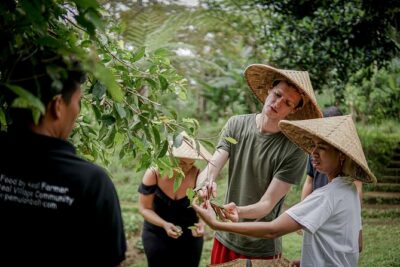
PRIVATE Balinese Cooking Class in Ubud with Dewa with Transfers
Read our review →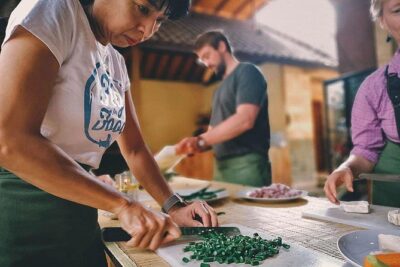
Balinese Cooking class with traditional morning market visit
Read our review →Browse the lists this tour appears in