
Reviewed · COOKING CLASSES
Balinese Cooking Class at Organic Farm
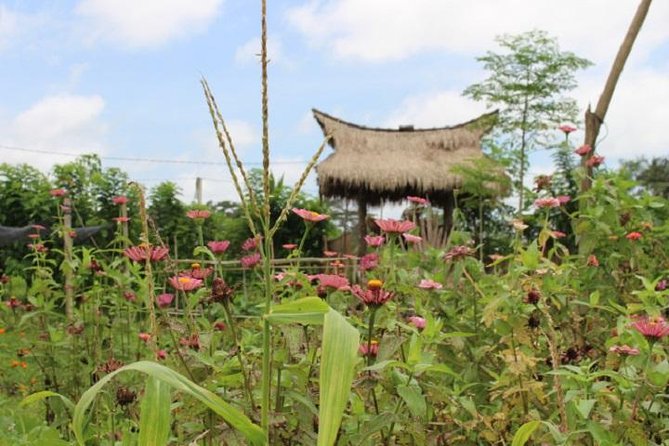
Food is the fastest way into Bali. This five-hour cooking class at Mai Organic Farm gives you a close look at village agriculture before you prepare six Balinese dishes, including sate lilit, with ingredients picked from the soil around you. I especially like the farm-to-table format and the chance to cook over a traditional wood-fired stove. The main consideration is the rural setting: weather can affect the outing, and the meeting point is outside central Ubud.
I also like the small-group design, with numbers capped at eight in the tour description and a maximum of 10 listed in the additional details. That keeps the cooking hands-on rather than turning it into a demonstration. Pickup and return from central Ubud hotels and rentals make the $40 price a fair deal, though you should allow a full morning or afternoon for the roughly five-hour program.
In This Review
- Key points to know before you book
- Arriving at Mai Organic Farm near Pejeng
- Walking the farm and learning about the Subak system
- Fresh drinks before the cooking begins
- Preparing six Balinese dishes together
- Eating lunch in a quiet gubuk
- What makes the community mission meaningful
- Is the $40 price good value?
- Who will enjoy this class most?
- Practical details for planning your morning
- Should you book the Mai Organic Farm class?
- FAQ
- Where does the Balinese cooking class take place?
- How long does the experience last?
- How many dishes will I prepare?
- Are drinks included?
- Is pickup available from Ubud?
- What happens if the weather is bad?
Key points to know before you book
- You harvest the ingredients first: Walk through Mai Organic Farm and collect herbs, fruit, and vegetables for the meal.
- Six Balinese dishes are prepared: The menu includes examples such as tuna sate and corn fritters, plus sate lilit kebab.
- Cooking uses a traditional wood-fired stove: This adds real local character, though it may feel less polished than a modern kitchen class.
- The farm supports Pejeng farmers: Your booking helps a local community effort that provides income and farming resources.
- Drinks are part of the experience: Expect fresh juice, infused water, herbal drinks, Balinese coffee, lemongrass tea, and a welcome drink.
- Central Ubud pickup is offered: The activity begins and ends at Mai Organic Farm, with round-trip transfers available from central Ubud hotels and rentals.
Arriving at Mai Organic Farm near Pejeng
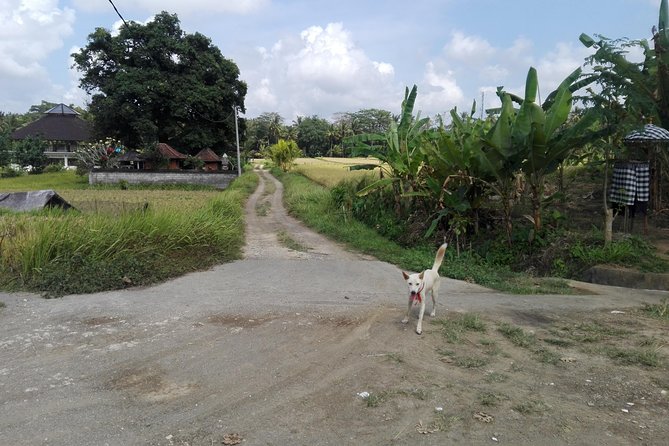
Mai Organic Farm sits in Subak Kana, Banjar Panglan, Pejeng, in the Gianyar area east of Ubud. This is not a restaurant class in town. It is a working community farm, and that difference shapes the whole morning.
If you use the pickup option, the day is easier. You do not have to arrange a taxi to the farm or find your way back after lunch. The listed meeting point is Mai Organic Farm Bali, and the activity returns there at the end, so check your pickup details carefully when you book.
The experience lasts about five hours. That is long enough to include the farm visit, ingredient gathering, cooking, drinks, and the shared meal without making the class feel rushed. I would avoid pairing it with another fixed-time morning activity. The class works best when you have time to enjoy the setting.
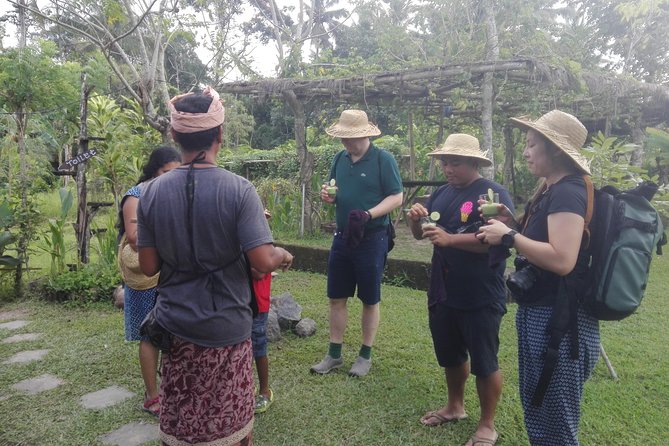
On arrival, you receive a welcome drink while sitting in a shaded area of the farm. This gentle start gives the staff time to explain the community movement and how the organic produce is grown and maintained. It also gives you a chance to settle into the slower pace of rural Bali.
More Cooking Classes in Ubud
- Ubud Cooking Class Bali with Balinese Chef
★ 5.0 · 1,609 reviews - PRIVATE Authentic Balinese Cooking Class in Ubud at Putu’s Home
★ 5.0 · 644 reviews - Balinese Ubud cooking school (9 Dish Cooking and Market Tour)
★ 5.0 · 540 reviews
Walking the farm and learning about the Subak system
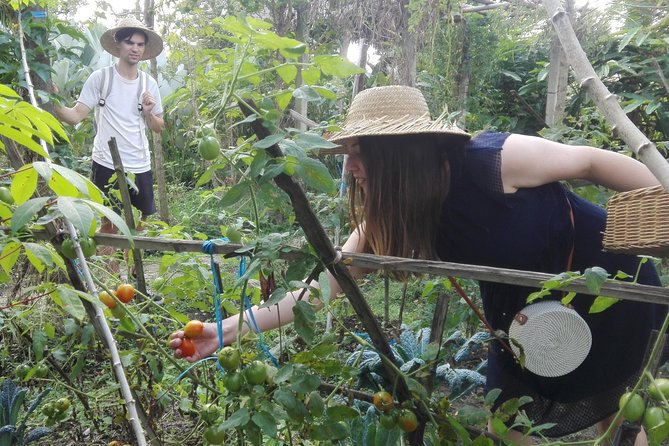
The farm walk is more than a quick look at a vegetable patch. You learn about organic farming and pick many of the ingredients that will later appear in your lunch. That simple connection is one of the strongest parts of the experience: you see the plants, handle the produce, and then help turn it into food.
You might taste fruit directly from the garden and smell spices before they reach a cooking pot. One family with children aged nine and six found the picking especially engaging, which makes this a useful choice if your children enjoy doing rather than just watching.
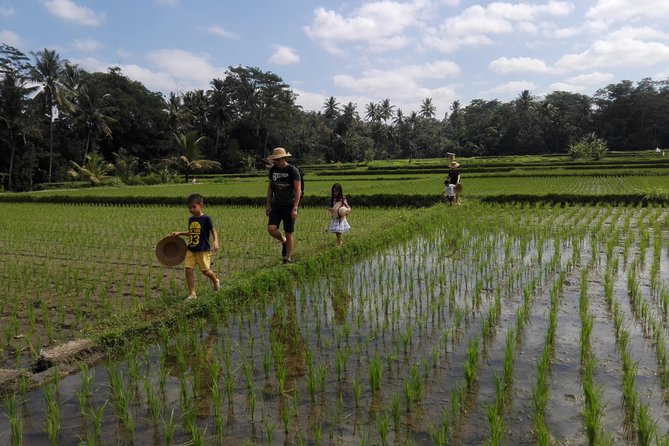
The farm visit also introduces Bali’s Subak system. Subak is the traditional water management system tied to rice farming, and it has UNESCO World Heritage recognition. Here, you receive an introduction to the system in the setting where farming still matters to everyday life.
Do not expect a formal lecture with a long historical timeline. The value is practical. You see how food production connects to land, water, community, and local income. For many visitors, that makes the class more meaningful than a cooking lesson held in a hotel kitchen.
The exact crops available can vary, since the class uses what is growing on the farm. That is a benefit for freshness, but it also means the experience is not built around a rigid shopping list. Go with some flexibility and enjoy the surprise of finding ingredients in their natural setting.
Fresh drinks before the cooking begins
After the farm walk, the group gathers at Mai Organic Farm’s community center for a fresh juice made with fruit and vegetables from local farms. This is one of several drinks included throughout the experience.
You may also be served infused water, herbal drinks, Balinese coffee, lemongrass tea, and a welcome drink at the start. The drink selection helps break up the cooking and keeps the day from feeling like one long kitchen session.
The class also has a clear low-plastic spirit. A French-speaking participant praised the experience for using no plastic from beginning to end. That detail matters if you care about how food tours handle waste, although the available information does not promise that every single item will be plastic-free on every date.
The farm setting gives these drinks more meaning. A glass of juice after picking produce feels tied to the place rather than added as a generic refreshment. I like that the refreshments support the same farm-to-table idea as the meal.
Preparing six Balinese dishes together
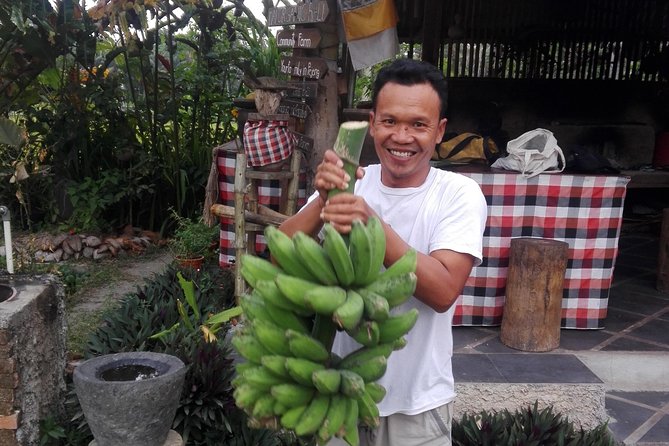
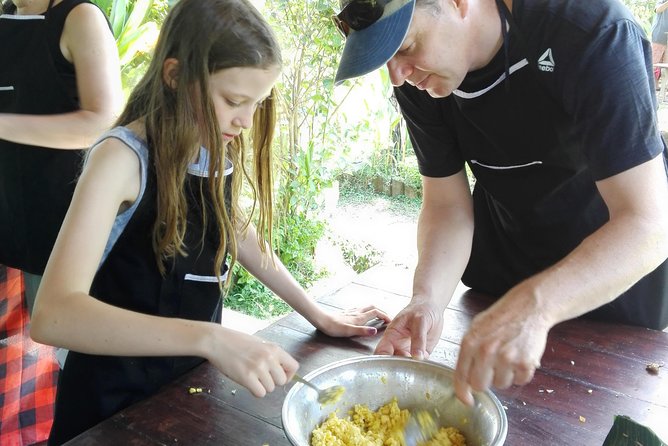
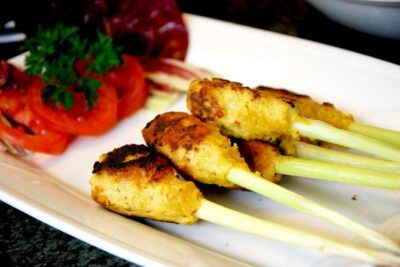
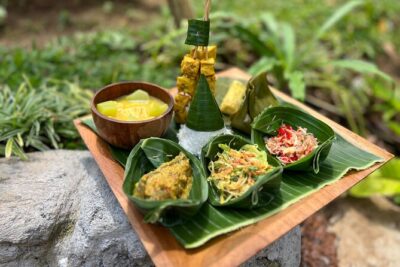
The main cooking session focuses on six Balinese dishes. Examples include tuna sate, corn fritters, and sate lilit, a Balinese kebab traditionally formed around a skewer. The full menu can vary, so you should not book if you need a guaranteed list of six specific recipes.
You can take part as much or as little as you prefer. That makes the class suitable for confident home cooks, first-time kitchen participants, and families with different energy levels. You might chop, mix, shape, grill, or simply follow along while the staff handles a tricky step.
The cooking is done with traditional equipment, including an outdoor grill and wood-fired stove. This is a major part of the class’s appeal. The heat, smoke, and shared work make the meal feel connected to Balinese home cooking rather than adapted entirely for tourists.
It also brings a few practical tradeoffs. A wood-fired setup is less controlled than an electric hob, and the outdoor conditions can affect comfort. If you prefer a highly polished cooking school with individual workstations and exact measurements, this class may feel informal. If you want a social kitchen and local methods, the rough edges are part of the charm.
The cooking is organized as a group effort. You are not simply handed a printed recipe and left alone at a counter. Staff guide the preparation, explain what you are doing, and help the group bring the dishes together.
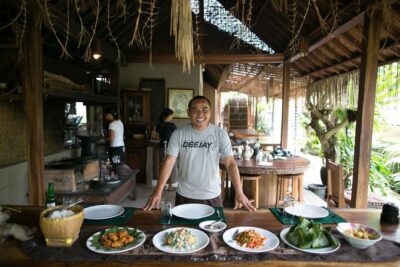
Several participants praised the friendly teaching style, with particular affection for an instructor named Korong, described as cheerful and full of useful information. Kadek is also mentioned as someone who asks how the class could improve. Staff names and assignments can change, but the clear strength here is the warm, involved teaching style.
A few more Ubud trips worth weighing up
- Balinese Farm Cooking Class by Pemulan Bali
★ 5.0 · 410 reviews - From Ubud: Authentic Bali Farm Cooking School & Organic Farm
★ 5.0 · 122 reviews - Small-Group Farm Tour & Balinese Cooking Class in Ubud with Kadek
★ 5.0 · 16 reviews - Farm-to-Table Balinese Cooking Experience
★ 4.0 · 3 reviews
Eating lunch in a quiet gubuk
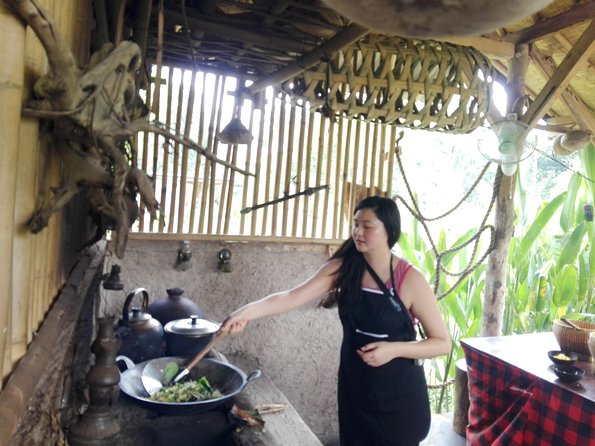
Once the dishes are ready, you sit together in a tranquil gubuk, or hut, and eat the meal you helped prepare. This shared finish is important. You do not just learn recipes and leave. You see the full result of the farm visit and kitchen work on one table.
The meal includes six Balinese favorites prepared by the group. Tuna sate and corn fritters are specifically given as examples, while sate lilit is highlighted as one of the signature dishes. The food is described as delicious and generous enough to make the cooking feel worthwhile, not merely instructional.
I like the communal format because it turns lunch into part of the cultural experience. You share tasks, compare your cooking attempts, and sit down together with new companions. It is especially well suited to couples, friends, and families who enjoy food as a social activity.
The quiet hut also gives the day a welcome pause. After walking the farm and working around a fire, sitting down to eat lets you appreciate the setting. This is not a class built around rushing back into central Ubud for the next attraction.
What makes the community mission meaningful
Mai Organic Farm is connected to a local effort supporting farmers and villagers from Pejeng. The aim is to strengthen local income and provide resources that can improve quality of life while encouraging organic farming.
That mission adds value to the $40 cost. You are paying for transport, teaching, food, drinks, and a five-hour activity, but your money also supports a community-based farming project. It is still wise to treat the social benefit as part of the experience rather than assuming every dollar goes directly to individual farmers.
The class also lets you see the mission in action. You walk the farm, learn how produce is grown, and use those ingredients in a shared meal. The connection feels more direct than a generic claim about supporting local communities printed on a tour brochure.
One particularly nice touch is the recipe book given at the end, according to one family group. The supplied information does not state whether every booking always includes one, so regard it as a possible extra rather than a guaranteed inclusion. If you receive it, it makes it easier to repeat a favorite dish at home.
Is the $40 price good value?
At $40 per person, I consider this good value for a roughly five-hour experience, especially if you use the included pickup and return from central Ubud. You receive drinks, a farm tour, ingredient gathering, instruction, six dishes, and a meal.
The value is strongest when you want more than a recipe lesson. You are also paying for a rural outing and an introduction to farming and the Subak system. A shorter cooking demonstration in town might cost less, but it would not offer the same connection between land, ingredients, and food.
Small-group capacity improves the deal. With eight participants listed as the usual cap, and 10 as the stated maximum in the additional information, you should have a reasonable chance to participate rather than watch from the back. The exact group size can vary, so do not assume you will always have a private instructor.
The price may feel less attractive if you already have extensive cooking experience and only want advanced culinary training. This is an approachable cultural activity, not a professional chef course. Its strengths are the farm visit, the people, the ingredients, and the communal cooking.
Who will enjoy this class most?
I would recommend this experience to:
- Couples who want a relaxed food-based outing outside Ubud
- Families whose children enjoy picking produce and helping with lunch
- Visitors interested in organic farming and local community projects
- First-time cooks who want clear guidance and a social setting
- Experienced home cooks who value traditional methods and local ingredients
- Anyone who would rather spend half a day doing something than simply taking photographs
The class may be less suitable if you dislike outdoor settings, wood smoke, or group cooking. You also need to be comfortable with a menu that may change according to available ingredients.
The children’s feedback is especially useful. Kids aged six and nine enjoyed both harvesting and cooking, while another family with girls aged 12 and 13 found the full program engaging from start to finish. That suggests the activity has enough variety to hold younger attention, though every child is different.
Practical details for planning your morning
The activity is offered with mobile ticketing and pickup from central Ubud hotels and rentals. Since the official meeting point is at the farm and the experience ends there, confirm whether your accommodation falls within the pickup area before relying on a transfer.
Confirmation is sent within 48 hours of booking, subject to availability. Since the experience is often reserved well ahead, with bookings averaging about 17 days in advance, I would not leave it until the last moment if your Ubud schedule is tight.
Good weather is required. If poor weather causes cancellation, you are offered another date or a full refund. You can cancel for a full refund up to 24 hours before the start time, but cancellations or changes made inside that window are not refunded or accepted.
Wear something comfortable for walking around a farm and cooking. The supplied details do not list a dress code or equipment requirements, so ask the operator directly if you have concerns about footwear, food allergies, or special dietary needs.
The activity is rated five out of five from 51 ratings, with 100 percent recommending it. That is a strong record, but you should still match the format to your own interests. The high marks focus on the staff, the farm walk, the delicious shared meal, the traditional stove, and the sense of community.
Should you book the Mai Organic Farm class?
Yes, if you want a hands-on Balinese food experience with a real connection to farming. I would choose this over a standard hotel cooking demonstration because you begin in the garden, gather the ingredients, learn about the Subak system, cook six dishes, and eat together in a gubuk.
The class is particularly good for families, couples, and anyone who values local community projects. The $40 price is reasonable once you count the food, drinks, transport option, teaching, and half-day format.
Skip it if you want a tightly scripted professional kitchen class, a guaranteed menu, or a fully indoor activity. Otherwise, reserve ahead, confirm your pickup point, leave room in your schedule, and prepare for a warm, informal morning centered on food, soil, and shared work.
FAQ
Where does the Balinese cooking class take place?
The class takes place at Mai Organic Farm Bali in Subak Kana, Banjar Panglan, Pejeng, in the Gianyar area of Bali. The activity ends back at the farm meeting point.
How long does the experience last?
The cooking class lasts approximately five hours, including the farm visit, ingredient gathering, cooking, drinks, and shared meal.
How many dishes will I prepare?
You will prepare six different Balinese dishes. Listed examples include tuna sate, corn fritters, and sate lilit kebab.
Are drinks included?
Yes. The experience includes a welcome drink, fresh juice, infused water, herbal drinks, Balinese coffee, and lemongrass tea.
Is pickup available from Ubud?
Yes. Round-trip pickup is offered from central Ubud hotels and rentals. Check the pickup details when booking because the official meeting point is at Mai Organic Farm outside central Ubud.
What happens if the weather is bad?
The experience requires good weather. If it is canceled because of poor weather, you will be offered a different date or a full refund. You can also cancel up to 24 hours before the start time for a full refund.
Just added around Ubud
- Kintamani Batur Jeep Sunrise Tour★ 5.0 · 3 reviews
- Bali Downhill Cycling and White Water Rafting★ 5.0 · 3 reviews
- Ubud Highlights Rice Terraces, Temple, Waterfall & Monkeys forest★ 5.0 · 3 reviews
- Bali ATV Quad Bike & Ayung River Rafting Combo with Lunch★ 5.0 · 3 reviews
- Half Day Uluwatu Temple Sunset, Kecak Dance and Seafood Dinner★ 3.5 · 3 reviews
- Blue Lagoon Snorkeling and Lunch with Tukad Cepung Waterfall★ 5.0 · 3 reviews
- Ancien Wisdom and Culture tour★ 5.0 · 3 reviews
- Full-Day Tour in Nusa Penida Island + Snorkeling Experience★ 5.0 · 3 reviews
Cooking Classes, compared.
PRIVATE Authentic Balinese Cooking Class in Ubud at Putu’s Home
Read our review →
Balinese Ubud cooking school (9 Dish Cooking and Market Tour)
Read our review →
PRIVATE Balinese Cooking Class in Ubud with Dewa with Transfers
Read our review →Browse the lists this tour appears in