
Reviewed · COOKING CLASSES
From Ubud: Authentic Bali Farm Cooking School & Organic Farm
Come hungry, leave with recipes.
This Ubud cooking class combines a morning market visit, hands-on farm work, and a six-dish Balinese meal at a community-run organic farm in Taro Village. I like the way you start with ingredients in their natural setting, then pick produce from the garden before cooking with it. I also like that the food you prepare becomes your lunch, not just a demonstration on a plate.
The setting is a peaceful 8,000-square-meter farm north of Ubud, and the staff keep the class friendly and practical. The main consideration is time: at roughly five and a half hours, with plenty of chopping, this is a full half-day rather than a quick cooking lesson. Morning and afternoon schedules also differ, since the traditional market visit is offered with the morning experience.
In This Review
- Key details before you book
- From Ubud parking lot to Taro Village
- The morning market sets the food in context
- Picking vegetables in an 8,000-square-meter organic farm
- Six dishes, plenty of chopping, and clear instruction
- Lunch tastes better when you made it
- The recipe book adds real value
- Is $38 good value in Ubud?
- What to expect from the staff
- Who will enjoy this class most?
- Practical tips for a smoother day
- Should you book the Taman Dukuh cooking class?
- FAQ
- Where does the cooking class start?
- Where does the activity finish?
- How long does the experience last?
- How much does the experience cost?
- Is transportation included?
- Is the market visit included in every session?
- How many dishes will I prepare?
- What is included besides the cooking lesson?
- Can the class accommodate dietary requirements?
- What is the maximum group size?
- Can I cancel for a refund?
Key details before you book
- Market first, farm second: Morning sessions begin with a visit to a local market and may include breakfast or tastings.
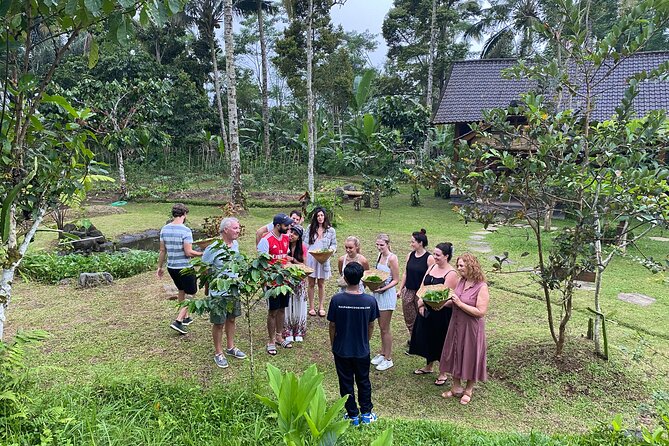
- Pick your own ingredients: You harvest vegetables and herbs from the organic garden before cooking.
- Six or more Balinese dishes: The class covers appetizers, main dishes, and dessert, with food for different diets.
- Eat everything you cook: Lunch, coffee or tea, bottled water, apron, utensils, and an air-conditioned vehicle are included.
- Recipe help for home: You receive a printed and PDF recipe book with substitutions, cooking tips, and technique-video links.
- A small but social class: The maximum group size is 20 people, so expect a shared activity rather than a private lesson.
From Ubud parking lot to Taro Village
The meeting point is Ubud Central Parking on Jalan Suweta, and the activity finishes back there. A shuttle transfer is available from this central point, and the package includes an air-conditioned vehicle.
That transfer matters. Taro Village is north of Ubud, away from the town center and its heavy traffic. The drive is part of the change of scene, taking you from Ubud’s busy streets toward farm country and a quieter setting.
Some bookings may include hotel pickup, but the stated meeting point is Ubud Central Parking. I would confirm your pickup details before the day, especially if you are expecting collection from your accommodation. One booking also had confusion over whether the market visit was included, so check your exact session carefully.
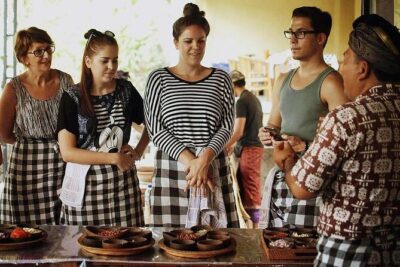
The class can hold up to 20 people. That is small enough for the instructors to offer help, but large enough that you will be sharing workstations and conversation with people from other countries. It suits solo visitors and couples who like meeting people, though anyone seeking a private chef lesson should look elsewhere.
More Cooking Classes in Ubud
- Ubud Cooking Class Bali with Balinese Chef
★ 5.0 · 1,609 reviews - PRIVATE Authentic Balinese Cooking Class in Ubud at Putu’s Home
★ 5.0 · 644 reviews - Balinese Ubud cooking school (9 Dish Cooking and Market Tour)
★ 5.0 · 540 reviews
The morning market sets the food in context
For morning bookings, the day begins at a traditional market. This is more than a quick stop for photographs. You get to see the produce, spices, fruits, and local delicacies that shape Balinese cooking before you are asked to handle them in the kitchen.
This opening gives the class useful context. Instead of treating Indonesian food as a list of unfamiliar ingredients, you see what those ingredients look like and how they are sold. You might encounter fruits you have never tried, along with the seasonings that give Balinese dishes their distinctive character.
A market visit also makes the class feel more connected to daily life. You are not simply being handed a prepared basket of ingredients in a polished kitchen. The food begins in a local setting, then travels with you to the farm.
The limitation is straightforward: the market tour is tied to the morning experience. If you choose an afternoon class, you should not expect the same market stop. The supplied details also do not promise a market tour for every booking, so confirm the schedule at the time of reservation.
Picking vegetables in an 8,000-square-meter organic farm
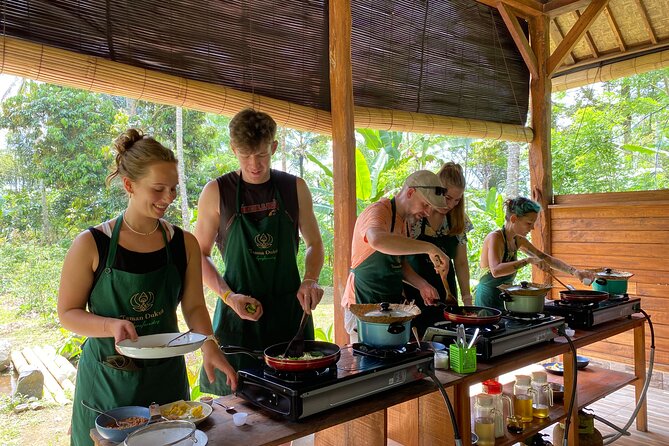
Back at the farm, you tour the garden and select produce for the meal. This is the part I find most appealing for anyone who wants more than a standard urban cooking class.
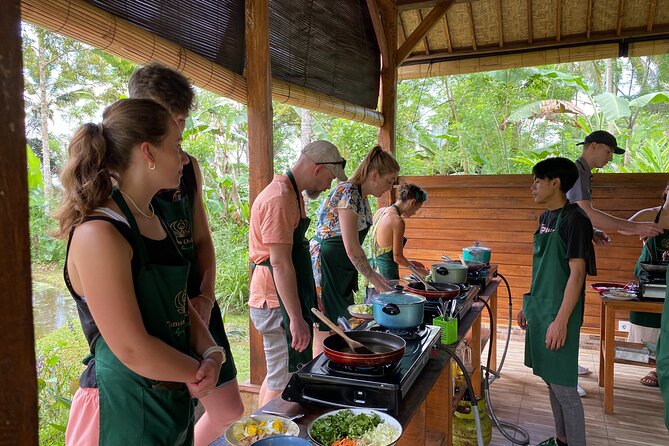
You handle the ingredients before they reach the cutting board. You can see the plants growing, learn about the farm’s organic approach, and take part in a simple farm-to-table process. The grounds are described as clean, well kept, and peaceful, with shade around the cooking and dining areas.
The farm is community-run, which gives the activity a more local purpose than a class built only around tourist entertainment. You are supporting a working place while learning how food connects with land, family, and village life.
Do not expect a strenuous farm tour. The focus is on harvesting ingredients and learning about sustainable farming practices, not on a long hike or a technical agriculture lesson. Still, the garden adds a welcome physical element. You are moving around, touching the produce, and seeing the setting before sitting down to cook.
Bring comfortable clothes that can handle a little food splatter. An apron is provided, but you will be cutting, mixing, and handling fresh ingredients for several hours.
Six dishes, plenty of chopping, and clear instruction
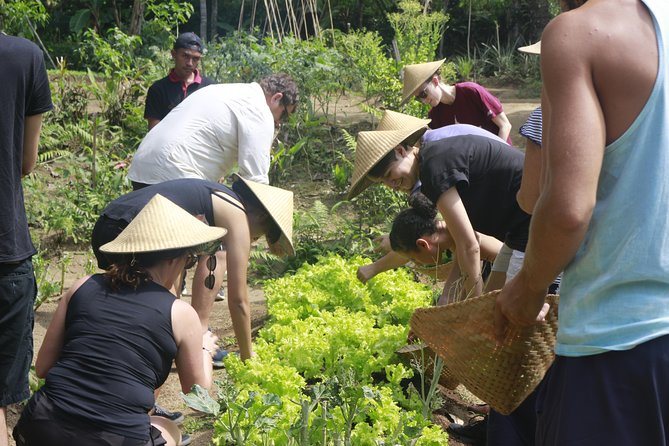
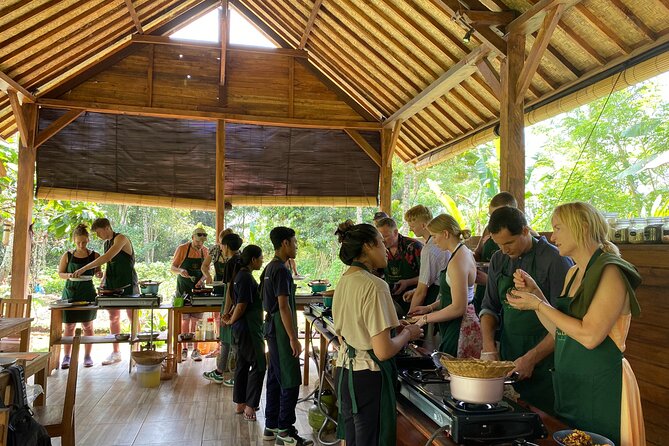
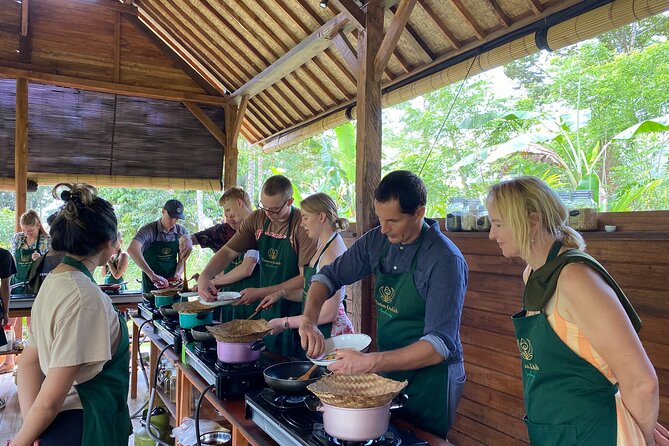
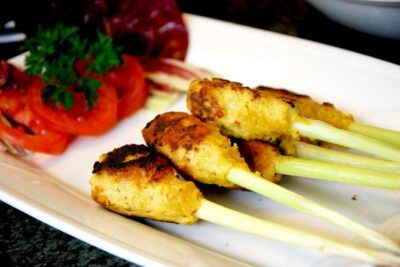
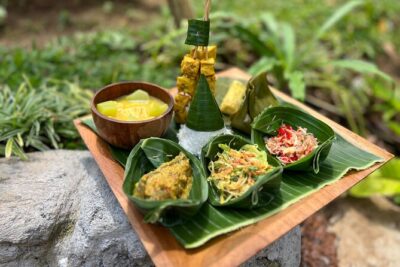
The class prepares six or more Indonesian dishes, including dessert. The exact menu can vary, but the format includes appetizers, main courses, and a sweet course, followed by a meal made from the food you prepared.
The instructors guide the process step by step in English. The strongest praise centers on their patience, humor, and willingness to help. That matters in Balinese cooking, where ingredients and methods may be new to you. You are not left to guess how a paste should look or when a dish is ready.
The class is designed for different skill levels. Easy-to-follow recipes make it suitable for people who cook often, but also for beginners who rarely cook at home. A son with a nut allergy was accommodated successfully, which suggests that the staff take dietary needs seriously. You should still state allergies and dietary requirements clearly when booking and again when you arrive.
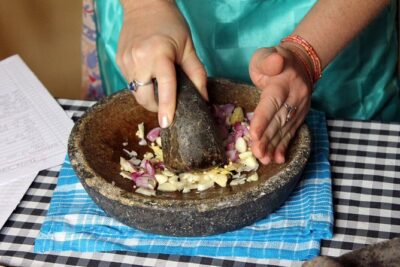
There is one practical tradeoff. You may do a lot of chopping, including onions and chilies. One participant felt the class could be shorter if staff prepared some of the repetitive cutting, leaving more time for unfamiliar ingredients and cooking techniques.
I see both sides. Cutting is not glamorous, but it teaches you the texture and size needed for the recipes. If you already cook regularly, parts of the preparation may feel slow. If you are new to Balinese food, the repetition gives you time to ask questions and watch each stage closely.
A few more Ubud trips worth weighing up
- Balinese Farm Cooking Class by Pemulan Bali
★ 5.0 · 410 reviews - Balinese Cooking Class at Organic Farm
★ 5.0 · 51 reviews - Small-Group Farm Tour & Balinese Cooking Class in Ubud with Kadek
★ 5.0 · 16 reviews - Farm-to-Table Balinese Cooking Experience
★ 4.0 · 3 reviews
Lunch tastes better when you made it
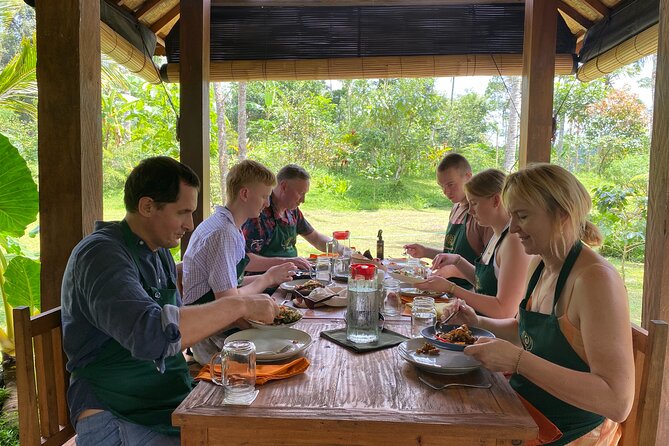
The meal is the reward for all that preparation. You eat the food you cook, and the class includes lunch as well as coffee or tea and bottled water. Alcoholic drinks and soda are available to buy, but they are not part of the price.
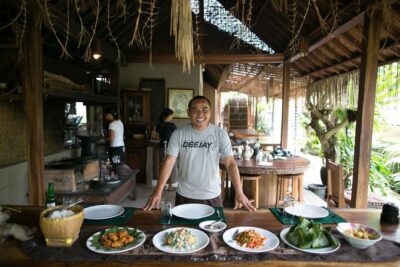
The dining area is comfortable and shaded, with the farm providing a calm backdrop. You will not be rushing through one plated sample before moving on. The format allows you to sit down, share the dishes, and enjoy the full spread.
The food earns unusually strong praise. The recipes are described as tasty, practical, and easy to recreate at home. That last point is important. Some cooking classes are enjoyable in the moment but difficult to repeat because the ingredients, equipment, or instructions are vague. Here, the aim is to send you home with usable methods.
You should arrive hungry. The menu covers several courses, and you eat what you make. A large breakfast before a morning session would be a mistake unless you have special dietary needs.
The recipe book adds real value
The printed and PDF recipe book is one of the best parts of the package. It includes ingredient substitutions, cooking tips, and links to videos showing techniques.
That makes the $38 price easier to justify. You are paying for transport, a farm visit, instruction, ingredients, lunch, equipment, and a take-home resource. The class also gives you a story to carry home: you picked the produce, prepared the food, and learned how the dishes fit into Balinese life.
The substitution notes are especially useful outside Bali. Some Indonesian ingredients can be difficult to find in other countries. A recipe that explains what can replace them gives you a better chance of cooking the dish again instead of filing the recipe book away in a drawer.
Is $38 good value in Ubud?
At $38 per person, this is strong value for a five-and-a-half-hour activity. The price includes an air-conditioned vehicle, bottled water, coffee or tea, an apron, utensils, all the ingredients, and the meal.
You also get three separate experiences: the market, the organic farm, and the cooking class. Booking each element independently would likely take more planning, and you would lose the link between them. Here, the ingredients move logically from market and garden to kitchen and table.
The value is best for you if you enjoy food, hands-on activities, and a slower morning outside central Ubud. It is less attractive if you want a short, polished demonstration or if you dislike group cooking.
The 16-day advance booking average suggests that popular dates may fill ahead of time, particularly during busy periods. I would reserve before arriving if the market visit and a particular session time matter to you.
What to expect from the staff
The instructors are the heart of the experience. They explain the cooking process in clear English, offer help throughout, and keep the mood relaxed.
The tone appears informal rather than rigid. You can expect jokes, conversation, and assistance as you work through the dishes. That makes a difference when the class includes people with very different cooking backgrounds.
Staff also seem comfortable adapting to needs. The successful handling of a nut allergy is encouraging, though no cooking class should be treated casually when allergies are severe. Share all relevant information in advance.
There is one small transport concern to keep in mind. One person found the bus could use a better cleaning. That does not change the farm or food experience, but it is worth knowing if you are particular about vehicle condition.
Who will enjoy this class most?
I would recommend this experience to:
- Food lovers who want to understand Balinese ingredients
- Beginners who appreciate patient, guided instruction
- Couples and solo visitors who enjoy social group activities
- Families, provided children are comfortable with several hours of cooking
- People interested in organic farming and community-run tourism
- Anyone who wants recipes they can use at home
It may not suit you if you want a private setting, a short activity, or a class centered only on advanced technique. The repetitive preparation can also test your patience if you already have strong kitchen skills.
The morning option is the best choice if the market interests you. Pick the afternoon only if the farm and cooking matter more than seeing the market, since the market visit is specifically associated with morning sessions.
Practical tips for a smoother day
Confirm the meeting point and transfer details before setting out. The published start is Ubud Central Parking, not automatically your hotel.
Tell the provider about allergies and dietary needs when you book. The class can cater to different diets, but early notice gives the kitchen time to prepare properly.
Wear comfortable clothing and shoes suitable for a farm setting. You will walk around the garden, harvest produce, and spend time standing at the cooking station.
Bring an appetite. You will eat all the food you prepare, and the class covers several courses.
Allow the full five and a half hours. Traffic, market timing, group pace, and the amount of preparation can affect the day, so do not schedule a tight appointment immediately afterward.
The activity uses a mobile ticket, and confirmation is sent when you book. Cancellation is free until 24 hours before the start time. Changes or cancellations inside that window are not refunded, and poor weather or failure to meet the minimum number of participants can lead to a new date or full refund.
Should you book the Taman Dukuh cooking class?
Book it if you want a hands-on Balinese food experience rather than a restaurant meal or quick demonstration. The farm setting, market option, fresh-picked ingredients, generous menu, and recipe book give the outing more substance than its modest price suggests.
I would especially choose the morning session. The market adds cultural context, and the full sequence from market to garden to kitchen makes the day feel complete.
Skip it if you dislike group activities, long preparation, or repetitive chopping. Otherwise, this is an easy recommendation for a half-day outside Ubud, with one sensible warning: confirm the market and pickup arrangements before you go.
FAQ
Where does the cooking class start?
The published meeting point is Ubud Central Parking, at Jalan Suweta No. 18, Ubud, Gianyar, Bali.
Where does the activity finish?
The activity ends back at the meeting point in Ubud Central Parking.
How long does the experience last?
The approximate duration is five hours and 30 minutes.
How much does the experience cost?
The listed price is $38 per person.
Is transportation included?
Yes. An air-conditioned vehicle is included, and a shuttle transfer is available from Ubud Central Parking.
Is the market visit included in every session?
The traditional market tour is offered with the morning experience. The supplied information does not state that it is included in afternoon sessions, so confirm the schedule before booking.
How many dishes will I prepare?
You will prepare six or more Indonesian dishes, including dessert.
What is included besides the cooking lesson?
The price includes lunch made from the food you cook, coffee or tea, bottled water, cooking utensils, and an apron. Alcoholic beverages and soda are available for purchase but are not included.
Can the class accommodate dietary requirements?
The class caters to various diets, and a nut allergy was accommodated during one visit. You should provide clear information about allergies or dietary needs when booking.
What is the maximum group size?
The activity accepts a maximum of 20 participants.
Can I cancel for a refund?
You can cancel at least 24 hours before the local start time for a full refund. Cancellations or changes made less than 24 hours in advance are not refunded. If bad weather or an insufficient number of participants causes cancellation, you will be offered another date or a full refund.
Just added around Ubud
- Kintamani Batur Jeep Sunrise Tour★ 5.0 · 3 reviews
- Bali Downhill Cycling and White Water Rafting★ 5.0 · 3 reviews
- Ubud Highlights Rice Terraces, Temple, Waterfall & Monkeys forest★ 5.0 · 3 reviews
- Bali ATV Quad Bike & Ayung River Rafting Combo with Lunch★ 5.0 · 3 reviews
- Half Day Uluwatu Temple Sunset, Kecak Dance and Seafood Dinner★ 3.5 · 3 reviews
- Blue Lagoon Snorkeling and Lunch with Tukad Cepung Waterfall★ 5.0 · 3 reviews
- Ancien Wisdom and Culture tour★ 5.0 · 3 reviews
- Full-Day Tour in Nusa Penida Island + Snorkeling Experience★ 5.0 · 3 reviews
Cooking Classes, compared.
PRIVATE Authentic Balinese Cooking Class in Ubud at Putu’s Home
Read our review →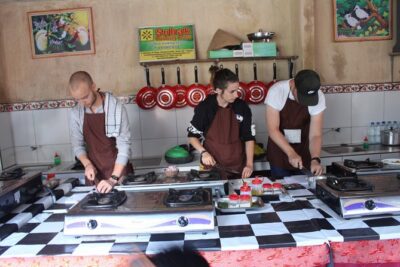
Balinese Ubud cooking school (9 Dish Cooking and Market Tour)
Read our review →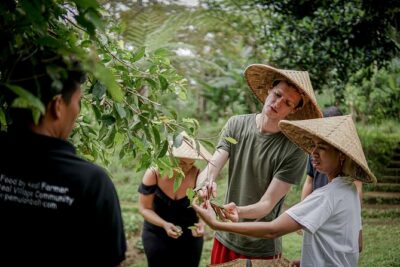
PRIVATE Balinese Cooking Class in Ubud with Dewa with Transfers
Read our review →Browse the lists this tour appears in