
Reviewed · COOKING CLASSES
PRIVATE Balinese Cooking Class in Ubud with Dewa with Transfers
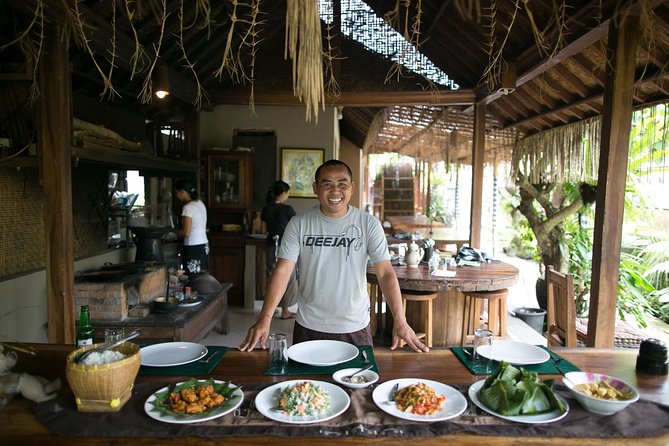
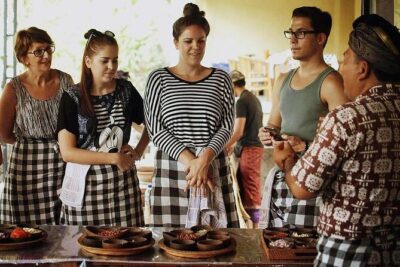
Food opens doors quickly. This four-hour experience takes you from an Ubud hotel to a family compound in Keliki, where Dewa and his family share Balinese cooking, farming, religion, and daily life. I like the garden walk, where you see ingredients such as galangal, cacao, nutmeg, lemongrass, and bananas before they reach the kitchen. I also like that you cook and eat in a real home rather than in a purpose-built classroom.
The main consideration is that this is not a polished professional cooking school. You are visiting a local family, using a wood-fired stove and traditional tools, so the pace and setting feel informal. If you want precise chef demonstrations, restaurant-style facilities, or a quick lesson focused only on recipes, this may feel too loose. If you want personal contact and a meal tied to Balinese life, the $69 price is strong value.
In This Review
- Key Details at a Glance
- Why This Cooking Class Feels Different
- The Ride from Ubud to Keliki
- Walking Through the Village and Garden
- Entering the Traditional Balinese Compound
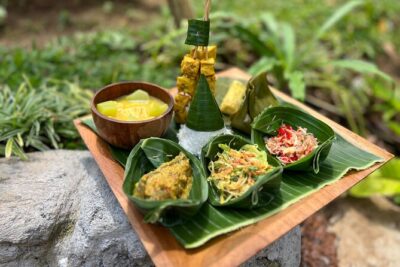
- Cooking With a Mortar, Wood Fire, and Banana Leaves
- Eating the Meal You Prepared
- The Cultural Lessons Are the Real Extra
- Is $69 a Good Value?
- Who Will Enjoy This Most?
- Practical Advice Before You Go
- Should You Book Dewa’s Cooking Class?
- FAQ
- How long does the Balinese cooking experience last?
- Is this a private activity?
- Is pickup included from Ubud?
- Can I book the experience if I stay outside Ubud?
- Where does the experience take place?
- What dishes might I learn to cook?
- Is a vegetarian meal available?
- Are drinks included?
- Is this a professional cooking class?
- Who hosts the experience?
- What happens if I need to cancel?
Key Details at a Glance
- A private family-home setting: Only your group takes part, giving the experience a personal feel.
- A garden-to-table lesson: You learn about local fruits, herbs, spices, and medicinal plants before cooking.
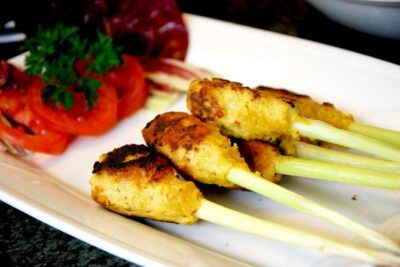
- Several traditional dishes: Depending on the menu, you may prepare dishes such as pepes ikan, bumbu kuning, and bregedel.
- A walk through Keliki: The outing includes village paths, gardens, farming areas, and explanations of Balinese customs.
- A full meal with drinks: You eat what you prepare, with local beer and water included.
- Transfers from Ubud: Pickup and return transport are included from Ubud hotels and vacation rentals, but not from outside the Ubud area.
Why This Cooking Class Feels Different
Many cooking classes teach you how to make a dish. This one tries to show you why the dish belongs to Bali in the first place.
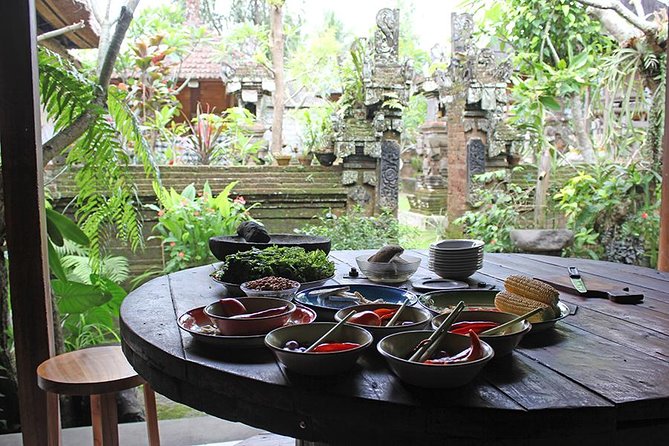
Dewa hosts the experience in his traditional Balinese family compound, a walled home arranged around a central courtyard with open pavilions. His extended family lives there, and the kitchen is part of an active home rather than a staged attraction. That difference matters. You are not just chopping vegetables in a tourist kitchen. You are seeing how food, family, religion, farming, and hospitality fit together.
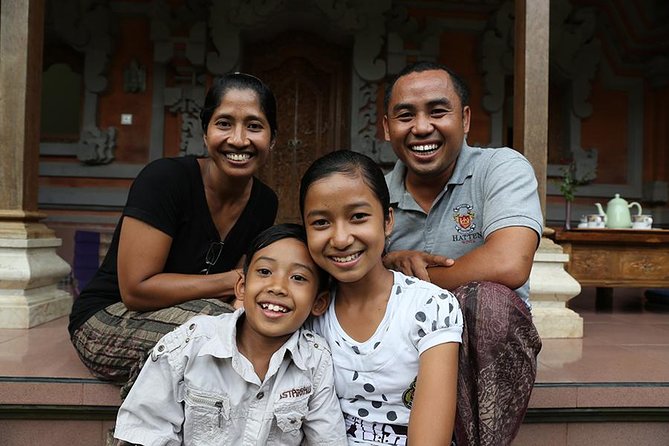
Dewa is the central guide, although another family member may host if he is unavailable. His wife, Jero, helps with the cooking. Together, they explain ingredients and methods while welcoming you into their home.
I especially like the cultural side of the experience. Dewa talks about Balinese Hinduism, Buddhism, animism, village life, spirituality, and the idea of living in balance with nature. The food lesson becomes a way to understand local values. You may arrive expecting a recipe class and leave with a better sense of how Balinese families relate to land, faith, and one another.
More Cooking Classes in Ubud
- Ubud Cooking Class Bali with Balinese Chef
★ 5.0 · 1,609 reviews - PRIVATE Authentic Balinese Cooking Class in Ubud at Putu’s Home
★ 5.0 · 644 reviews - Balinese Ubud cooking school (9 Dish Cooking and Market Tour)
★ 5.0 · 540 reviews
The Ride from Ubud to Keliki
If you are staying in Ubud, round-trip transfers are included. Dewa can collect you from an Ubud hotel or vacation rental and return you after the meal. This makes the experience easy to fit into a half-day, especially if you do not want to arrange a taxi to a rural meeting point.
The stated meeting point is Rumah Makan Jero Nini in Keliki, north of Ubud. Keliki sits among terraced foothills and village greenery. Accounts of the drive describe roughly 15 to 30 minutes from Ubud, though the actual journey depends on your exact hotel and road conditions.
If you stay outside the Ubud region, transport is not included. You will need to reach Dewa’s home in Keliki yourself, so check your location before booking. This is one of the few practical limits of the experience.
The private format is useful here. You are not waiting for a large coach or moving between several commercial stops. The vehicle takes your own group, and the day can feel more like an invitation to a local home than a standard excursion.
Walking Through the Village and Garden
The activity usually begins with a walk through the village and surrounding growing areas. Wear comfortable shoes. Several people describe walking along village roads, forest paths, rice fields, and garden areas before reaching the house.
Dewa points out the plants used in the meal and explains how local families use them. Galangal, cacao, nutmeg, lemongrass, bananas, and other herbs and fruits may appear along the way. He also discusses medicinal properties, farming methods, and the role of plants in Balinese cooking.
This part gives the class its strongest sense of place. In a normal cooking school, ingredients arrive washed and measured. Here, you first see where some of them grow. The lesson makes clear that Balinese food is built around fresh aromatics, spices, coconut, banana leaves, vegetables, and careful preparation.
The walk also provides a gentle introduction to village life. Dewa explains local customs and family traditions, and you may learn about community gardens or small-scale food production. One account describes seeing local tofu making, while others refer to walks through rice fields and forest areas.
The pace is not designed for someone who wants to rush straight to the stove. That is both the benefit and the possible drawback. You get much more cultural context, but the cooking portion is only one part of a wider experience.
Entering the Traditional Balinese Compound
After the walk, you arrive at Dewa’s home. The compound includes several open pavilions around a courtyard, with family spaces set within the walls. The setting is calm and green, and you get a glimpse of how a traditional Balinese household is arranged.
The family’s welcome is an important part of the day. You may meet relatives or other members of the local community, and the cooking takes place in an open kitchen. The atmosphere is friendly and informal rather than formal or instructional.
Cleanliness is still part of the appeal. The home setting does not mean the food preparation feels careless. The family shares its kitchen and methods in a direct, practical way, while you take part in the work.
The house also gives you a better sense of the difference between a cultural visit and a commercial food tour. You are not merely shown a replica of Balinese domestic life. You are invited into the setting where the hosts actually live and cook.
That invitation calls for good manners. Listen closely, dress comfortably, and treat the compound as someone’s home. The experience works best when you approach it with curiosity rather than with the expectation of a restaurant service.
A completely different kind of day out in Ubud:
- All-Inclusive Ubud Private Tour
★ 5.0 · 14,344 reviews - Best of Ubud Full-Day Tour with Jungle Swing
★ 5.0 · 8,571 reviews - Ubud: Monkey Forest, Jungle Swing, Rice Terrace, and Water Temple
★ 5.0 · 7,160 reviews - Best of Ubud 1-Day Private Tour
★ 5.0 · 4,451 reviews
Cooking With a Mortar, Wood Fire, and Banana Leaves
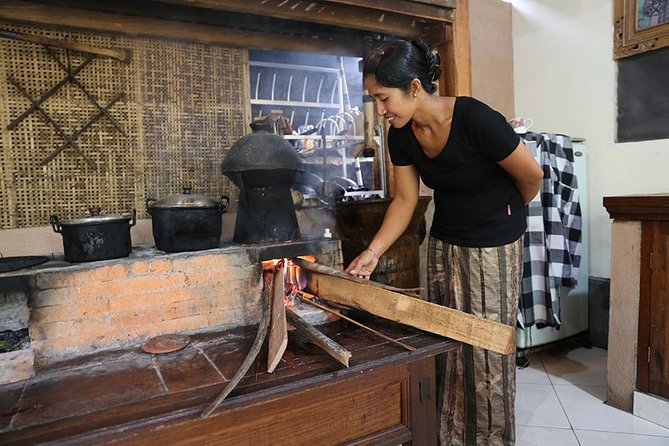
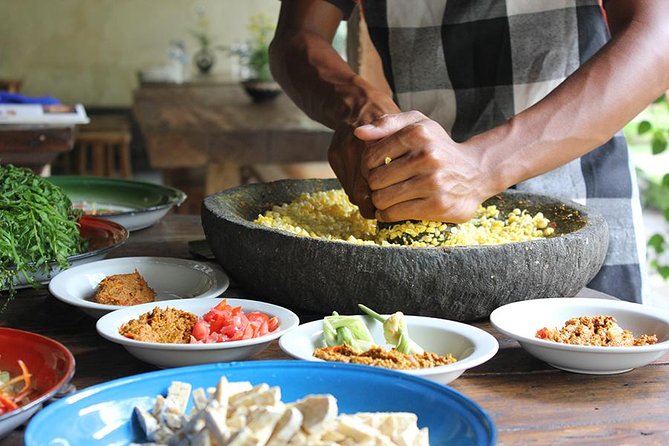
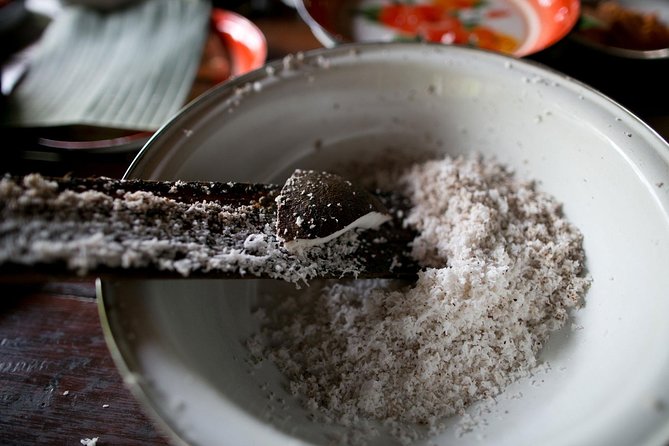
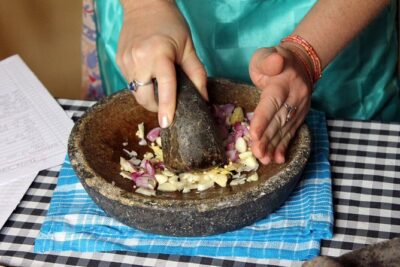
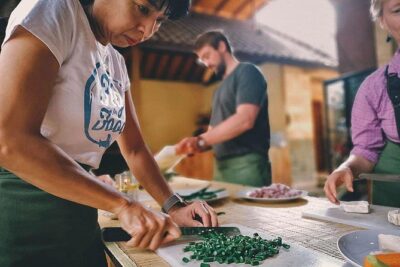
The cooking is hands-on. You use traditional tools, including a pestle and mortar, and prepare food over a wood-fired stove. This gives you a more physical understanding of Balinese cuisine than simply watching a chef stir a pot.
Grinding spices by hand takes time and effort, but it also explains the flavor base of many Balinese dishes. You can see how fresh herbs and spices are turned into pastes and sauces, rather than relying on pre-made seasoning.
The exact menu can vary, but the dishes named for this experience include:
- Pepes ikan: Tuna grilled in banana leaves.
- Bumbu kuning: Chicken cooked with fresh turmeric and coconut milk.
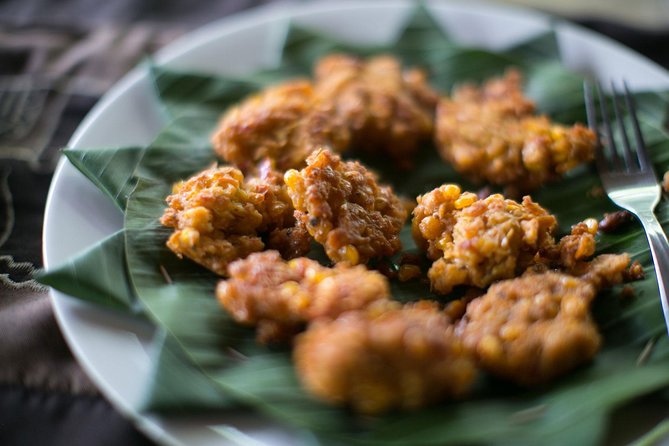
- Bregedel: Hand-ground corn fritters.
The meal can include five, six, or even seven dishes depending on the session. Past accounts describe a spread covering salads, main courses, fritters, and dessert. Since the exact menu is not fixed in the details provided, you should think of these dishes as examples rather than a guaranteed list.
You take part in chopping, grinding, mixing, and cooking. The lesson is designed so that you can follow along, even if you are not an experienced cook. Still, the traditional equipment may feel slower and less familiar than a modern kitchen.
I like the practical result: you do not just taste a finished plate. You understand the work behind it. The food is seasoned with fresh ingredients and traditional methods, and the emphasis is on using local products for nourishment and balance, not on loading every dish with salt.
Eating the Meal You Prepared
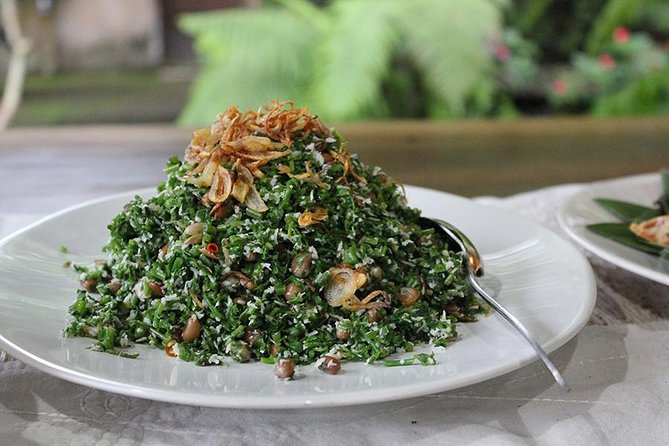
Once the cooking is done, you sit down to eat the results. The meal is served in the family compound, often in the peaceful garden setting. Local beer and water are included.
This is the part that makes the morning or afternoon feel complete. You have walked through the village, picked or examined ingredients, prepared the dishes, and then eaten them together. The meal is not a separate restaurant stop. It is the final step in the lesson.
The food receives the highest praise for good reason. The recipes use fresh herbs, spices, coconut, vegetables, meat, fish, and other local ingredients. The cooking is traditional but accessible, and several dishes are practical enough to recreate at home.
A small recipe notebook is provided, based on the experience described by past participants. You can write down the recipes as Dewa explains them, and the book gives you a useful souvenir rather than another decorative trinket. If you hope to repeat the meal at home, bring a pen and pay attention to quantities and cooking times, since a home lesson may be less exact than a formal culinary course.
The Cultural Lessons Are the Real Extra
The cooking is good, but the wider conversation may be the most memorable part.
Dewa explains Balinese history, village customs, religion, agriculture, and family life as you move through the area. His style is often described as calm, warm, and reflective. He is not simply naming ingredients. He connects them to local beliefs and the daily choices made by Balinese families.
This makes the class a good fit for you if food is a way to understand a place. You will hear about how Balinese life draws from Hindu, Buddhist, and animist traditions, and how spirituality shapes attitudes toward nature and community.
The cultural material can also make the experience feel longer than four hours in a good way. You are not spending four hours at a counter. You are moving, talking, cooking, eating, and meeting family members.
There is a trade-off. If you are mainly interested in mastering restaurant recipes, you may find the history and spiritual discussion takes time away from detailed instruction. If you enjoy conversation and local context, that balance is exactly what makes the experience worthwhile.
Is $69 a Good Value?
At $69 per person, this is not the cheapest cooking lesson in Bali. It is, however, a private experience that includes transfers from Ubud, a village walk, a garden visit, a cooking session, a substantial meal, water, and local beer.
The private format is especially valuable for couples, families, and small groups. You are not paying only for food preparation. You are paying for access to a family compound, personal guidance, transportation, and several hours of cultural explanation.
The price also makes more sense if you compare it with the cost and effort of arranging these parts separately. A private car to Keliki, a village guide, a meal, and a cooking lesson would quickly add up. Here, they are joined into one half-day experience.
Group discounts may be available, so ask about the final price if you are booking for several people. The activity is generally booked well ahead, with an average booking time of about 36 days in advance. That suggests you should not leave it until the final day of your Ubud stay, especially if your schedule is tight.
Who Will Enjoy This Most?
I would recommend this experience to you if you:
- Want a private outing rather than a large group class.
- Care more about local life than polished facilities.
- Enjoy walking through villages, gardens, and rural areas.
- Like learning about religion and customs alongside food.
- Want recipes you can try again at home.
- Are comfortable cooking with traditional tools and a wood-fired stove.
- Want a meal prepared with a Balinese family.
It may be less suitable if you have limited mobility and are not comfortable with village and garden walking. The information provided does not give a detailed accessibility description, so ask before booking if you have specific needs.
It is also worth noting that service animals are allowed and the activity is near public transportation. A vegetarian meal is available if you request it in advance. Do not assume the vegetarian option will be arranged automatically.
Practical Advice Before You Go
Wear comfortable shoes for the village walk and garden visit. Bring a pen if you want to record recipes in the handmade notebook, and leave enough time to listen to the explanations rather than treating the class as a quick cooking demonstration.
Tell the provider about dietary needs when you book, particularly if you require a vegetarian meal. Confirm your hotel is within the Ubud pickup area. If it is outside that region, plan your own transport to Keliki.
The activity lasts about four hours, but allow some flexibility around the transfer. The experience ends back at the meeting point, although Ubud pickup arrangements include return transport to your hotel or vacation rental.
Free cancellation is available if you cancel at least 24 hours before the local start time. Changes or cancellations made later are not accepted for a refund.
Should You Book Dewa’s Cooking Class?
Yes, if you want a personal look at Balinese home life and do not mind that the cooking lesson is part of a larger cultural visit.
The strongest reasons to book are Dewa’s storytelling, the walk through the village and garden, the chance to cook in a real family home, and the meal you prepare yourself. The $69 price is fair for a private half-day with transport, food, drinks, and a local host.
Skip it if you want a strictly professional cooking school with exact measurements, modern equipment, and little conversation. For everyone else, this is a thoughtful way to spend half a day near Ubud, and one of the better choices for connecting food with the place where it comes from.
FAQ
How long does the Balinese cooking experience last?
The experience lasts approximately four hours.
Is this a private activity?
Yes. Only your group participates in the activity.
Is pickup included from Ubud?
Yes. Round-trip transfers are included from hotels and vacation rentals in the Ubud region.
Can I book the experience if I stay outside Ubud?
Yes, but transport is not included from outside the Ubud region. You will need to reach Dewa’s home in Keliki yourself.
Where does the experience take place?
The activity takes place at Dewa’s traditional family compound in Keliki, north of Ubud. The listed meeting point is Rumah Makan Jero Nini on Jl. Arjuna.
What dishes might I learn to cook?
The sample dishes include pepes ikan, bumbu kuning, and bregedel. The meal may include several other Balinese dishes as well.
Is a vegetarian meal available?
Yes. A vegetarian option is available if you request it when booking.
Are drinks included?
Yes. Local beer and water are included.
Is this a professional cooking class?
No. It is a visit to an authentic local home where a Balinese family shares its cooking methods, culture, and cuisine.
Who hosts the experience?
Dewa hosts when available, with his wife Jero helping with the cooking. If Dewa cannot host, an equally welcoming family member may lead the experience with Jero.
What happens if I need to cancel?
You can receive a full refund if you cancel at least 24 hours before the experience start time. Cancellations or changes made less than 24 hours before the start time are not accepted for a refund.
Just added around Ubud
- Kintamani Batur Jeep Sunrise Tour★ 5.0 · 3 reviews
- Bali Downhill Cycling and White Water Rafting★ 5.0 · 3 reviews
- Ubud Highlights Rice Terraces, Temple, Waterfall & Monkeys forest★ 5.0 · 3 reviews
- Bali ATV Quad Bike & Ayung River Rafting Combo with Lunch★ 5.0 · 3 reviews
- Half Day Uluwatu Temple Sunset, Kecak Dance and Seafood Dinner★ 3.5 · 3 reviews
- Blue Lagoon Snorkeling and Lunch with Tukad Cepung Waterfall★ 5.0 · 3 reviews
- Ancien Wisdom and Culture tour★ 5.0 · 3 reviews
- Full-Day Tour in Nusa Penida Island + Snorkeling Experience★ 5.0 · 3 reviews
Cooking Classes, compared.
PRIVATE Authentic Balinese Cooking Class in Ubud at Putu’s Home
Read our review →
Balinese Ubud cooking school (9 Dish Cooking and Market Tour)
Read our review →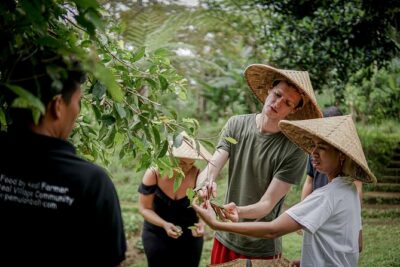
Balinese Cooking class with traditional morning market visit
Read our review →Browse the lists this tour appears in