
Reviewed · COOKING CLASSES
PRIVATE Authentic Balinese Cooking Class in Ubud at Putu’s Home
Cooking can be the best map of Bali. This private class brings you into Putu’s family compound, where you prepare a five-dish Balinese meal with ingredients from the family garden and learn how food connects to daily life. I like the home setting and the chance to cook with produce harvested nearby, rather than simply watching a chef work.
I also like the warm, personal teaching from Putu and her family, including stories about Balinese Hinduism, traditional medicines, rice farming, and household temples. The main consideration is time: the home is about 40 minutes from central Ubud according to the tour information, so the roughly three-hour outing can take up much of an afternoon or evening.
In This Review
- Key points before you book
- Arriving at Putu’s ancestral village
- Fresh ingredients from the family garden
- A hands-on class in a simple outdoor kitchen
- Five Balinese dishes, then a proper feast
- Lunch or dinner, with different moods
- The cultural side is more than a quick house tour
- Why the private format matters
- Is $75 a person a fair price?
- Practical details that make the visit easier
- Who will enjoy this most?
- Should you book Putu’s cooking class?
- FAQ
- How long does the Balinese cooking class last?
- Where does the cooking class take place?
- Is transportation included?
- Can I choose lunch or dinner?
- Is a vegetarian or vegan menu available?
- How many dishes will I prepare?
- What drinks are included?
Key points before you book
- Cook five dishes from scratch: You chop, grind, season, steam, and grill instead of merely observing.
- Visit Putu’s family compound: See the home temple, living spaces, gardens, orchards, rice, fruit, and farm animals.
- Eat what you prepare: The class ends with a generous Balinese meal, and leftovers may be packed for you.
- Choose lunch or dinner: Night classes take place in a well-lit outdoor kitchen after sunset.
- Enjoy private transport: Round-trip pickup and drop-off from an Ubud hotel are included.
- Plan for a rural setting: Transport from outside Ubud costs extra, and the drive can take around 40 minutes from Ubud Center.
Arriving at Putu’s ancestral village
The experience begins with pickup from your Ubud hotel. The private vehicle is a useful part of the package, since Putu’s home is outside the central streets and the drive may take about 40 minutes from Ubud Center. Give yourself breathing room afterward, especially if you have dinner reservations, a temple visit, or another tour planned.
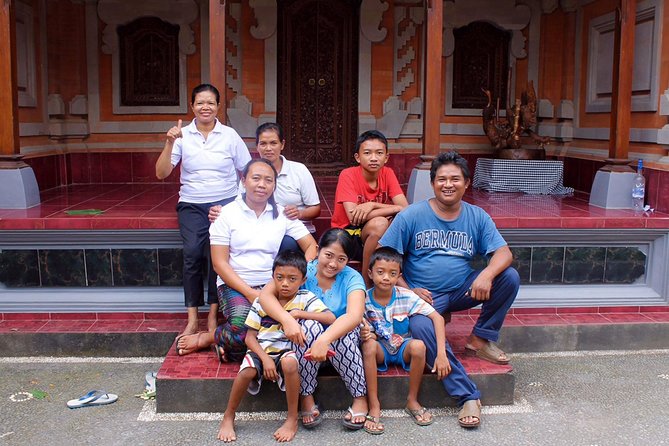
At the family compound, Putu welcomes you with her husband, children, grandparents, or other relatives. This is not a commercial cooking studio arranged to look Balinese. It is a working family home, with the ordinary activity of a household around you.
Putu gives you a tour of the compound before cooking begins. You may see the family temple, living areas, gardens, fruit trees, farm plots, and animals cared for by her grandparents. The tour provides useful context because the meal is tied to the place where the ingredients grow and the family lives.
A traditional Balinese compound is organized around several parts, each with its own purpose and meaning. Putu explains these areas in practical terms, along with details about household ceremonies and Balinese Hindu customs. Her humor and clear English help keep the cultural discussion friendly rather than formal.
More Cooking Classes in Ubud
- Ubud Cooking Class Bali with Balinese Chef
★ 5.0 · 1,609 reviews - Balinese Ubud cooking school (9 Dish Cooking and Market Tour)
★ 5.0 · 540 reviews - Balinese Farm Cooking Class by Pemulan Bali
★ 5.0 · 410 reviews
Fresh ingredients from the family garden
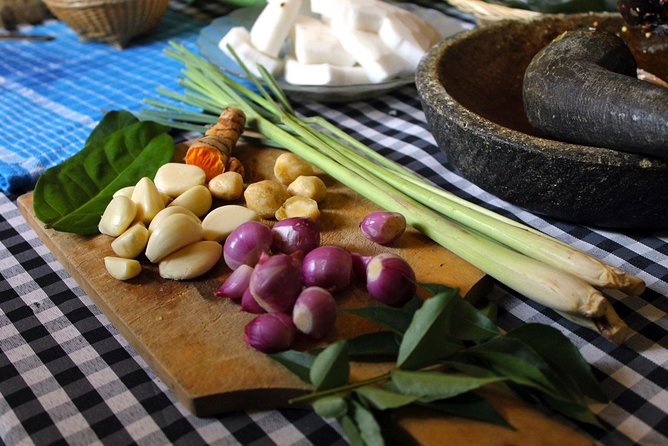
The garden is one of the strongest parts of the experience. Putu uses fresh ingredients from the family property whenever the season allows, and some visitors have been able to pick fruit such as mangosteen during the visit. The menu changes with the season, so you should not book expecting one fixed list of dishes.
This seasonal approach is a plus. It shows you how Balinese cooking actually works, using what is available rather than forcing a restaurant menu year-round. It also means the five dishes you prepare can vary.
Putu explains the spices as you work. You learn how ingredients are combined, how much chili to use, and how traditional Balinese food builds flavor from fresh aromatics, spice pastes, coconut, herbs, and other local produce. You can usually adjust the spice level to suit your taste, which is helpful if you enjoy Indonesian food but are not used to Balinese heat.
The class also touches on traditional Balinese medicines and the healing uses associated with local ingredients. This does not turn the cooking lesson into a medical workshop. Instead, it gives you a glimpse of how food, plants, family knowledge, and ceremony overlap in Balinese life.
A hands-on class in a simple outdoor kitchen
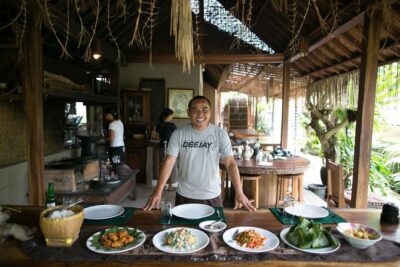
The cooking area is simple and practical. Putu’s kitchen has been described as an outdoor space with a two-burner cooktop, traditional equipment, wood blocks, and small cleavers. The setting may feel very different from a polished cooking school, but that is part of its appeal.
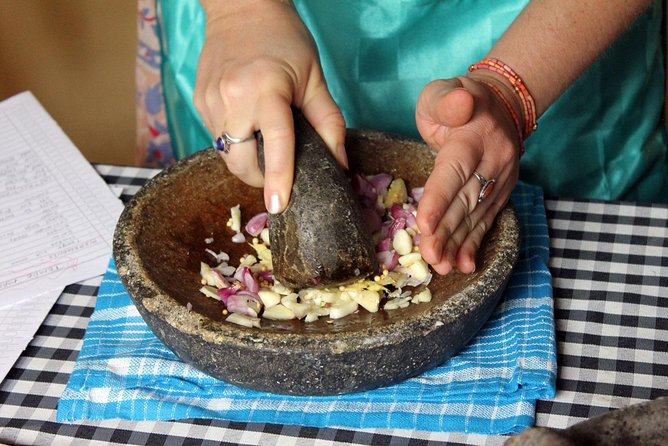
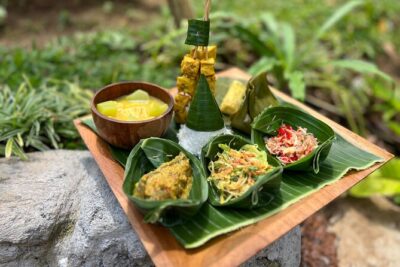
You take an active role. Expect to chop vegetables, grind ingredients by hand, prepare spice mixtures, and help with grilling or steaming. Traditional methods may include grinding ingredients for satay, steaming rice over a wood-burning stove, and preparing banana leaf parcels.
Putu guides you through each stage and adapts her pace to the group. Families have found ways for children and older relatives to take part, while people with different levels of cooking ability can still contribute. You do not need advanced skills, but you should be ready to work with your hands and follow instructions.
The cooking portion is listed as about 1.5 hours, while the full experience lasts approximately three hours. The additional time includes pickup, the compound tour, preparation, and the final meal. Exact timing can vary depending on the number of people and the pace of the cooking.
The small kitchen can also be a limitation. If you prefer a professional demonstration kitchen with individual workstations, this may feel informal. For me, the modest setup is exactly what makes the lesson useful, because you see how complex flavors can come from basic equipment and careful technique.
Five Balinese dishes, then a proper feast
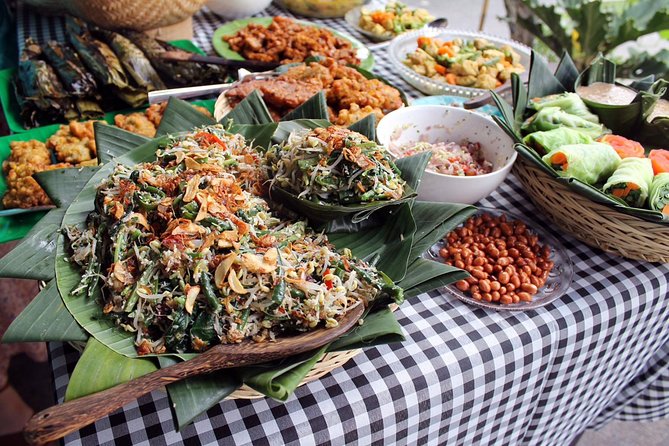
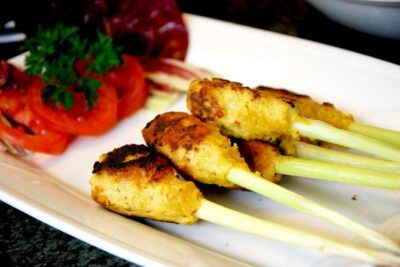
The meal generally includes five authentic Balinese dishes, though the exact menu changes with the season and available ingredients. Possible preparations include grilled fish, curry, satay, and banana leaf parcels. The supplied descriptions also refer to Balinese vegetables, spice pastes, rice, and other home-cooked dishes.
You prepare the food with Putu, then sit down to eat everything together. This shared meal is not an afterthought. It gives you a chance to taste how each technique affected the final result and to ask questions while the cooking is still fresh in your mind.
The family’s homegrown rice is a particularly meaningful part of the meal. Putu’s grandparents are rice farmers, so the rice connects the table to the work of the family. That small detail adds more value than another restaurant course would.
The portions can be generous. Some visitors have received enough leftovers for breakfast or a meal later that day, packed into takeaway boxes. This is not guaranteed as a formal inclusion, but it is a useful possibility if your group prepares more food than it can finish.
Non-alcoholic drinks are included, along with one or two glasses of local alcohol. If you do not drink, you can simply choose the non-alcoholic option. Make any dietary restrictions, allergies, vegetarian preferences, or vegan requirements clear when booking.
A completely different kind of day out in Ubud:
- All-Inclusive Ubud Private Tour
★ 5.0 · 14,344 reviews - Best of Ubud Full-Day Tour with Jungle Swing
★ 5.0 · 8,571 reviews - Ubud: Monkey Forest, Jungle Swing, Rice Terrace, and Water Temple
★ 5.0 · 7,160 reviews - Best of Ubud 1-Day Private Tour
★ 5.0 · 4,451 reviews
Lunch or dinner, with different moods
You can choose a lunch or dinner class. The lunch option lets you see the garden and compound in daylight, which may be best if the farm visit and household details are your main interests.
The dinner class has its own charm. The outdoor kitchen is lit after sunset, and the cooking takes on a more relaxed evening feel. You still see the ingredients laid out and take part in the same basic process, but the atmosphere is different.
A lunch booking may suit families with young children or anyone who wants to see the property clearly. A dinner booking can work well for couples and friends who prefer to make the cooking class their evening activity. Since the class is private, you do not need to match your pace to a large public group.
The cultural side is more than a quick house tour
Food is the doorway into this experience, but Putu offers more than recipes. She explains how her family uses the compound, why certain temple areas matter, and how ceremonies shape household life. Timing can be especially interesting if a local ceremony is taking place during your visit.
You also hear about farming and rural life. Putu’s grandparents cultivate rice, while the family tends fruit, vegetables, and animals. Seeing these elements together gives you a clearer picture of how a Balinese household can connect home, worship, agriculture, and food.
I appreciate that the cultural material is delivered during an ordinary visit rather than as a staged lecture. Putu’s warmth and humor help the conversation feel natural. You can ask questions about Balinese Hinduism, household customs, cooking practices, and family life without needing to fit into a fixed museum-style presentation.
The trade-off is that this is a personal introduction, not a full survey of Balinese culture. You will come away with stories and useful observations, not an academic course. That is the right expectation for a three-hour home experience.
Why the private format matters
The class is private, so only your group takes part. This changes the experience in practical ways. Putu can help a child who needs a simpler task, adjust chili levels, answer detailed questions, or slow down for someone who has not cooked much before.
Private also means the occasion can feel more personal. Couples have used it as a memorable honeymoon activity, while larger family groups ranging from children to older adults have taken part together. A group of nine, with ages from six to 80, was able to stay involved.
The format suits a group with mixed interests. One person can focus on spice preparation while another asks about the temple or garden. You are not competing for a place around a demonstration table.
The private arrangement does not mean the setting is luxurious. Putu’s family and relatives may be involved in welcoming you, and the kitchen is a real household cooking area. Book this for contact with local family life, not for air-conditioning, formal service, or restaurant-style presentation.
Is $75 a person a fair price?
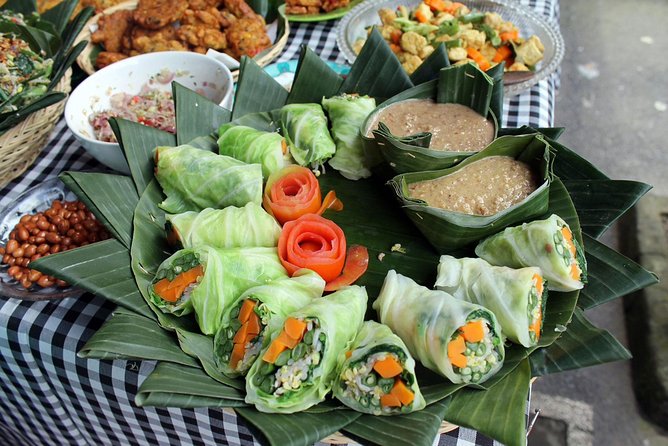
At $75 per person, the price is higher than a basic group cooking class in Ubud. The value comes from what is bundled into the visit: private instruction, a home-cooked meal, a tour of the compound and garden, local drinks, round-trip transport from an Ubud hotel, and a personal cultural exchange.
The transport matters. A taxi or hired driver to a rural home would add both cost and planning, while the included pickup keeps the outing simple if you are staying in Ubud. The price also includes taxes, handling charges, and gratuities.
You are paying for access to a family home and for Putu’s time, not just for five recipes. If your priority is the lowest possible cooking-class price, a group school may be a better fit. If you want a private visit with a meal and a look at rural Balinese life, the package offers solid value.
Large groups should check the final price carefully because group discounts are offered, but the amount is not specified. Transport from outside Ubud costs extra, so include your hotel name when reserving and confirm the pickup arrangement.
Practical details that make the visit easier
Tell the host about allergies, dietary restrictions, or cooking preferences at booking. Vegetarian and vegan versions are available, but the menu should be arranged in advance rather than requested at the last minute.
The menu changes by season. That is good news for freshness, but it means you should treat the listed dishes as examples rather than promises. The experience may include grilled fish, curry, banana leaf parcels, or other preparations based on what is available.
For a dinner booking, bring a phone with WhatsApp if possible. Putu has used WhatsApp to communicate about pickup, and it can make meeting arrangements easier.
Wear clothing suitable for cooking and moving around a home garden. The experience involves chopping, grinding, grilling, and walking around the compound, so comfortable clothes and shoes make sense. Specific dress requirements are not provided, but respectful behavior is appropriate in a family home and temple area.
Free cancellation is available if you cancel at least 24 hours before the local start time. Changes or cancellations made less than 24 hours before the start are not accepted for a refund.
Who will enjoy this most?
I would choose this class if you want to connect food with family life. It works especially well for couples, friends, families, and private groups that prefer conversation and participation over a standard sightseeing stop.
It is also a good choice for cooks who want techniques they can try at home. Grinding spice mixtures by hand, working with banana leaves, preparing satay, and learning how chili levels are balanced can give you more useful ideas than simply tasting a Balinese dish in a restaurant.
Families should find the format flexible. Children can take part in age-appropriate tasks, and the private setting makes it easier to include different abilities. Older relatives who do not want to cook every step can still enjoy the garden, compound tour, conversation, and meal.
I would hesitate only if your schedule is tight or you want a central Ubud activity. The drive can take about 40 minutes from Ubud Center, and the full outing lasts around three hours. It is best treated as the main plan for that part of the day.
Should you book Putu’s cooking class?
Book it if you want a personal, hands-on look at Balinese food and family life. The strongest reasons are Putu’s patient teaching, the garden-grown ingredients, the five-dish meal, the private format, and the chance to see a real family compound rather than a staged tourist venue.
Think twice if you want a quick class near central Ubud, a fixed menu, or a slick professional kitchen. For everyone else, especially families and food-loving couples, the combination of cooking, culture, transport, and a generous meal makes $75 a reasonable spend.
FAQ
How long does the Balinese cooking class last?
The complete experience lasts approximately three hours. The cooking portion itself is described as about 1.5 hours, followed by the shared meal and other parts of the visit.
Where does the cooking class take place?
The class takes place in Putu’s home kitchen in her ancestral village near Ubud, among family gardens and tropical orchards.
Is transportation included?
Round-trip transport from Ubud hotels is included. Pickup from outside Ubud costs extra, so provide your hotel name when booking.
Can I choose lunch or dinner?
Yes. You can select a lunch or dinner class when arranging the experience.
Is a vegetarian or vegan menu available?
Yes. Vegetarian and vegan options are available, but you should advise the host when booking.
How many dishes will I prepare?
You will generally prepare five authentic Balinese dishes. The exact menu can change with the season and available ingredients.
What drinks are included?
Non-alcoholic drinks are included, along with one or two glasses of local alcohol.
Just added around Ubud
- Kintamani Batur Jeep Sunrise Tour★ 5.0 · 3 reviews
- Bali Downhill Cycling and White Water Rafting★ 5.0 · 3 reviews
- Ubud Highlights Rice Terraces, Temple, Waterfall & Monkeys forest★ 5.0 · 3 reviews
- Bali ATV Quad Bike & Ayung River Rafting Combo with Lunch★ 5.0 · 3 reviews
- Half Day Uluwatu Temple Sunset, Kecak Dance and Seafood Dinner★ 3.5 · 3 reviews
- Blue Lagoon Snorkeling and Lunch with Tukad Cepung Waterfall★ 5.0 · 3 reviews
- Full-Day Tour in Nusa Penida Island + Snorkeling Experience★ 5.0 · 3 reviews
- Ancien Wisdom and Culture tour★ 5.0 · 3 reviews
Cooking Classes, compared.
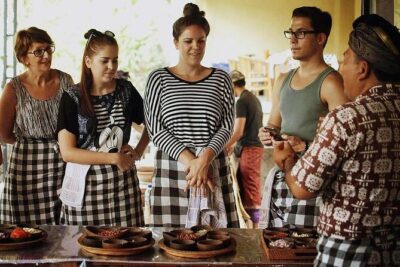
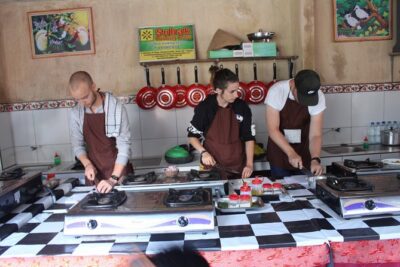
Balinese Ubud cooking school (9 Dish Cooking and Market Tour)
Read our review →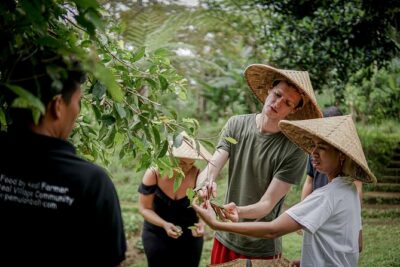
PRIVATE Balinese Cooking Class in Ubud with Dewa with Transfers
Read our review →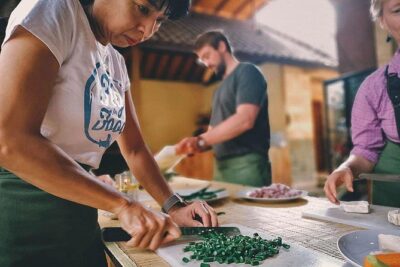
Balinese Cooking class with traditional morning market visit
Read our review →Browse the lists this tour appears in