
Reviewed · COOKING CLASSES
Balinese Cooking class with traditional morning market visit
Start with a market, then cook lunch. This six-hour Ubud experience links Bali’s everyday food culture with a hands-on class led by a local chef. I like the morning market visit, where unfamiliar herbs, fruits, vegetables, meat, and spices become easier to understand. I also like the chance to make a canang offering, a small Balinese basket used in daily Hindu practice, before preparing and eating several local dishes.
The class costs $35 per person, including hotel pickup, transport, cooking equipment, instruction, taxes, and the meal you prepare. That is strong value for a half-day outing, especially with a small group capped at eight people. The main consideration is the early market visit and six-hour commitment, which may feel long if you only want a quick cooking demonstration.
In This Review
- Key points to know before booking
- Why this Ubud cooking class feels different
- The morning market: a practical introduction to Balinese ingredients
- Arriving in Laplapan and learning to make a canang
- The cooking lesson: plenty of hands-on work
- Eating what you make
- The guides and teaching style
- Group size, pace, and comfort
- Is $35 good value?
- Who should book this experience?
- Should you book the Balinese cooking class?
- FAQ
- How long does the Balinese cooking class last?
- Does the tour include hotel pickup?
- How much does the experience cost?
- How many people can join the class?
- What is included in the price?
- Will I visit a local market?
- Can I cancel for a refund?
Key points to know before booking
- The market comes first: You visit a local morning market and learn about the ingredients before cooking with them.
- Canang-making adds cultural context: The class includes instruction in making a traditional Balinese offering basket.
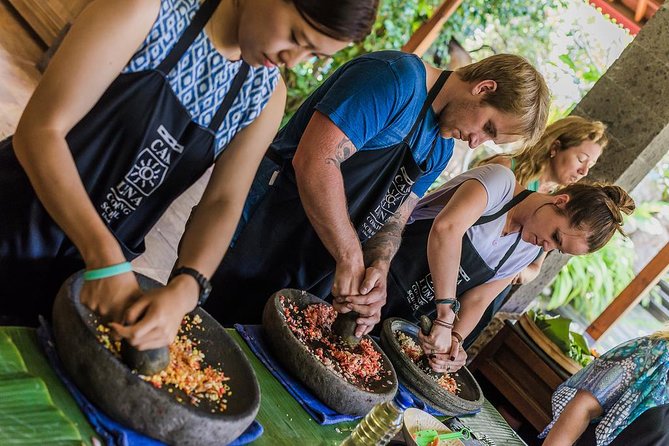
- You do the cooking: The format is hands-on, with starters, main dishes, and dessert prepared with guidance from the chef.
- Pickup is included: Air-conditioned transport runs from your hotel to the market and cooking venue.
- The setting is rural Ubud: The class takes place in the traditional village of Laplapan, surrounded by jungle scenery.
- Small groups keep it personal: The stated maximum is eight people, though one family account described a group of nine.
Why this Ubud cooking class feels different
Many cooking classes begin in a kitchen with ingredients already laid out. This one starts earlier, at a fresh food market. That small change matters. You first see the raw materials in their normal setting, then learn how they are used at the cooking station.
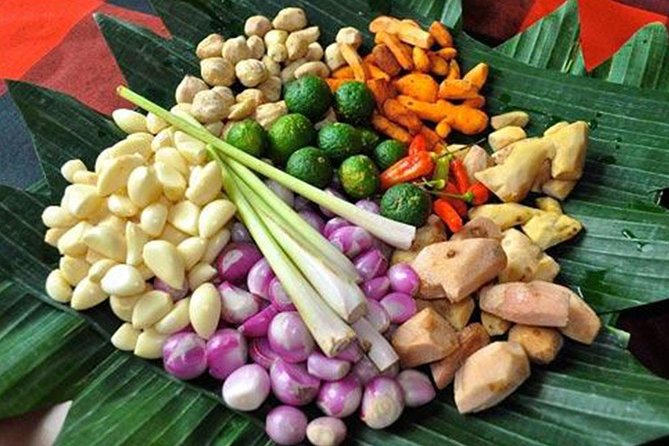
I like this order because it gives the food a local setting. You are not simply chopping vegetables from a supermarket. You are looking at produce, herbs, spices, and other ingredients that form part of daily Balinese cooking. The guide explains what you are seeing, and some participants have been offered small tastes of unfamiliar fruit or local sweets.
The market stop is not meant to be a major sightseeing tour. It is described as a short visit, so you should expect an introduction rather than a long shopping expedition. Still, it gives you useful background before the class begins and helps you understand why Balinese dishes use such a broad mix of fresh ingredients.
The experience is hosted by Bali Ubud Tour, with local instructors including Wayan, Dewa, and Putu named in the feedback. Their teaching style receives especially strong praise. Wayan is described as warm, funny, patient, and clear, while Putu is praised for her friendly manner and ability to work well with children.
More Cooking Classes in Ubud
- Ubud Cooking Class Bali with Balinese Chef
★ 5.0 · 1,609 reviews - PRIVATE Authentic Balinese Cooking Class in Ubud at Putu’s Home
★ 5.0 · 644 reviews - Balinese Ubud cooking school (9 Dish Cooking and Market Tour)
★ 5.0 · 540 reviews
The morning market: a practical introduction to Balinese ingredients
Hotel pickup starts the day, followed by air-conditioned transport to a local fresh food market. The included vehicle is a useful touch if you are staying outside central Ubud. One account specifically praised the ride from a hotel in Sanur, including the driver’s helpful explanations of places along the way.
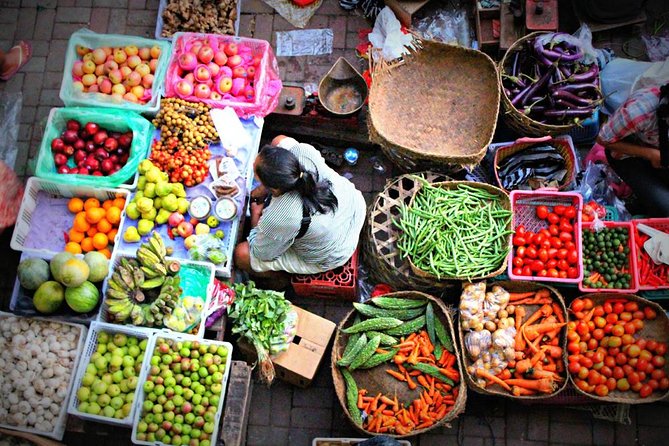
At the market, you can expect to see the ingredients that will support the day’s cooking. The selection includes vegetables, herbs, meat, spices, fruits, and other local foods. The guide helps explain what is available and may let you smell or taste items you do not recognize.
This is the part of the morning where you should ask questions. If you have ever looked at a bundle of leaves or a pile of roots in Bali and had no idea how to use them, this stop gives you a chance to ask before the food reaches the kitchen.
The market also gives you a glimpse of ordinary local life. It is not polished for sightseeing, and that is part of its value. At the same time, you should keep your expectations sensible. The market visit is brief, and the main activity is still the cooking class.
A morning start also means the market is likely to be at its most active and well supplied. Bring curiosity, and be ready for new smells and ingredients. The tour information does not specify exact market hours or a fixed pickup time, so check the confirmed details after booking.
Arriving in Laplapan and learning to make a canang
After the market, the group continues to Laplapan, a traditional village near Ubud. The cooking workshop is set in attractive jungle surroundings, giving the experience a calmer feel after the market visit and drive.
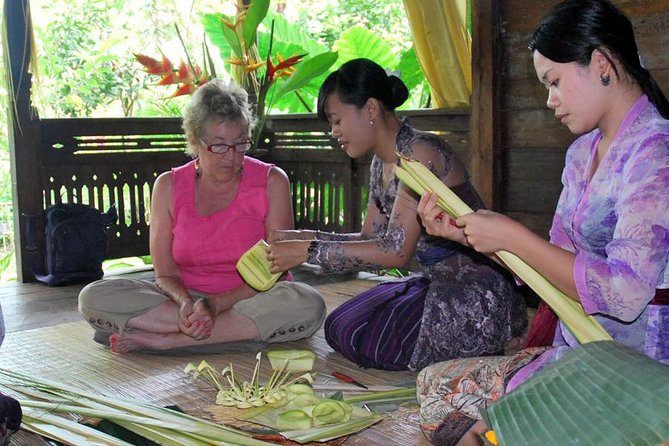
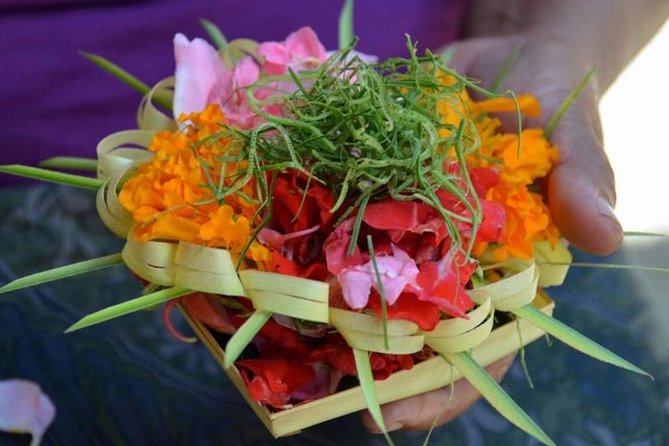
Before cooking, the class includes a lesson on Balinese offerings. You learn how to make a canang and other related equipment. A canang is a small woven offering basket, usually arranged with flowers and other symbolic materials. It is a simple craft, but it opens a door into Balinese religious life.
This cultural portion is one of the best reasons to choose this class instead of a standard recipe lesson. You learn not only what people eat, but also something about the daily practices that shape village life. Several accounts describe this as enlightening and memorable, particularly for first-time visitors to Bali.
The offering activity also gives the morning a gentle start. You are not rushed straight into chopping and frying. Instead, you first learn about a local tradition and make something with your own hands.
Families can find this section appealing too. The class has been described as suitable for children as young as six, eight, and nine in one family booking. The instructor Putu received special praise for keeping children involved and entertained.
The cooking lesson: plenty of hands-on work
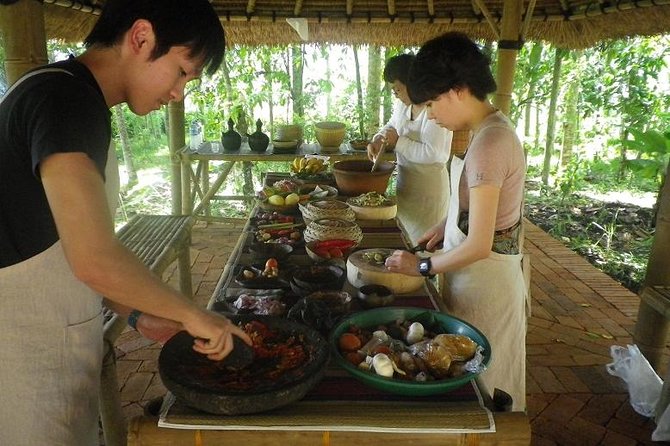
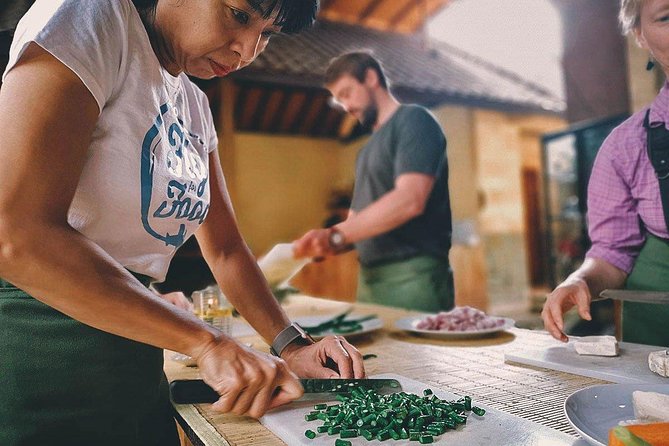
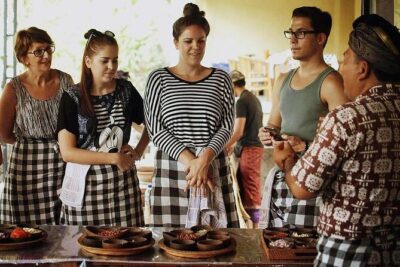
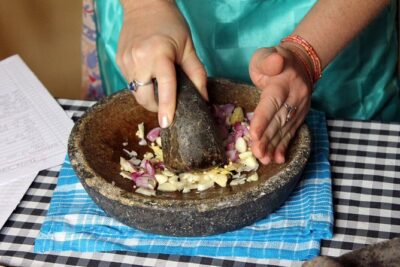
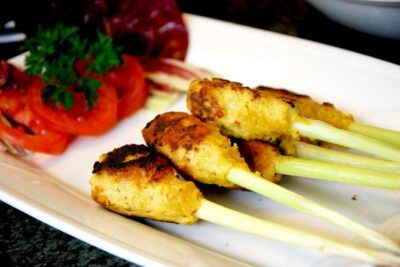
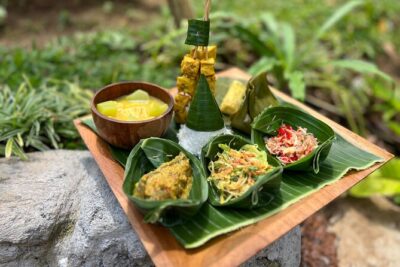
The kitchen portion is the main event. Local chefs guide you through the preparation of Balinese food, with participants working on starters, main courses, and an authentic dessert.
The exact menu can vary, so you should not book this expecting one fixed list of dishes. The available descriptions refer to several dishes, and one account says the group prepared nine tasty dishes. Another describes a five-course set. That suggests the menu may depend on the group, the day, or the class format.
The useful point is that you prepare more than one recipe. This is not a short demonstration followed by lunch. You work through several stages and learn practical methods that you can try at home.
The class appears to balance preparation between the staff and participants. Some ingredients are prepared in advance so the cooking can move along within the half-day schedule. That is sensible. Without some advance preparation, a menu of several dishes could turn into a very long kitchen session.
You should still get plenty of hands-on work. One solo participant said a private lesson allowed them to prepare and cook every dish, while another account described the whole group being encouraged to do their share. In a standard small group, you may not personally handle every single task, but the format is interactive rather than passive.
The instructors are also praised for adapting their teaching to the group. Wayan is described as patient and willing to answer questions, and the class has accommodated dietary requirements, including vegetarian options, according to one detailed account. If your diet is important, tell the operator when booking rather than waiting until the morning.
A few more Ubud trips worth weighing up
- PRIVATE Ubud Market Tour & Balinese Cooking Class with Putu
★ 5.0 · 125 reviews - Ubud Cooking Class with Optional Market Visit Pickup Included
★ 5.0 · 70 reviews - Balinese Cooking Class with Traditional Market Tour
★ 5.0 · 66 reviews - Bali Food Tour: Savor Street Food and Night Market Adventures
★ 5.0 · 46 reviews
Eating what you make
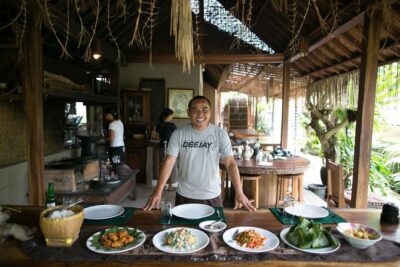
The reward comes at the end, when you sit down to eat the food prepared during the lesson. This is more satisfying than receiving a small sample after a demonstration. You get a proper shared meal and can see how the separate ingredients and techniques come together.
The portions appear generous. One account specifically described amazing dishes and lots of food, while another praised the meal as both delicious and beautifully presented. Since the menu changes, I would not promise a particular number of courses, but you should expect a substantial meal built from the class recipes.
The sit-down meal also gives you time to talk with the chef and other participants. Solo visitors can meet people from other places, while couples and families can enjoy the meal together after working side by side.
You may also receive recipes to take home. One participant was given a recipe book, and another said the group left with recipes for recreating the food later. The tour details do not formally guarantee a recipe book for every booking, so treat this as a likely benefit rather than a promised inclusion.
The guides and teaching style
The strongest part of the experience is the human side. Wayan, Dewa, and Putu are repeatedly praised for being friendly, humorous, patient, and generous with their time. That matters in a cooking class because clear instruction can make the difference between feeling involved and simply trying to keep up.
Wayan receives especially warm praise as both teacher and host. She is described as funny, patient, and able to explain techniques clearly. Dewa and Wayan are also credited with making people feel welcome, almost like visiting family.
The driver can add to the day as well. Awan is named in one account and praised for starting the experience with useful comments about sights along the route. Pickup is not just a practical transfer if the driver is willing to explain what you pass.
Of course, teaching quality can vary from one date to another, and the named instructors may not lead every session. Still, the repeated praise for the local staff is a strong sign that the class depends on personal instruction rather than a scripted presentation.
Group size, pace, and comfort
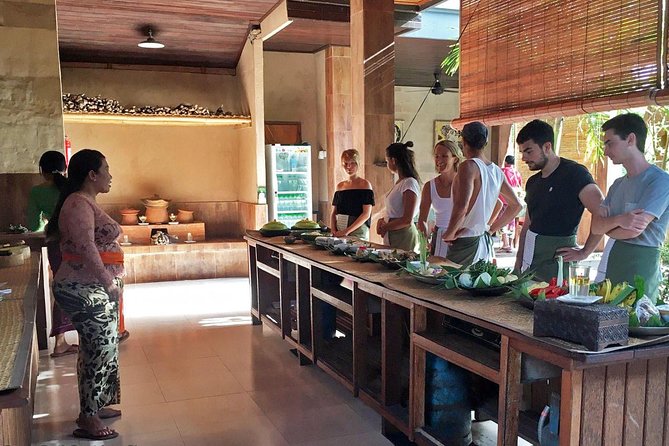
The stated maximum is eight people. That is a good size for a cooking lesson because you should have a reasonable chance to ask questions and take part. A tiny group can feel almost private, while a larger class may leave you waiting for a turn at the work surface.
One person ended up with a private lesson and found the pace comfortable, with time to cook each dish. That is not something you should expect, but it shows how the class can work particularly well when numbers are low.
The experience lasts about six hours, including pickup, the market visit, the drive to Laplapan, the offering lesson, cooking, and the meal. It is best treated as a half-day activity rather than a quick morning add-on.
Air-conditioned transport is included, which makes the transfers easier in Bali’s heat. Cooking equipment, class fees, and taxes are also included. Personal expenses are not, so bring money only if you want to buy something separately at the market or during the day.
The tour has a 99 percent recommendation rate and a five-star rating based on 161 reviews. That is unusually consistent praise, particularly for an activity that combines transport, a market stop, cultural instruction, and food preparation.
Is $35 good value?
At $35 per person, this is one of the better-value ways to spend half a day in Ubud. You are paying for transport, a guided market visit, cooking equipment, instruction, the ingredients used in class, and the final meal. Taxes are included too.
The value improves if you are staying outside Ubud and would otherwise need to arrange a taxi to the market and workshop. Air-conditioned pickup removes one practical chore and makes the class easier to fit into a Bali itinerary.
You also get more than food. The canang lesson and market tour add cultural context that a simple kitchen session would not provide. If you only measure value by the number of recipes, you miss part of what makes this experience worthwhile.
The one limitation is that the menu is not clearly fixed in the available details. If you have your heart set on a specific Balinese dish, ask about the menu before paying. The class appears to focus on variety and local methods rather than promising one exact recipe list.
Who should book this experience?
I would recommend it most strongly to people who enjoy food, local customs, and active sightseeing. You do not need to be an experienced cook. The instruction is designed for beginners, and the teachers help with preparation and technique.
It also suits solo visitors. The small group creates an easy setting for meeting other people, and the shared meal gives the day a natural social finish.
Families can consider it as well. The class has worked successfully with children, and the offering activity gives younger participants something creative to do before the cooking begins. Parents should remember that it is a six-hour outing, so children need to be comfortable with a fairly full morning.
This may not be the right pick if you dislike markets, want a luxurious private culinary lesson, or prefer a short demonstration with no active work. It is also not ideal for anyone who needs a firmly fixed menu unless the operator confirms the dishes in advance.
You can cancel for a full refund if you do so at least 24 hours before the start time. Changes or cancellations inside that window are not accepted, and the cutoff follows local time.
Should you book the Balinese cooking class?
Yes, if you want an active Ubud experience that combines food with everyday culture. The market visit helps you understand the ingredients, the canang lesson adds meaning beyond the kitchen, and the cooking itself gives you useful skills to take home.
The price is fair, the transport is included, and the small group should give you personal attention. I would book this for a first visit to Bali, especially if you want more than temples and scenery.
Check the menu and mention dietary needs before booking. If you prefer a relaxed, social morning with generous food and friendly local instruction, this class is an easy choice. If you only want to watch a chef cook, choose something shorter and less hands-on.
FAQ
How long does the Balinese cooking class last?
The experience lasts approximately six hours, including hotel pickup, the market visit, transport to Laplapan, the offering lesson, cooking, and the final meal.
Does the tour include hotel pickup?
Yes. Pickup is offered, and air-conditioned transport to the market and cooking workshop is included.
How much does the experience cost?
The listed price is $35 per person.
How many people can join the class?
The stated maximum is eight participants.
What is included in the price?
The price includes cooking equipment, the cooking class fee, an air-conditioned vehicle, and taxes. Personal expenses are not included.
Will I visit a local market?
Yes. The experience begins with a visit to a fresh food market, where you learn about and help select ingredients such as vegetables, herbs, meat, spices, and fruit.
Can I cancel for a refund?
Yes. You can receive a full refund if you cancel at least 24 hours before the experience starts. Cancellations or changes made less than 24 hours before the start time are not accepted.
More Shopping Tours
- Ubud City Tour I: Monkey Forest, Ubud Palace, Art Market, and Waterfall
★ 5.0 · 31 reviews - Ubud City Tour II: Monkey Forest, Palace, Art Market, and Rice Terrace
★ 4.5 · 17 reviews - Ubud Day Tour : Waterfall, Temple and Local Night Market Tour
★ 5.0 · 17 reviews - Bali Night Market Experience and Ubud Highlights tour
★ 5.0 · 16 reviews
Just added around Ubud
- Kintamani Batur Jeep Sunrise Tour★ 5.0 · 3 reviews
- Bali Downhill Cycling and White Water Rafting★ 5.0 · 3 reviews
- Ubud Highlights Rice Terraces, Temple, Waterfall & Monkeys forest★ 5.0 · 3 reviews
- Bali ATV Quad Bike & Ayung River Rafting Combo with Lunch★ 5.0 · 3 reviews
- Half Day Uluwatu Temple Sunset, Kecak Dance and Seafood Dinner★ 3.5 · 3 reviews
- Blue Lagoon Snorkeling and Lunch with Tukad Cepung Waterfall★ 5.0 · 3 reviews
- Ancien Wisdom and Culture tour★ 5.0 · 3 reviews
- Full-Day Tour in Nusa Penida Island + Snorkeling Experience★ 5.0 · 3 reviews
Cooking Classes, compared.
PRIVATE Authentic Balinese Cooking Class in Ubud at Putu’s Home
Read our review →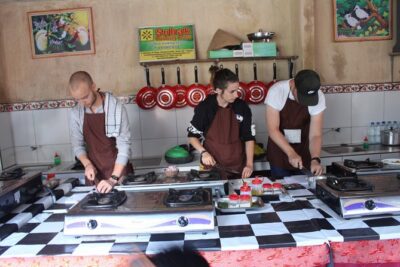
Balinese Ubud cooking school (9 Dish Cooking and Market Tour)
Read our review →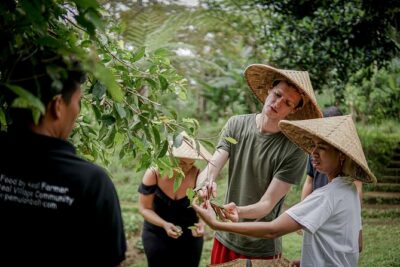
PRIVATE Balinese Cooking Class in Ubud with Dewa with Transfers
Read our review →Browse the lists this tour appears in