
Reviewed · COOKING CLASSES
Balinese Cooking Class with Traditional Market Tour
Start with the market, then eat your homework. This Ubud cooking class pairs a morning visit to a traditional Balinese market with hands-on cooking in a local compound home. I like the market visit because it gives you a look at everyday food shopping, not just a staged kitchen lesson. I also like the old-school use of a stone mortar, which shows how Balinese spice pastes are really made.
The five-course lunch is another strong point, since you prepare and eat the food yourself. The main consideration is timing: the class is listed at about 2 hours 30 minutes, but pickup, the market, and return transport can make the full outing about six hours. Come hungry, and allow most of your morning and early afternoon.
In This Review
- Key points to know before booking
- Why this Ubud cooking class feels different
- 7:30 am at the traditional market
- Herbs and spices in the organic garden
- Cooking in a traditional open kitchen
- The five-course lunch you prepare yourself
- Transport, timing, and the real length of the outing
- Group size and the feel of the lesson
- What the strongest feedback tells you
- Price, inclusions, and what you are really paying for
- Who should book this experience
- Booking and cancellation tips
- Should you book the Balinese cooking class?
- FAQ
- Where does the cooking class take place?
- What time does the experience start?
- How long does the full experience last?
- Is hotel pickup included?
- What happens at the traditional market?
- Is the cooking hands-on?
- How many dishes are included?
- Is food included in the price?
- How many people can join the class?
- Can I cancel for a full refund?
Key points to know before booking
- The market comes first: You visit a traditional market around 7:30 to 8:00 am, when the outdoor heat is easier to handle.
- You do the actual cooking: Chopping, grinding, mixing, and cooking are hands-on, including work with a stone mortar.
- Lunch includes five dishes and one dessert: Everything is made during the class, then served as your meal.
- The setting is a compound home: The lesson takes place in a traditional Balinese open kitchen rather than a modern cooking studio.
- Small groups keep the lesson personal: Bookings allow up to six people, while the class can take up to 12 participants.
- Transfers simplify the morning: Hotel pickup and drop-off are included, along with a welcome drink, snack, bottled water, and a class certificate.
Why this Ubud cooking class feels different
Cooking classes can be a pleasant way to spend a few hours, but the best ones explain how food fits into daily life. This experience begins before the chopping board appears. You start with a visit to a traditional market, then move to an organic garden and finally cook in a Balinese family compound.
That order matters. You first see the raw ingredients, then learn about herbs and spices, and only after that turn them into lunch. I prefer this approach to a lesson that simply hands you a prepared basket of food.
The class is run by Bali SUN Tours, with a cooking instructor and local guides involved at different stages. One guide named Nyoman is specifically associated with the market visit, and Yoga has handled hotel pickup for some participants. The transport side has received praise for punctual pickup and clear English.
The price is $58.16 per person. That is not the cheapest meal you will find in Ubud, but it covers transport, market access, instruction, ingredients, drinks, snacks, lunch, and a certificate. For you, the value depends on how much you want a cultural activity rather than just a restaurant meal. If you enjoy cooking, the price is reasonable because it combines several separate experiences into one morning.
More Cooking Classes in Ubud
- Ubud Cooking Class Bali with Balinese Chef
★ 5.0 · 1,609 reviews - PRIVATE Authentic Balinese Cooking Class in Ubud at Putu’s Home
★ 5.0 · 644 reviews - Balinese Ubud cooking school (9 Dish Cooking and Market Tour)
★ 5.0 · 540 reviews
7:30 am at the traditional market
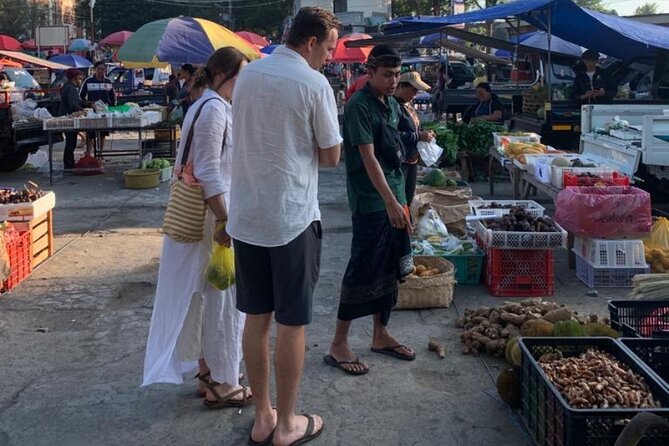
The day begins with pickup from your accommodation, followed by a direct visit to a traditional market. The stated start time is 7:30 am, with the market portion running around 7:30 to 8:00 am.
An early start is practical in Bali. Markets are outdoor places, and cooler morning air makes walking and looking at produce more comfortable. It also gives you a chance to see local shopping as part of the day, rather than arriving later when the heat is stronger.
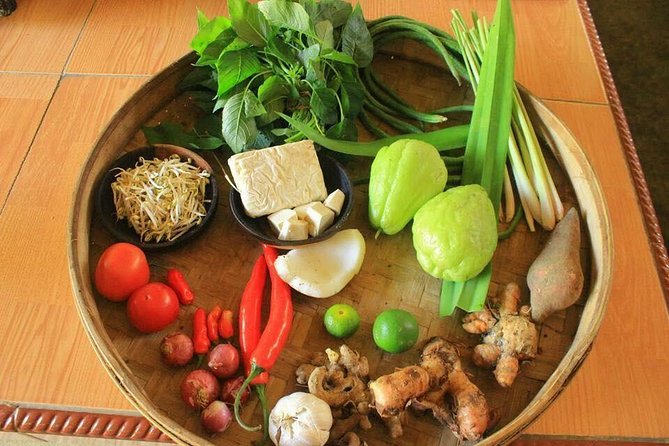
At the market, your guide explains the vegetables, fruit, herbs, and other ingredients needed for the meal. Nyoman has been praised for showing visitors around and explaining Balinese customs and daily routines. This is where the experience gains its strongest cultural value.
You are not only learning which ingredients go into a recipe. You are seeing how Balinese people buy food before cooking. That small detail helps put the class into context. The food on your plate begins with a market visit, not with a printed recipe.
I would keep your expectations realistic. The market stop is described as a visit and shopping trip, not as a long food tour with tastings at every stall. Its purpose is to introduce you to local produce and cooking needs. If you want a detailed market history lesson, this may feel brief. If you want a useful first look at everyday Balinese shopping, it fits well.
Wear comfortable shoes and bring only what you need. The tour includes bottled water, but you should still dress for a warm morning and an active cooking session.
Herbs and spices in the organic garden
After the market, your guide introduces herbs and spices in an organic garden. This is a short but useful bridge between shopping and cooking.
Balinese food depends heavily on fresh aromatics and spice mixtures. Seeing the plants before they are chopped or ground can make the recipes easier to understand. You get a clearer sense of the difference between an ingredient as a plant and that same ingredient as part of a paste or sauce.
The garden also slows the pace. The market is about people, produce, and daily activity. The garden is about identification and preparation. Together, the two stops give you a stronger base for the kitchen lesson.
Coffee and cake are included before the cooking begins. That is a welcome touch, especially with an early pickup. It also means you do not need to arrive after breakfast, though I would not treat the snack as a substitute for a full meal. The lunch comes later, and the class is active.
Cooking in a traditional open kitchen
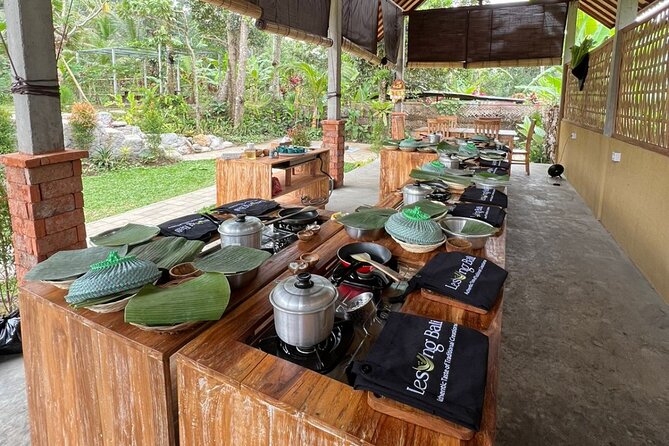
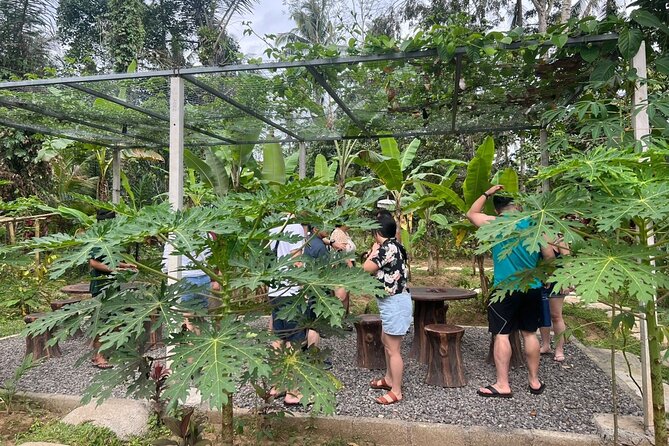
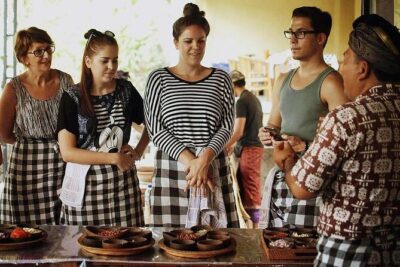
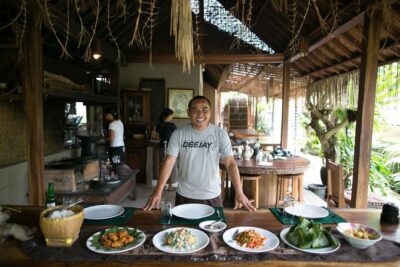
The main lesson takes place in a typical compound home with a traditional open kitchen. This setting gives the class a more local feel than a polished demonstration kitchen.
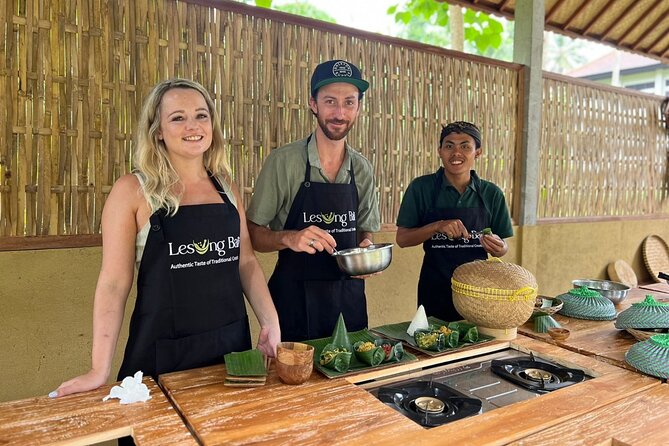
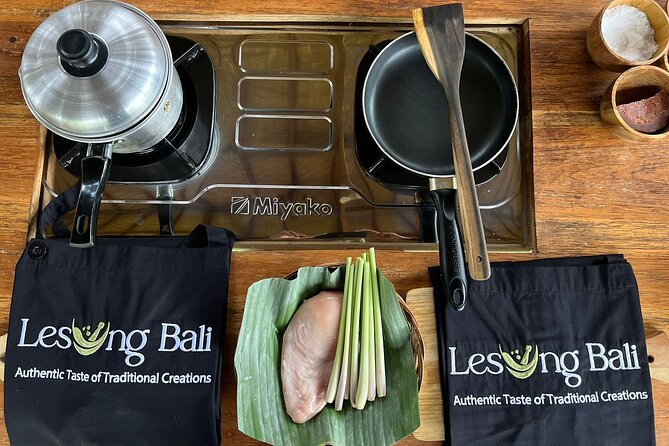
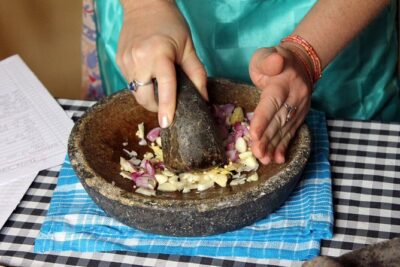
You prepare the food yourself. The work includes chopping on a wooden block, grinding ingredients in a stone mortar, making spice pastes, preparing sauces, and cooking the dishes in different ways. The mortar is a key part of the lesson because spice pastes are central to many Balinese dishes.
This kind of preparation takes effort. A blender may be faster, but the stone mortar shows how texture is created and why the paste matters. You get a physical sense of the work behind the food, rather than watching someone else finish the difficult steps.
The instruction appears suited to people who want to participate fully. The class is not described as a demonstration where you sit back and take notes. All preparation and cooking are hands-on. That makes the experience more rewarding for confident cooks, but it may feel busy if you prefer a relaxed demonstration.
The class can accommodate up to 12 people, while each booking can include a maximum of six. A group of four to 12 is small enough for personal attention, though your experience may vary depending on the final group size. A four-person session will naturally feel more intimate than a full group of 12.
The cooking itself has been described as full-on, so plan for a working lunch rather than a passive tasting. You will chop, grind, cook, and keep track of several dishes. The payoff comes at the table.
A few more Ubud trips worth weighing up
- Balinese Cooking class with traditional morning market visit
★ 5.0 · 161 reviews - PRIVATE Ubud Market Tour & Balinese Cooking Class with Putu
★ 5.0 · 125 reviews - Ubud Cooking Class with Optional Market Visit Pickup Included
★ 5.0 · 70 reviews - Bali Food Tour: Savor Street Food and Night Market Adventures
★ 5.0 · 46 reviews
The five-course lunch you prepare yourself
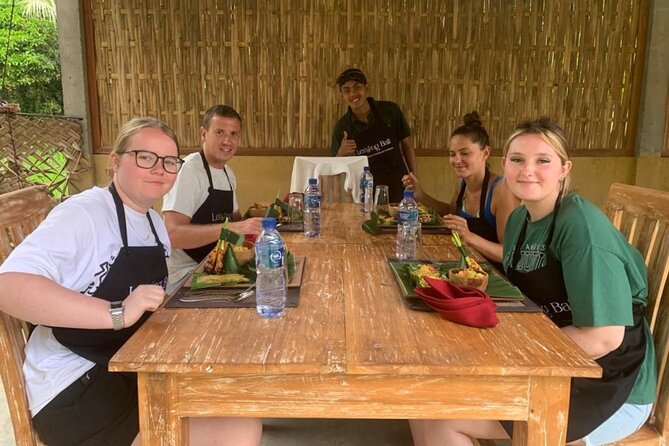
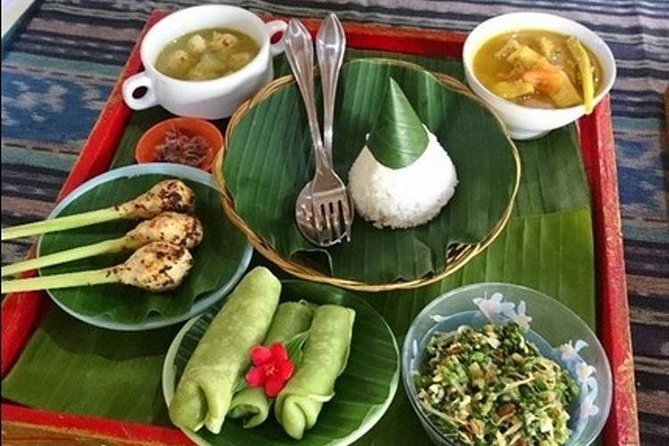
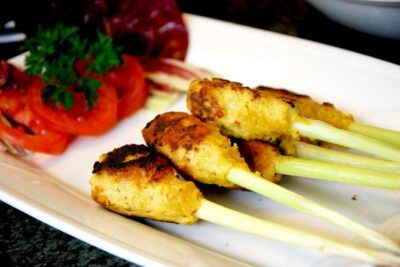
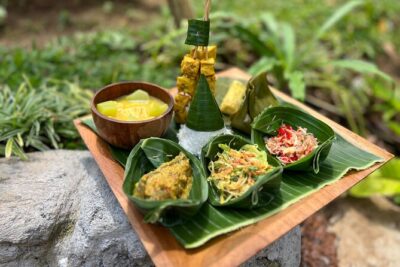
After the cooking, you sit down to eat the dishes you made. The package includes five dishes and one dessert, described as a five-course lunch.
This is the best part for anyone who likes to see a clear result from a class. You are not eating a meal prepared entirely by an instructor. You can connect the taste to the work you just did, including the spice paste, chopping, and cooking methods.
Bring a serious appetite. One couple found the meal so generous that they could not finish everything. That is useful advice because the lunch is not a small sample plate. The cooking begins in the morning, and the food is the main reward at the end.
The lunch also gives you a chance to compare your own results with the instructor’s guidance. If a sauce is too strong or a texture is different from what you expected, you have learned something useful. Cooking classes are often most valuable when they give you methods you can remember, not just a pleasant meal.
A certificate is included at the end. It is a small extra, but it can be a nice souvenir, especially if you enjoy collecting certificates from food classes or want something tangible from the experience.
Transport, timing, and the real length of the outing
The experience includes door-to-door hotel pickup and drop-off. For you, this is one of the more practical parts of the package. Ubud transport can add time and expense when you arrange it yourself, and an early start is easier when the driver comes to your accommodation.
The advertised cooking experience lasts about 2 hours 30 minutes. The additional information gives a more useful figure for planning: around six hours from pickup to drop-off. Treat six hours as the time to reserve in your schedule.
That longer estimate includes transport, the market, the garden, the lesson, lunch, and the return journey. Do not book a tight afternoon appointment unless you have plenty of room between activities.
Pickup performance has been praised, with Yoga singled out for arriving on time and speaking good English. Transport quality can shape an early-morning tour, so punctual pickup is more than a minor detail.
The start time is fixed around 7:30 am. That schedule is well chosen for the market and the heat, but it will not suit everyone. If you prefer late mornings, this is not the right fit. If you want to see a market before the day warms up, the early departure works in your favor.
Group size and the feel of the lesson
The class is designed for four to 12 people. Each booking can contain up to six people, while the total class limit is 12.
That is a useful middle ground. You get more interaction than in a large food workshop, but the activity may still have a social feel if the class fills. The experience is suitable for couples, families, and small groups who want to cook together.
If personal instruction is important to you, ask about the expected group size when booking. The stated group range suggests attention should be available, but a full class will feel different from a small booking.
The hands-on format also makes this a good choice for people with different cooking abilities. Someone who cooks often can focus on technique, while a beginner can learn the basic sequence of chopping, grinding, and combining flavors. Still, you should be ready to take part. This is not a sit-and-watch activity.
What the strongest feedback tells you
The most consistent praise focuses on three things: the market, the food, and the people leading the experience.
The market visit works because the guide explains both ingredients and Balinese customs. One account describes Ron explaining vegetables, fruit, and local traditions before the group moved to a compound home. That sort of commentary gives the first hour more meaning than a quick shopping stop.
The cooking instructor is also praised for being helpful, kind, and well informed about the food. Good instruction matters here because traditional tools can take more effort than modern kitchen equipment.
The food receives strong approval as well. The meal is generous, varied, and made by your own hands. That combination explains why this class has a 5 out of 5 rating from 66 reviews, with 100 percent recommending it. Those numbers suggest a very dependable experience, though they do not remove the need to consider the early start and long total duration.
Price, inclusions, and what you are really paying for
At $58.16 per person, the cost covers much more than the cooking lesson itself.
You receive:
- Hotel pickup and drop-off
- Traditional market visit
- Welcome drink and snack
- Cooking instructor
- Organic garden introduction
- Five dishes and one dessert
- Lunch made during the class
- Bottled water
- Cooking class certificate
The value is strongest if you would otherwise pay separately for transport, a market visit, and a Balinese meal. You also receive instruction in traditional preparation methods, especially spice paste work with a stone mortar.
The price is less compelling if you only want a quick cooking lesson or a simple lunch. You are paying for a half-day cultural outing, not just food. I would compare it with the cost of arranging transport and dining independently, then ask how much you value learning the techniques.
Group discounts are available, which may improve the price for families or small parties. Optional expenses are not included, so keep extra spending separate from the advertised cost.
Who should book this experience
I would recommend this class to you if you enjoy food, local markets, and practical cultural activities. It suits people who want to do the work themselves and eat a substantial meal afterward.
It is particularly good for:
- Couples who want a shared activity
- Small groups who enjoy cooking together
- Visitors interested in Balinese herbs and spices
- First-time visitors who want a guided market introduction
- People who prefer cultural experiences with a meal included
- Home cooks who want to learn traditional tools and techniques
Families may also enjoy it, but the data does not specify age limits or child arrangements. You should confirm those details before booking if you are traveling with children.
I would hesitate to recommend it if you dislike early starts, active preparation, or long morning outings. The class also may not suit anyone looking only for a short, polished demonstration.
Booking and cancellation tips
Confirmation is provided when you book. Free cancellation is available if you cancel at least 24 hours before the local start time.
Cancellations made less than 24 hours before the start are not refunded, and changes inside that window are not accepted. Since pickup, market timing, and group planning are involved, check your schedule before committing.
Should you book the Balinese cooking class?
Book it if you want to understand Balinese food by doing the work. The market visit, organic garden, stone mortar, open kitchen, and generous lunch form a clear progression from ingredient to finished dish.
The strongest reasons to go are the local setting, the practical instruction, and the included transport. The main tradeoffs are the 7:30 am start, the roughly six-hour total outing, and the active pace of the kitchen.
For $58.16, I see solid value if you would enjoy a full cultural morning rather than a quick class. Come hungry, leave room in your schedule, and expect to chop, grind, cook, and eat a lot.
FAQ
Where does the cooking class take place?
The class takes place in Ubud, at a traditional Balinese compound home with an open kitchen.
What time does the experience start?
Pickup and the traditional market visit begin around 7:30 am. The market portion is listed as taking place around 7:30 to 8:00 am.
How long does the full experience last?
The cooking activity is approximately 2 hours 30 minutes, but the full outing from pickup to drop-off takes about six hours.
Is hotel pickup included?
Yes. Hotel pickup and drop-off at the original pickup point are included.
What happens at the traditional market?
You visit a typical Balinese market to see local culture and daily shopping, while your guide explains the vegetables, fruit, and ingredients needed for cooking.
Is the cooking hands-on?
Yes. You prepare the food yourself using traditional tools and techniques, including chopping on a wooden block and grinding ingredients in a stone mortar.
How many dishes are included?
The experience includes five dishes and one dessert. You eat the food you prepare as lunch.
Is food included in the price?
Yes. The package includes lunch made during the class, as well as a welcome drink, snack, and bottled water.
How many people can join the class?
The class can accommodate a maximum of 12 participants. Each booking can include up to six people.
Can I cancel for a full refund?
Yes, if you cancel at least 24 hours before the experience start time. Cancellations or changes made less than 24 hours before the start are not refunded or accepted.
More Shopping Tours
- Ubud City Tour I: Monkey Forest, Ubud Palace, Art Market, and Waterfall
★ 5.0 · 31 reviews - Ubud City Tour II: Monkey Forest, Palace, Art Market, and Rice Terrace
★ 4.5 · 17 reviews - Ubud Day Tour : Waterfall, Temple and Local Night Market Tour
★ 5.0 · 17 reviews - Bali Night Market Experience and Ubud Highlights tour
★ 5.0 · 16 reviews
Just added around Ubud
- Kintamani Batur Jeep Sunrise Tour★ 5.0 · 3 reviews
- Bali Downhill Cycling and White Water Rafting★ 5.0 · 3 reviews
- Ubud Highlights Rice Terraces, Temple, Waterfall & Monkeys forest★ 5.0 · 3 reviews
- Bali ATV Quad Bike & Ayung River Rafting Combo with Lunch★ 5.0 · 3 reviews
- Half Day Uluwatu Temple Sunset, Kecak Dance and Seafood Dinner★ 3.5 · 3 reviews
- Blue Lagoon Snorkeling and Lunch with Tukad Cepung Waterfall★ 5.0 · 3 reviews
- Ancien Wisdom and Culture tour★ 5.0 · 3 reviews
- Full-Day Tour in Nusa Penida Island + Snorkeling Experience★ 5.0 · 3 reviews
Cooking Classes, compared.
PRIVATE Authentic Balinese Cooking Class in Ubud at Putu’s Home
Read our review →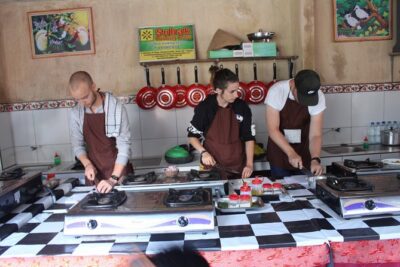
Balinese Ubud cooking school (9 Dish Cooking and Market Tour)
Read our review →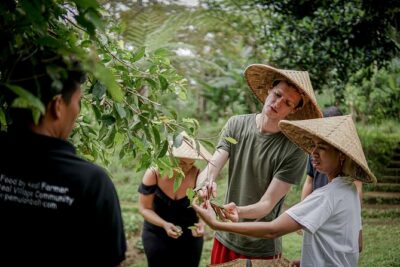
PRIVATE Balinese Cooking Class in Ubud with Dewa with Transfers
Read our review →Browse the lists this tour appears in