
Reviewed · COOKING CLASSES
Traditional Tempeh Making & Cooking Balinese Cuisine
Tempeh turns a cooking class into a food lesson. In this three-hour experience, you learn how this Indonesian staple is made from scratch, cook plant-based Balinese dishes with Ayu and Ngurah, and eat your work in the garden of a local home. I like the small group of up to 10 people, which should give you time to ask questions, and I like the clear focus on tempeh rather than treating it as just another ingredient. The main catch is location: although the experience is marketed around Seminyak, it starts at Canang Sari Homestay in northern Denpasar, so you need to plan your journey carefully.
I also like that the class works for vegans but does not force every participant into a single menu. You can cook chicken and tuna dishes, or skip them and keep the meal vegan. The possible drawback is that the three-hour schedule includes tempeh instruction, several dishes, and lunch, so the pace may feel full rather than leisurely.
In This Review
- Key points before you book
- Why tempeh makes this class different
- Meeting Ayu and Ngurah in Denpasar
- The 9:30 a.m. tempeh lesson
- Indonesian spices and the open-air kitchen
- Seven dishes and a Balinese lunch
- The garden meal and local setting
- What the $39 price gets you
- Who should choose this cooking class?
- Timing, cancellation, and planning tips
- Should you book the tempeh cooking class?
- FAQ
- Where does the cooking class start?
- What time does the class begin and end?
- Is the class suitable for vegans?
- How many people can join the class?
- What food will be prepared?
- Can I cancel the booking for a full refund?
Key points before you book
- Tempeh is the main lesson: You learn about its Indonesian origins and follow the basic process from the beginning.
- Seven dishes make up lunch: The meal includes tempeh preparations, sayur urab, and other Balinese recipes.
- Vegan diners have a clear option: Chicken and tuna can be left out without making the class unsuitable for plant-based eaters.
- Lunch takes place at home: You eat in the garden of a cozy local house, with tea, coffee, water, and a light snack provided.
- Ayu and Ngurah lead the class: Their friendly, hands-on approach is a major part of the experience.
- The class is close to three hours: It runs from 9:30 a.m. to 12:30 p.m. and returns to the starting point.
Why tempeh makes this class different
Many Balinese cooking classes focus on spice pastes, rice, and familiar dishes. This one adds a practical food lesson by showing you how tempeh is produced. Tempeh is an Indonesian food originally associated with Java, and the class explains its long place in Indonesian cooking, with roots reaching back to the 1600s.
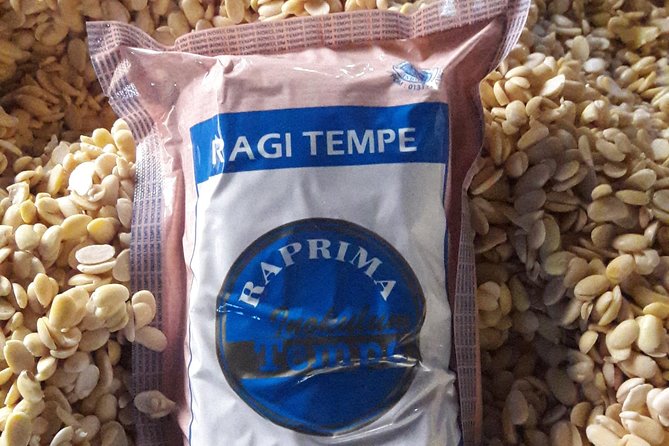
You are not simply handed a block of tempeh and asked to fry it. The class highlights the making process, giving you a better sense of how soybeans become the firm, sliceable food used in local cooking. That makes the experience useful beyond Bali. You can take the method home and try it yourself, and a written guide is provided to help with that.
Tempeh is also a smart ingredient for a cooking lesson. It is high in protein and can be fried, mixed into other dishes, or used as the main element of a meal. You get to see its flexibility instead of meeting it in just one recipe.
This focus suits anyone who already enjoys plant-based food, but you do not need to be vegan. The menu can include chicken and tuna, while those ingredients can be skipped for a fully vegan meal.
More Cooking Classes in Seminyak
- Balinese Cooking Class in Seminyak
★ 5.0 · 281 reviews - Nia Balinese Cooking Class
★ 5.0 · 202 reviews - Nia Bali Seminyak Cooking Class
★ 5.0 · 127 reviews
Meeting Ayu and Ngurah in Denpasar
The class begins at 9:30 a.m. at Canang Sari Homestay, Gg. Kaswari No. 6, Dangin Puri Kaja, in northern Denpasar. The experience ends at the same meeting point, which keeps the morning simple once you arrive.
Pay attention to the address. The activity is associated with Seminyak, but the listed starting point is in Denpasar, not central Seminyak. That difference matters in Bali, where traffic can make a short distance take much longer than expected. I would allow extra time to reach the homestay and confirm your transport plan before the morning of the class.
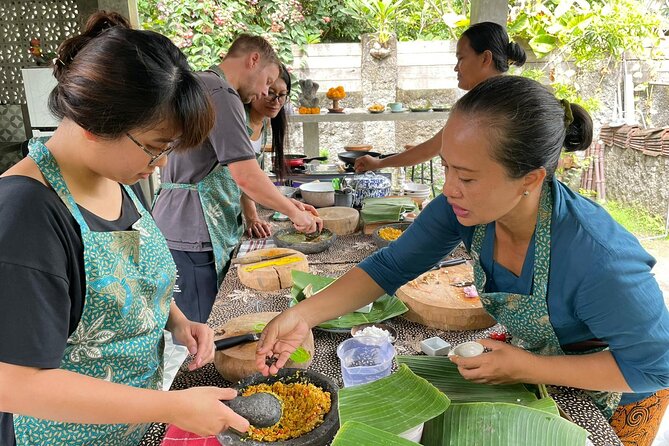
Ayu and Ngurah are central to the experience. Ayu is described as especially warm and passionate about cooking, while both hosts are praised for explaining each stage carefully. That personal teaching style is important here because tempeh making is less familiar to many visitors than preparing a standard Indonesian spice paste.
The group size is capped at 10 people. That is small enough to make questions practical, though it is not a private lesson. If you want more direct attention or prefer setting the pace yourself, a private option is available on request.
The 9:30 a.m. tempeh lesson
The first major part of the morning introduces tempeh and its place in Indonesian food. Your host explains where it comes from, why it matters, and how it became a widely used source of protein.
You then work through the main steps of making it. The details supplied for the class do not give a full technical recipe or list every piece of equipment, so you should not expect a laboratory-style fermentation workshop. The value is in seeing the process as part of a broader cooking tradition and learning enough to recreate it at home with the provided guide.
This is a good point to ask questions. The class has a clear educational purpose, not just a demonstration followed by lunch. You can learn how the ingredient behaves in cooking and why it works in several different preparations.
The class is also a useful choice for people who want food context without spending an entire day at a cooking school. At about three hours, it gives you a focused morning activity and leaves the rest of the day open.
Indonesian spices and the open-air kitchen
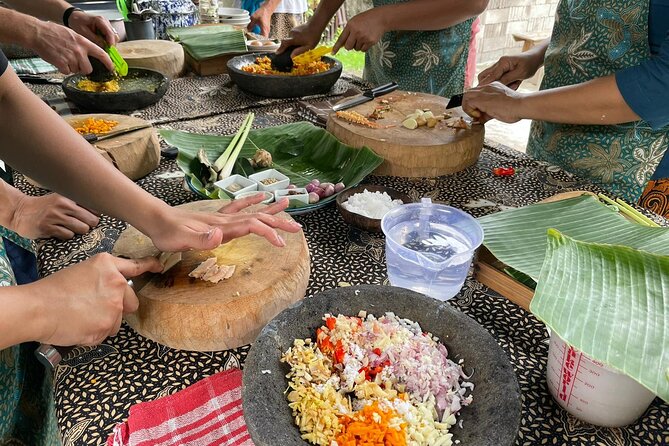
After the tempeh lesson, you move into the cooking portion in an open-air kitchen studio. This is where the class broadens into Balinese cuisine, using fresh plant-based ingredients and Indonesian spices.
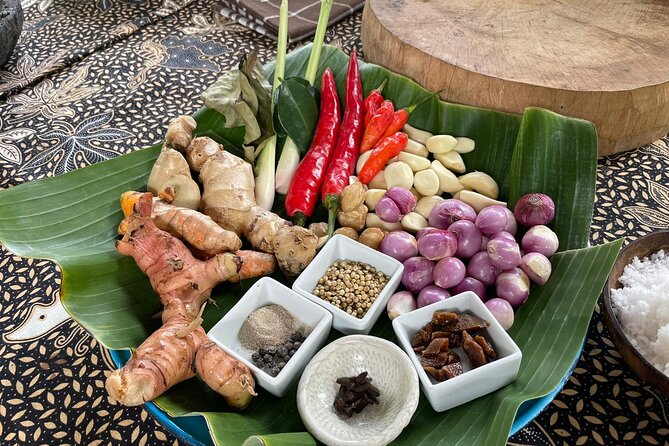
The supplied information does not name every spice, so you should not arrive expecting a fixed inventory of ingredients. You can expect to encounter the bold seasoning style associated with Indonesian cooking and learn how different ingredients work together in the dishes you prepare.
The hands-on element matters. You are not only watching Ayu and Ngurah cook. You prepare recipes from scratch, which gives you a better chance of remembering the steps once you return home. The hosts explain the methods carefully, and the class includes a guide for making tempeh yourself.
One useful feature is the flexibility of the menu. You can include chicken and tuna if you want a broader Balinese meal, or leave both out. This makes the class workable for mixed groups, where one person eats vegan food and another does not.
A completely different kind of day out in Seminyak:
- Bali Full-Day Traditional Village Sightseeing Trip All Inclusive
★ 5.0 · 3,069 reviews - Experts Bali Driver : Best Bali Private Driver for Tour in Bali
★ 5.0 · 1,339 reviews - Bali Hai Sunset Dinner Cruise
★ 5.0 · 1,173 reviews - Mount Batur Sunrise Trekking
★ 5.0 · 947 reviews
Seven dishes and a Balinese lunch
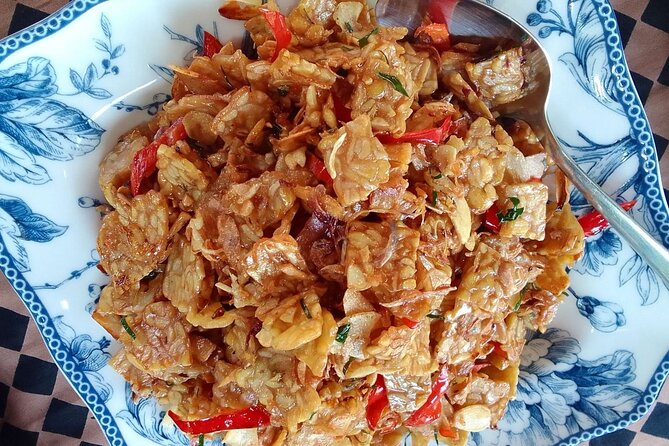
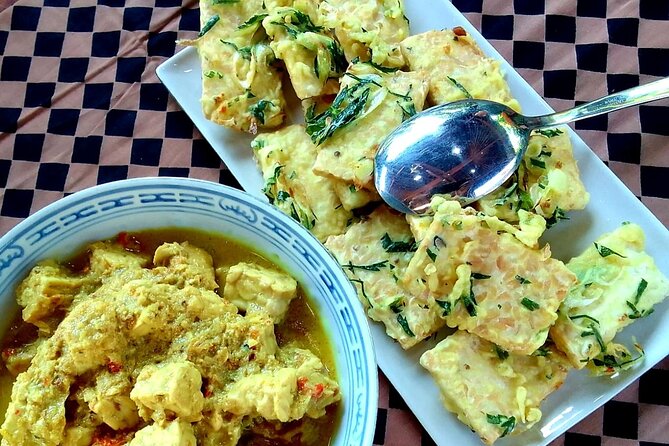
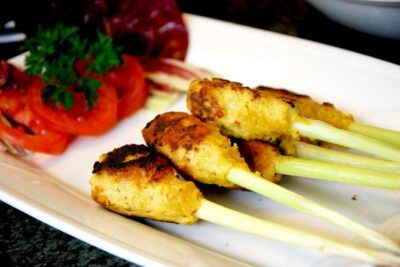
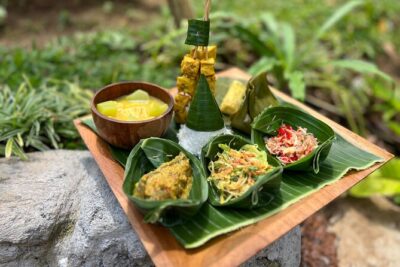
The meal includes seven dishes, with tempeh used in several ways. One named dish is tempeh fritters, an especially practical recipe because it can be adapted at home and served as a snack, side dish, or light meal.
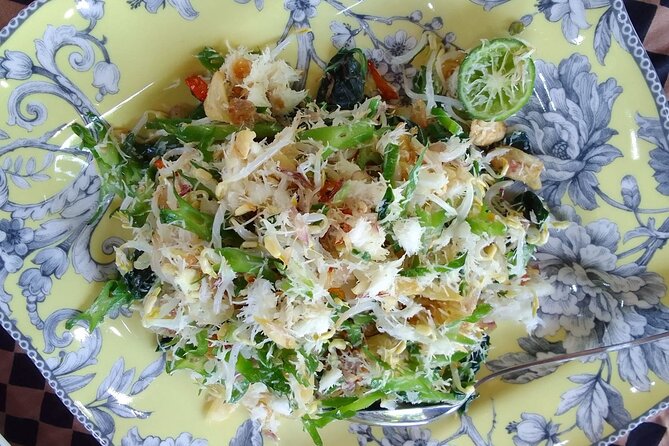
You also prepare sayur urab, a vegetable dish made with greens and beans mixed with grilled grated coconut. This gives the meal a different texture from the tempeh dishes and shows how coconut can add both flavor and body to a simple vegetable preparation.
Other local recipes round out the meal. The exact selection may vary with the class, but the structure is clear: you cook a collection of Balinese dishes, then share the results in the garden with the hosts and the rest of the group.
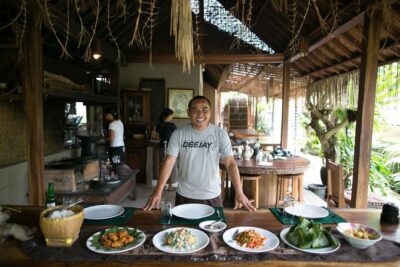
That shared lunch is more than a convenient finish. Eating the food soon after preparing it lets you see how the dishes work together as a meal. It also gives the class a relaxed, family-style ending rather than a quick tasting at a counter.
Tea, coffee, water, and a light snack are included during the class. The provided details do not specify all dietary arrangements beyond the vegan option, so you should communicate any additional food needs when booking.
The garden meal and local setting
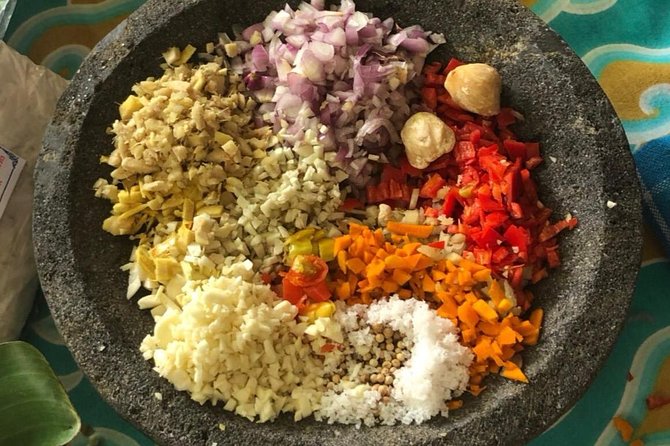
The garden setting gives the class a more personal feel than a large commercial cooking school. You eat at the home where the class takes place, surrounded by the everyday setting of a local household rather than a formal restaurant.
That atmosphere is one of the strongest reasons to choose this experience. You are not only collecting recipes. You are spending a morning with hosts who explain their food traditions and share a meal in their own space.
The tone is friendly and informal. Ayu and Ngurah are praised for being hospitable and patient, and their willingness to explain the steps makes the class suitable for people with different cooking abilities. You do not need to arrive as an experienced cook.
Still, the home setting means you should keep your expectations realistic. This is not a polished studio production with a long professional kitchen brigade. Its appeal comes from the personal scale, direct instruction, and meal at home.
What the $39 price gets you
At $39 per person, the value is strong if you want more than a standard lunch. You receive about three hours of instruction, the tempeh lesson, preparation of several dishes, a seven-dish meal, drinks, a snack, and time with local hosts.
The price also covers a subject that is difficult to find in a general cooking class. You leave with a better understanding of tempeh and a guide for trying the process yourself. That take-home value helps justify the cost, especially if you cook plant-based food at home.
The class is less compelling if you only want to eat Balinese food without participating. You will spend the morning preparing ingredients and following steps, so the value depends on your interest in cooking.
It is also worth noting that the experience tends to be booked about 24 days ahead. If your Bali schedule is fixed, booking early is sensible. A private group can be arranged on request, though the supplied price is for the standard per-person experience and does not state the private supplement.
Who should choose this cooking class?
I would point this experience toward several kinds of visitors:
- Vegan and vegetarian cooks: The class has a strong plant-based center, with animal products optional.
- Food-focused visitors: You learn about tempeh, spices, and local recipes rather than simply sampling finished food.
- Small groups and couples: A maximum of 10 people keeps the class more personal than a large demonstration.
- Home cooks: The written tempeh guide gives you something practical to use after Bali.
- Anyone seeking a local setting: Lunch in a family garden feels more intimate than eating at a tourist restaurant.
Families may also enjoy it, though the provided details do not state a minimum age or special arrangements for children. If you are booking with young children, ask the host first.
The class may not suit you if you want a very slow, quiet morning or if you dislike hands-on cooking. Seven dishes in three hours is a productive schedule, and the morning has a clear structure.
Timing, cancellation, and planning tips
The class runs from 9:30 a.m. to 12:30 p.m., including lunch. It starts and ends at Canang Sari Homestay, so you need to arrange your own way to the meeting point unless your booking provides separate transport details.
The experience is mobile-ticket friendly, and confirmation is provided at booking. It has a maximum of 10 participants. Private groups are available by request.
You can cancel for a full refund up to 24 hours before the local start time. Changes or cancellations inside that window are not accepted for a refund. The class also depends on suitable weather and a minimum number of participants. If the host cancels for either reason, you are offered another date or experience, or a full refund.
My practical advice is simple: book ahead, check the Denpasar address closely, and tell the host before arrival if you want the vegan menu. That avoids confusion once the cooking begins.
Should you book the tempeh cooking class?
Book it if you want a hands-on Balinese food experience with a clear point of difference. The tempeh lesson, optional vegan menu, seven-dish lunch, and personal teaching from Ayu and Ngurah give the morning real substance.
At $39, it offers good value for anyone who enjoys cooking and wants a useful skill to take home. I especially like the tempeh guide, the small group limit, and the garden lunch at a local home.
Skip it if your main goal is a quick meal, a central Seminyak location, or a highly polished cooking-school production. For everyone else, this is a warm, practical introduction to Indonesian food, with tempeh rightfully given the starring role.
FAQ
Where does the cooking class start?
It starts at Canang Sari Homestay, Gg. Kaswari No. 6, Dangin Puri Kaja, Denpasar, Bali 80234, Indonesia.
What time does the class begin and end?
The class starts at 9:30 a.m. and finishes at about 12:30 p.m., including lunch.
Is the class suitable for vegans?
Yes. The class is vegan friendly, and you can skip the chicken and tuna dishes for a vegan meal.
How many people can join the class?
The activity has a maximum of 10 participants.
What food will be prepared?
You will make tempeh-based dishes, sayur urab with greens, beans, and grilled grated coconut, plus other local recipes. Chicken and tuna may also be included unless you choose the vegan option. The meal includes seven dishes.
Can I cancel the booking for a full refund?
Yes. You can cancel at least 24 hours before the experience start time for a full refund. Weather or minimum-participant cancellations may also result in a different date or a full refund.
Just added around Seminyak
- Facial treatment + Balinese massage at Bali Luxury Spa★ 3.5 · 3 reviews
- Bali Full-Day Private Customize Tour★ 5.0 · 3 reviews
- Telaga Waja White Water Rafting and Besakih Temple Tour★ 5.0 · 3 reviews
- Bali: Private Mount Batur Sunrise Trek with Guide★ 5.0 · 3 reviews
- Airport Transfer Check in OR Check out Seminyak Area★ 5.0 · 3 reviews
- Private Half-Day Tour: Tanah Lot Sunset Tour★ 5.0 · 3 reviews
- Bali Airport Transfers Service To Ubud, Uluwatu, Pecatu★ 3.5 · 3 reviews
- Private Munduk Waterfalls Trekking Tour★ 5.0 · 3 reviews
Cooking Classes, compared.
PRIVATE Authentic Balinese Cooking Class in Ubud at Putu’s Home
Read our review →
Balinese Ubud cooking school (9 Dish Cooking and Market Tour)
Read our review →
PRIVATE Balinese Cooking Class in Ubud with Dewa with Transfers
Read our review →Browse the lists this tour appears in