
Reviewed · COOKING CLASSES
Exclusive Authentic Balinese Cooking Class at Family home
Bring your appetite and a sharp curiosity. This six-hour private cooking class near Ubud combines a visit to Payangan Market with hands-on work in a family compound, giving you a useful look at Balinese food and daily life. I like the local market visit, where you learn about unfamiliar spices and produce before cooking, and I like that you prepare every dish yourself rather than watching a chef do the work. The main consideration is the price: at $75 per person, it is not a cheap meal, though the private transport, market tour, cooking instruction, food, recipe book, and certificate add real value.
The class suits you best if you enjoy learning by doing. You will chop, pound, grind, mix, grill, and eat the results, with vegetarian dishes available if you request them in advance. Pickup is included in Ubud and Payangan, but transfers from other parts of Bali cost extra, and the six-hour schedule is a serious half-day commitment.
In This Review
- Key Points to Know Before You Book
- Why the Payangan Market Visit Matters
- Entering the Family Compound Near Ubud
- Coffee, Cake, and a Taste of the Spice Cabinet
- What You Cook During the Six Hours
- The Teaching Style and the People Behind It
- Is $75 a Good Value?
- Timing, Transport, and Small Practical Details
- Who Will Enjoy This Most?
- Should You Book the Payangan Cooking Class?
- FAQ
- Where does the cooking class take place?
- Is hotel pickup included?
- Can I request a vegetarian menu?
- How many people can join?
- What dishes will I prepare?
- What happens if the class is canceled?
Key Points to Know Before You Book
- Payangan Market comes first: Morning sessions visit the traditional morning market, while afternoon sessions visit the night market.
- You cook in a family compound: The open-air kitchen is part of a real Balinese home, not a hotel demonstration room.
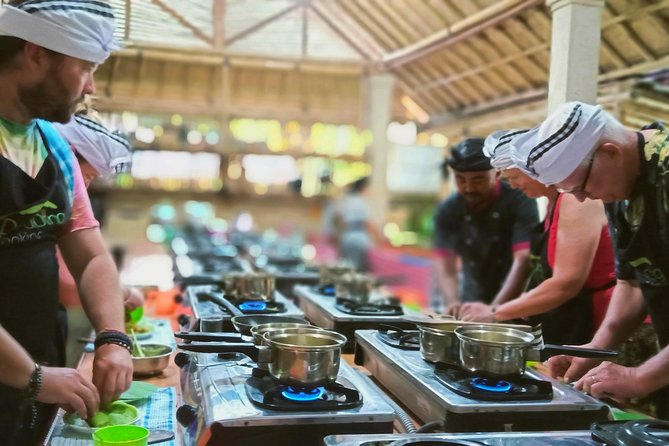
- Every participant gets a cooking station: You handle the preparation and cooking, using traditional tools such as a wooden chopping block and stone mortar.
- The menu covers five Balinese dishes: Expect items such as jukut urab, sate lilit, chayote soup, tahu mesanten, and dadar gulung.
- The experience is private: Your group alone takes part, with a minimum of one person and a maximum of 12.
- Vegetarian cooking is possible: Tell the provider when booking so the ingredients can be prepared correctly.
Why the Payangan Market Visit Matters
The class begins at Payangan Traditional Farmer Market, at the listed meeting point in Melinggih, Payangan. This is more than a quick stop to buy onions. Your guide explains the spices, vegetables, and other ingredients used in Balinese cooking, helping you recognize the raw materials before they reach the kitchen.
That order makes sense. If you first see the ingredients at the market, the cooking lesson has a clear starting point. You are not simply told that a certain root or spice matters. You see it among the produce sold to local families, then work with it yourself a short time later.
The market also gives you a look at food outside the usual Ubud restaurant circuit. One account describes stalls with unusual foods and a local vendor selling portions of freshly cooked suckling pig. That sort of detail is useful because it shows how food functions as part of ordinary community life, not only as a polished dish served to visitors.
Morning and afternoon schedules offer different moods. The morning option includes a traditional morning market and ends with lunch. The afternoon option visits a night market and finishes with dinner. If the market is your main reason for booking, choose the time that fits your interest. If you want the strongest daylight for seeing the family compound and garden, the morning class may be the simpler choice, though the afternoon market has its own appeal.
You should also expect a walking market visit rather than a quiet indoor tasting. Wear comfortable shoes and bring a reusable water bottle. Bottled water is not included, and the provider asks you to avoid single-use plastic by bringing your own bottle. Free refills are available during the class.
More Cooking Classes in Ubud
- Ubud Cooking Class Bali with Balinese Chef
★ 5.0 · 1,609 reviews - PRIVATE Authentic Balinese Cooking Class in Ubud at Putu’s Home
★ 5.0 · 644 reviews - Balinese Ubud cooking school (9 Dish Cooking and Market Tour)
★ 5.0 · 540 reviews
Entering the Family Compound Near Ubud
After the market, you go to the Balinese compound house where the cooking takes place. This setting is one of the most praised parts of the experience. You are welcomed into a family home and shown around the property before moving to the kitchen.
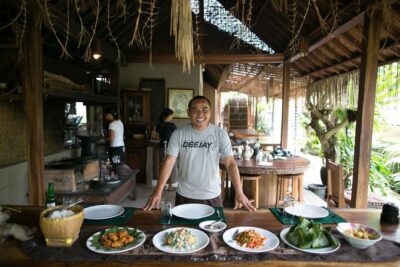
The kitchen is open-air, set in a garden area, and equipped with about 12 cooking stations. One detailed account describes it as clean and pleasant, with each participant given a place to work. The setting matters because you get a glimpse of a traditional Balinese home rather than spending the entire class in a commercial cooking studio.
A family member may be introduced, and you might see parts of ordinary household life that a restaurant cannot provide. One class included a rescued pet monkey, while another mentioned honey collected from native bees kept by the family. These details are not guaranteed parts of every session, but they show the kind of personal setting you may encounter.
The family-home format also means the experience has a social side. You are not only learning a recipe. You are being welcomed into a place where food, family, and religious or household routines connect. The exact amount of home and compound conversation may depend on your instructor and group, but the class is clearly designed to share local life along with cooking skills.
The open kitchen has a practical downside. Bali is warm, and an open-air cooking space will not feel like a sealed, modern culinary school. The supplied details do note an air-conditioned vehicle for transport, but they do not promise air conditioning in the cooking area. Dress lightly, tie back long hair, and wear shoes that can handle a little mess.
Coffee, Cake, and a Taste of the Spice Cabinet
The welcome is simple: Bali coffee or tea, along with a Balinese cake or seasonal snack. You can refill your water bottle before the cooking begins.
You will also test the spice ingredients. This is an important step because Balinese cooking depends heavily on the balance of fresh aromatics, pastes, and sauces. The lesson presents two traditional preparation methods: chopping ingredients on a wooden chopping block and grinding them in a stone mortar.
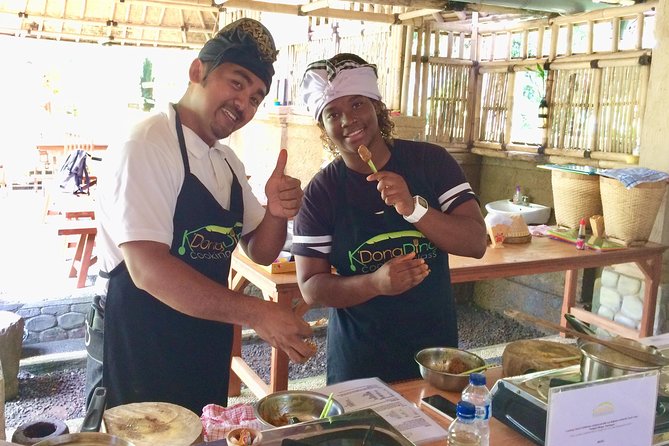
I especially like that you are expected to do the work yourself. The class is not built around standing behind a counter while a chef prepares lunch. You chop, pound, pestle, mix, and cook at your own station, with the instructor guiding you through each stage.
That makes the class useful for home cooks. A recipe can tell you what to add, but it rarely teaches the feel of a spice paste, the right texture of a ground mixture, or the order in which ingredients should be cooked. Here, you practice the physical steps that make Balinese sauces taste different from a quick restaurant version.
No previous cooking experience is required. Still, this is an active lesson, not a relaxed tasting. If you have difficulty with prolonged chopping or grinding, you should keep that in mind before booking.
What You Cook During the Six Hours
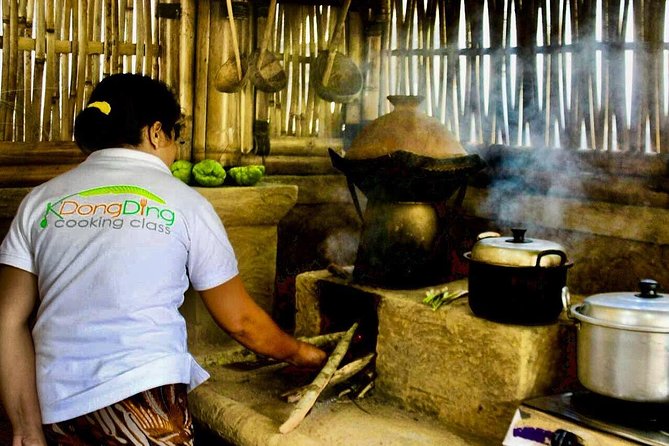
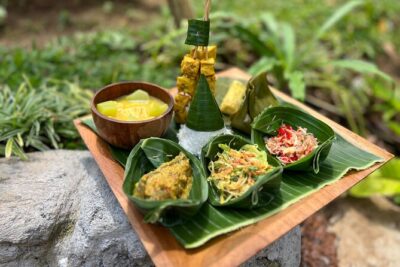
The menu is designed as a full meal of several dishes rather than one signature recipe. Listed dishes include:
- Jukut urab, a vegetable dish
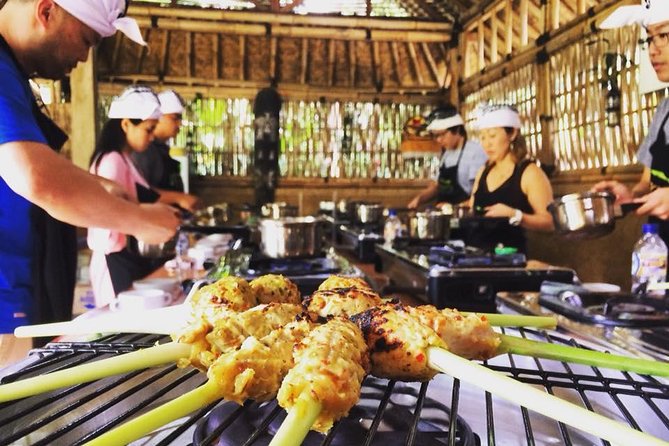
- Sate lilit ayam, or a chicken version of Balinese minced satay
- A chayote soup with chicken
- Tahu mesanten, a tofu dish
- Dadar gulung, a Balinese rolled pancake or sweet snack
Vegetarian substitutions are available, including tofu in place of chicken for some dishes. You must request this in advance because the ingredients need to be prepared for the vegetarian menu. Do not wait until you arrive if you have strict dietary needs or allergies. The provider specifically asks you to give that information at booking.
The chayote soup is described as a dish with several nutrients and a high-fiber, low-calorie vegetable. Treat the health claims as general food information, not medical advice. The real value here is learning how a familiar local vegetable is used in a Balinese home meal.
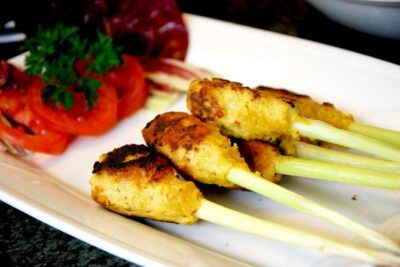
Sate lilit is another worthwhile lesson because it differs from the more familiar skewered chunks of meat. The mixture is shaped around a skewer, with the seasoning doing much of the work. The tofu alternative makes the dish accessible to vegetarians, though the exact menu can depend on the arrangements made in advance.
Dadar gulung provides a sweet finish. Its rolled shape and coconut-based filling make it a pleasant change from the savory spice pastes prepared earlier. Cooking five dishes also spreads the class across different techniques, so you are not repeating the same task for six hours.
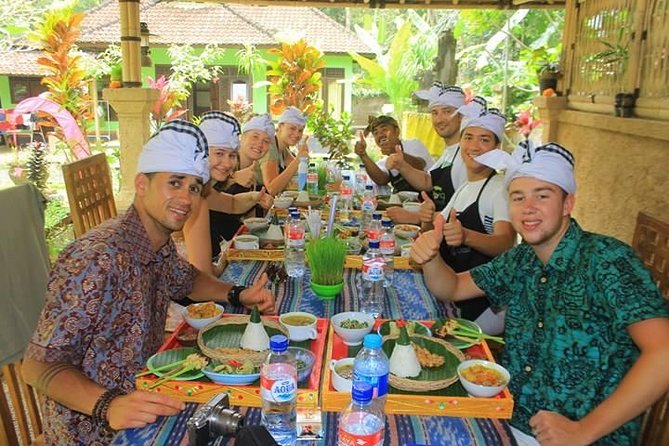
Your meal is included. In a morning class, you eat lunch. In an afternoon class, you eat dinner. Since you prepare the menu yourself, the meal feels like the payoff for the work rather than a separate restaurant stop.
A completely different kind of day out in Ubud:
- All-Inclusive Ubud Private Tour
★ 5.0 · 14,344 reviews - Best of Ubud Full-Day Tour with Jungle Swing
★ 5.0 · 8,571 reviews - Ubud: Monkey Forest, Jungle Swing, Rice Terrace, and Water Temple
★ 5.0 · 7,160 reviews - Best of Ubud 1-Day Private Tour
★ 5.0 · 4,451 reviews
The Teaching Style and the People Behind It
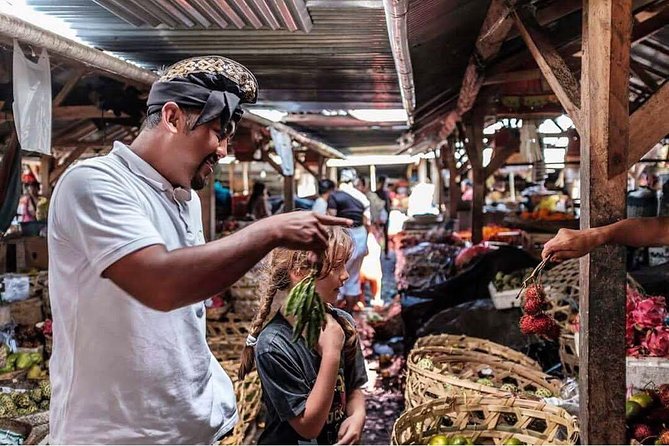
The cooking class is operated by Nipala Cooking Class by Kedongding, with local instruction from a professional Balinese cook. Several detailed accounts identify Nyoman Mahendra as the chef, while another refers to Wayan, so the instructor may vary by date or group. If meeting a particular chef matters to you, confirm that before booking.
The strongest feature of the teaching style is the hands-on approach. The instructor guides you through the process but allows you to complete the cooking. One solo participant described receiving close attention from the chef and being able to ask about the origin of each dish and its place in Balinese culture.
That kind of conversation is one reason a private class can be worth more than a larger group demonstration. With only your party present, you can ask practical questions about spice combinations, substitutions, and cooking methods without waiting for a turn.
The advertised group range is one to 12 people. The provider’s cooking tools and kitchen setup can support up to 12, but the listed vehicle holds six passengers. If your party has seven to 12 people, an extra charge of $15 per additional person applies for transport. For a large family or group, ask for the exact transport plan before paying.
You receive a recipe book and a culinary workshop certificate. The recipe book is the more useful souvenir. It lets you repeat the dishes at home, though the availability of local herbs and spices will vary by country. The certificate is a nice keepsake, especially for families or first-time cooking students.
Is $75 a Good Value?
At $75, this is a mid-priced Ubud activity, but the cost covers more than a meal. You receive roughly six hours of instruction, a market tour, round-trip pickup in Ubud or Payangan, ingredients, kitchen equipment, drinks, snacks, lunch or dinner, recipes, and a certificate.
The private format is the key value. If you are booking alone, the price buys a personal lesson with room for questions. If you are traveling with family or friends, your group can reserve the date for itself, up to the stated limit of 12 people.
The value drops if you are staying far from Ubud. Extra transfer fees are listed for Sanur, Kuta, Seminyak, Legian, Nusa Dua, and Jimbaran. The published details give different Sanur amounts in different places, including IDR 350,000 and IDR 500,000 per booking, so confirm the current fee before booking. The listed charge for Kuta, Seminyak, Legian, Nusa Dua, and Jimbaran is IDR 500,000 per booking.
The class is a good use of money if you want food instruction plus cultural contact. It is less suitable if your only goal is a cheap lunch or a short activity between sightseeing stops. Six hours is long enough to make the experience a main event for the day.
Timing, Transport, and Small Practical Details
Free pickup and drop-off apply in the Ubud and Payangan areas. The class begins at Payangan Market and ends back at the meeting point, so clarify the pickup time and exact return arrangement when your booking is confirmed.
The vehicle is air-conditioned, which helps during the transfer. The car holds up to six passengers. Larger groups need the extra transport arrangement described above.
The minimum age is 12, and children must be accompanied by an adult. The minimum booking size is one person, so solo participation is allowed. The activity is private, meaning only your group takes part.
Confirmation is sent within 48 hours, subject to availability. Since the experience is non-refundable and cannot be changed after booking, check your dates carefully. It also depends on suitable weather and a minimum number of participants. If poor weather or an unmet minimum causes cancellation, you are offered another date or a full refund.
Bring a reusable water bottle, comfortable clothes, and shoes suitable for a market and open-air kitchen. Tell the provider about allergies or dietary requirements at booking, especially if you need vegetarian substitutions.
Who Will Enjoy This Most?
I would choose this class if you want to understand Balinese food from the ingredient level upward. It suits curious eaters, home cooks, couples, families with older children, and anyone who prefers a personal activity to a standard sightseeing tour.
It is also a strong choice if you have visited Bali before and want something more connected to local life. The market, family compound, and shared meal offer more context than a restaurant dinner alone.
I would think twice if you dislike hands-on work, want a short class, or need a fully climate-controlled kitchen. The session involves chopping, grinding, mixing, and cooking over several hours. It is friendly and accessible, but it is still work.
Should You Book the Payangan Cooking Class?
Yes, if you want a full half-day built around food, family life, and practical skills. The combination of Payangan Market, a traditional compound, five dishes, and a meal you prepare yourself gives the experience more substance than a simple cooking demonstration.
The biggest strengths are the private setting, the unusually hands-on instruction, and the chance to ask questions directly while working. Book early enough to provide dietary details, confirm the instructor and transfer fee, and choose morning or afternoon based on whether you prefer a market lunch or night market dinner.
At $75, it is best viewed as a cultural activity with food included, not merely a cooking class. If that sounds like your kind of Bali day, this is a solid choice.
FAQ
Where does the cooking class take place?
The class begins at Payangan Traditional Farmer Market in Melinggih, Payangan, and then continues at a Balinese compound house near Ubud. The activity ends back at the meeting point.
Is hotel pickup included?
Free pickup and drop-off are provided for hotels in the Ubud and Payangan areas. Extra charges apply for some other areas, including Sanur, Kuta, Seminyak, Legian, Nusa Dua, and Jimbaran.
Can I request a vegetarian menu?
Yes. Vegetarian options are available, but you must provide the request when booking so the ingredients can be prepared in advance.
How many people can join?
The minimum is one person, and the maximum is 12 people per booking. The activity is private, so only your group participates.
What dishes will I prepare?
The menu can include jukut urab, sate lilit ayam or tofu, chicken or tofu with chayote soup, tahu mesanten, and dadar gulung. The exact vegetarian substitutions should be arranged before the class.
What happens if the class is canceled?
If poor weather or an unmet minimum number of participants causes cancellation, you are offered a different date or a full refund. If you cancel or request an amendment yourself, the experience is non-refundable.
Just added around Ubud
- Kintamani Batur Jeep Sunrise Tour★ 5.0 · 3 reviews
- Bali Downhill Cycling and White Water Rafting★ 5.0 · 3 reviews
- Ubud Highlights Rice Terraces, Temple, Waterfall & Monkeys forest★ 5.0 · 3 reviews
- Bali ATV Quad Bike & Ayung River Rafting Combo with Lunch★ 5.0 · 3 reviews
- Half Day Uluwatu Temple Sunset, Kecak Dance and Seafood Dinner★ 3.5 · 3 reviews
- Blue Lagoon Snorkeling and Lunch with Tukad Cepung Waterfall★ 5.0 · 3 reviews
- Ancien Wisdom and Culture tour★ 5.0 · 3 reviews
- Full-Day Tour in Nusa Penida Island + Snorkeling Experience★ 5.0 · 3 reviews
Cooking Classes, compared.
PRIVATE Authentic Balinese Cooking Class in Ubud at Putu’s Home
Read our review →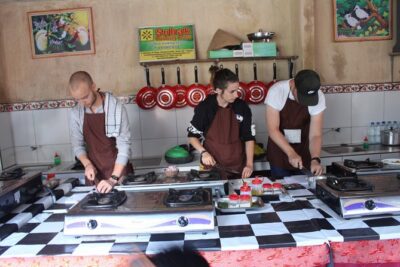
Balinese Ubud cooking school (9 Dish Cooking and Market Tour)
Read our review →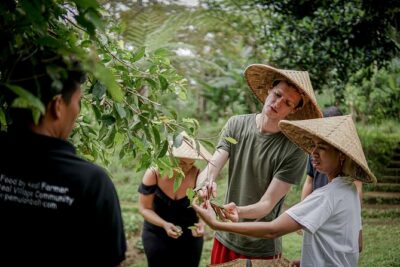
PRIVATE Balinese Cooking Class in Ubud with Dewa with Transfers
Read our review →Browse the lists this tour appears in