
Reviewed · COOKING CLASSES
Bali Cooking Class with Culture Experience
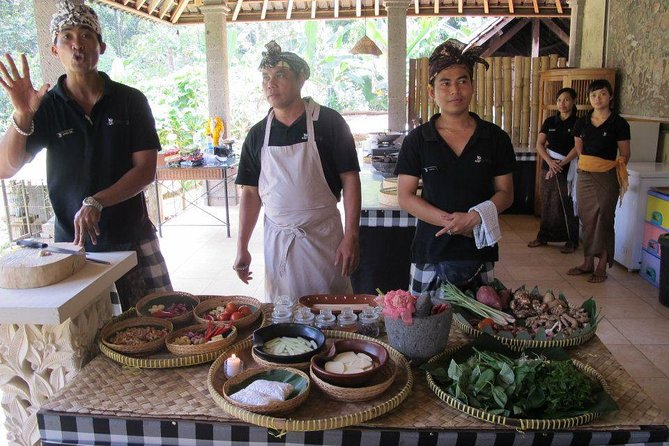
Fresh food tells the story of Bali. This six-hour Ubud experience combines a morning market visit with hands-on cooking at a Balinese family compound, giving you more than a standard recipe lesson. You shop for herbs and spices, learn about home life and shrines, then prepare and eat a full meal with help from a professional chef. I especially like the market visit and the warm welcome with banana fritters, coffee, or tea. One point to weigh is the early 7:30 a.m. start, which may feel demanding after a late night in Ubud.
The small group is capped at 12 people, and pickup is offered from central Ubud hotels. I also like that you leave with an illustrated recipe booklet, so the class has value after your holiday ends. The main consideration is that the menu is described broadly rather than fixed in the details, so you may want to ask what dishes are planned before booking.
In This Review
- Key things to know before booking
- Why this Ubud cooking class feels different
- The 7:30 a.m. market visit
- A Balinese family compound and a welcoming snack
- The cooking pavilion and the recipe booklet
- Preparing a full Balinese menu
- Lunch tastes better when you made it
- What the $62 price includes in practical terms
- Timing, pickup, and group size
- Who will enjoy this most
- Cancellation and booking advice
- Should you book Lobong Bali Cooking Class?
- FAQ
- Where does the cooking class take place?
- What time does the experience start?
- How long does the cooking experience last?
- Is hotel pickup available?
- How many people can join the class?
- What happens at the market?
- Who leads the cooking lesson?
- What food will I prepare?
- Is lunch included?
- Do I receive recipes to take home?
- Can I cancel for a full refund?
Key things to know before booking
- The market comes first: You visit a typical morning market and learn about the fresh herbs, spices, fruit, and vegetables used in the cooking class.
- You cook in a Balinese home setting: The class takes place at a family compound and cooking pavilion, not just in a commercial kitchen.
- Dewa welcomes you with local flavor: A hot drink and freshly made Pisang Goreng, or crispy banana fritters, begin the home visit.
- The meal covers several courses: You prepare an appetizer, several main dishes, side dishes, and dessert.
- The group stays fairly small: A maximum of 12 people allows for more direct help than a large demonstration class.
- Your lunch is the final reward: You eat the food you prepare, then take home recipes, photos, tips, and space for notes.
Why this Ubud cooking class feels different
Many cooking classes teach you how to chop, stir, and season. This one adds a cultural visit before the knives come out. You begin at a local market, then continue into a Balinese family home where food, daily life, and religious customs are discussed together.
That order matters. At the market, ingredients are not just items on a shopping list. You hear about the herbs, spices, fruits, and vegetables that shape Balinese cooking, then see them used later in the pavilion. The lesson has a clear thread from market stall to lunch plate.
The setting also gives the experience a personal feel. The family compound is described as beautiful, and part of the visit includes conversation about Balinese families, home shrines, and local culture. One particularly memorable touch is a ritual of gratitude after the meal. It adds a quiet cultural moment to what could otherwise be only a food workshop.
Lobong Culinary Experience keeps the group to 12 people at most. That is not a private lesson, but it is small enough to make questions practical. You should have a better chance of seeing the chef’s techniques and getting help than you would in a crowded class built around a single demonstration.
More Cooking Classes in Ubud
- Ubud Cooking Class Bali with Balinese Chef
★ 5.0 · 1,609 reviews - PRIVATE Authentic Balinese Cooking Class in Ubud at Putu’s Home
★ 5.0 · 644 reviews - Balinese Ubud cooking school (9 Dish Cooking and Market Tour)
★ 5.0 · 540 reviews
The 7:30 a.m. market visit
Your morning begins at 7:30 a.m., with pickup offered from central Ubud hotels. The early hour is useful here because the first part of the experience is built around a morning market. You meet your Family Host and see the ingredients being selected for the class.
Expect a lesson in fresh produce rather than a polished food tour. The focus is on herbs, spices, fruit, and vegetables, with explanations of how they are used in Balinese food. The visit also gives you a chance to smell and discuss different herbs, which is important when you later try to recreate the dishes at home.
The market stop includes fruit that may be unfamiliar if you come from the United States. That makes this part especially worthwhile for curious eaters. You are not simply watching someone buy ingredients for you. You get context for the produce and a better sense of how the meal begins long before it reaches the table.
There is one practical limit: the supplied details do not give the market a separate length or identify its exact name. If you need precise transport timing, confirm the pickup details after booking. Confirmation is sent within 48 hours, subject to availability.
A Balinese family compound and a welcoming snack
After the market, you arrive at the home setting and meet Dewa. He welcomes you with a hot cup of coffee or tea, mineral water, and Pisang Goreng, fresh banana fritters with a crisp coating.
This small snack may sound simple, but it helps set the pace. You can settle in, enjoy something warm, and listen while the staff prepares the cooking pavilion. It also gives you an early taste of the kind of food you will be working with: fresh, direct, and made for sharing.
The cultural talk covers Balinese lifestyle, family life, and home shrines. That is useful because the compound is not being treated only as an attractive backdrop. You get a little explanation of the place where you are cooking and the customs connected with daily life.
The home setting is one of the most praised parts of the experience. The combination of a beautiful compound, a friendly welcome, and careful organization gives the class a stronger sense of place than a lesson held in a hotel kitchen. If you want a quick class with no cultural discussion, this may feel slower than necessary. If you want food connected to local life, the extra time is a strength.
The cooking pavilion and the recipe booklet
Before cooking begins, you receive an illustrated instructional booklet. It includes the menu, recipes, directions, photographs, tips, and room for your own notes.
I consider this a major part of the value. Cooking instructions given only by demonstration can fade quickly once you return home. A printed guide gives you something to refer to when you are trying to find similar ingredients, remember a method, or explain the dish to friends and family.
The booklet also changes how you can approach the class. You do not need to rely on memory alone. Write down questions, add substitutions, and note which flavors you liked best. The space for personal notes is a useful detail for anyone who cooks regularly.
The class is led by a professional chef, with the family and staff helping prepare the session. The information provided does not list the full menu in advance. Instead, it promises a complete menu with an appetizer, several traditional main dishes, accompanying dishes, and dessert. That gives you variety, but it also means you should not book expecting one specific dish unless the provider confirms it.
A completely different kind of day out in Ubud:
- All-Inclusive Ubud Private Tour
★ 5.0 · 14,344 reviews - Best of Ubud Full-Day Tour with Jungle Swing
★ 5.0 · 8,571 reviews - Ubud: Monkey Forest, Jungle Swing, Rice Terrace, and Water Temple
★ 5.0 · 7,160 reviews - Best of Ubud 1-Day Private Tour
★ 5.0 · 4,451 reviews
Preparing a full Balinese menu
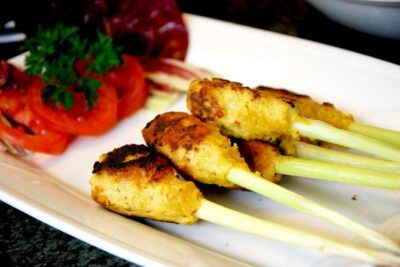
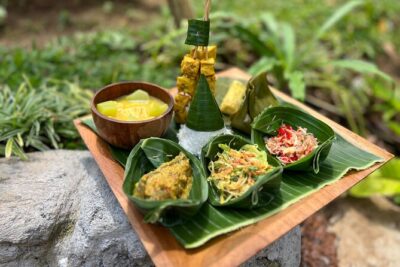
This is not a single-dish lesson. You prepare a complete meal, moving through an appetizer, multiple entrees, side dishes, and dessert. The result is a broader introduction to Balinese cooking than a class focused only on one famous recipe.
The menu format helps you see how the parts of a meal work together. You can compare the preparation of the main dishes with the accompanying foods, then finish by making dessert. Since the meal is served at the end, each stage has a clear purpose.
You should expect active participation rather than simply watching a chef cook. The description emphasizes that you will learn to prepare the food, and the class is designed so you can repeat the dishes at home. The professional guidance is useful for beginners, while the range of dishes should give more experienced home cooks several ideas to take away.
The experience also places some attention on healthy, fresh cooking. One account praised the freshness of the ingredients and described the resulting food as both healthy and delicious. That does not mean every dish will suit every diet, and no detailed dietary information is provided, so ask before booking if you have food restrictions.
Lunch tastes better when you made it
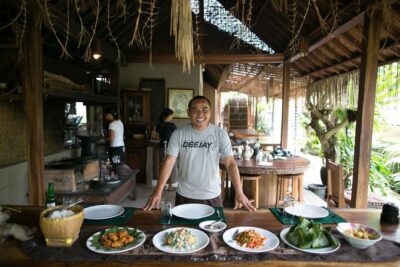
After the cooking session, you sit down to eat the meal you prepared. Lunch is included in the experience, along with the dessert you have made.
This is the best kind of cooking-class finale because you can judge the food immediately. You are not carrying a container away and hoping it survives the afternoon. You taste the result in the same place where you learned the techniques, with the cooking steps still fresh in your mind.
The meal is also a chance to slow down. The class lasts about six hours, so the day is not rushed from one short activity to another. Market shopping, cultural conversation, cooking, and lunch form one connected visit.
Keep your expectations sensible. The class gives you a traditional menu and a cultural setting, but the supplied information does not specify how much food is prepared per person or how many dishes each student handles individually. If you want a highly technical chef-school format, ask how much hands-on work each participant receives.
What the $62 price includes in practical terms
At $62, this is not the cheapest way to eat in Ubud. You can find an inexpensive local meal for far less. The better question is what you receive beyond lunch.
The price covers an approximately six-hour experience, a market visit, a cultural welcome at a family compound, instruction from a professional chef, a hot drink or water, banana fritters, the cooking lesson, and the meal you prepare. You also receive the illustrated recipe booklet and round-trip transfers from central Ubud hotels when pickup is available.
That makes the price reasonable for someone who wants several activities combined into one morning and afternoon. You are paying for teaching, ingredients, transport support, food, and access to a home setting. The booklet adds lasting value, particularly if you plan to cook Balinese food later.
The value is less clear if you only want a quick meal or a short demonstration. Six hours is a sizeable part of your Ubud schedule. I would choose this class over a shorter lesson if food and culture are high on your list. I would skip it if you prefer to keep your mornings open or already have a full day of planned activities.
Timing, pickup, and group size
The official start time is 7:30 a.m. Pickup is offered from central Ubud hotels, which should make the early start easier if your accommodation falls within the service area. The details do not promise pickup from every location, so check your hotel address when arranging the booking.
The experience lasts about six hours. Plan for a substantial morning and early afternoon, not a quick stop between sightseeing visits. The market, home welcome, cooking, and lunch all need time, and the length is part of what makes the day feel complete.
The maximum group size is 12 people. That is a useful middle ground. You get some social energy without the scale of a large bus group, though the class will not have the quiet, fully customized feel of a private lesson.
Confirmation arrives within 48 hours of booking, subject to availability. The activity is near public transportation, but the supplied details emphasize pickup rather than a specific bus or taxi plan.
Who will enjoy this most
I would recommend this experience to you if you want food to be a way into Balinese culture. The market, family compound, home shrines, and gratitude ritual give the cooking a local setting, while the recipe booklet helps the experience continue at home.
It suits couples, families, solo visitors, and small groups who enjoy shared activities. The maximum of 12 participants keeps it social and manageable. It also works well for home cooks who want more than a tasting and prefer to leave with methods they can use again.
The class may be less suitable if you dislike early starts, have a tightly packed Ubud itinerary, or need a fixed menu confirmed in advance. It is also worth asking about dietary needs before payment, since the available details do not list vegetarian, vegan, allergy, or other special meal arrangements.
Cancellation and booking advice
Free cancellation is available if you cancel at least 24 hours before the local start time. Cancellations made less than 24 hours in advance are not refunded, and changes inside that window are not accepted.
The activity requires a minimum number of participants. If that minimum is not reached and the experience is canceled, you are offered another date or experience, or a full refund. Since confirmation is subject to availability, avoid building an essential sightseeing connection around this class until your booking is confirmed.
Should you book Lobong Bali Cooking Class?
Book it if you want a full food day rather than a basic recipe demonstration. The strongest reasons are the morning market, the welcome at a real Balinese family compound, the thoughtful cultural discussion, and the chance to eat a multi-course meal you helped prepare.
At $62, the value is strongest when you count the six-hour format, transport support, snack, lunch, chef instruction, and recipe booklet together. The early 7:30 a.m. start and partly unspecified menu are the main points to consider.
My practical advice is simple: confirm the pickup area, ask about the planned dishes and dietary needs, then reserve at least a day when your schedule is flexible. If you are keen on Balinese food and want a personal connection to the place, this is a well-rounded choice in Ubud.
FAQ
Where does the cooking class take place?
The experience takes place in Ubud and includes a visit to a local market followed by cooking at a Balinese family home and cooking pavilion.
What time does the experience start?
The start time is 7:30 a.m.
How long does the cooking experience last?
The experience lasts approximately six hours.
Is hotel pickup available?
Pickup is offered from central Ubud hotels. Check whether your specific accommodation is included when booking.
How many people can join the class?
The maximum group size is 12 people.
What happens at the market?
You visit a typical morning market while your Family Host purchases and explains the fresh herbs, spices, fruits, and vegetables used in the class.
Who leads the cooking lesson?
A professional chef leads the cooking lesson. Dewa welcomes you at the home setting with a hot drink, mineral water, and banana fritters.
What food will I prepare?
You prepare a complete menu that includes an appetizer, several traditional main dishes, side dishes, and dessert. The exact menu is not specified in the available details.
Is lunch included?
Yes. You eat the lunch and dessert that you prepare during the cooking experience.
Do I receive recipes to take home?
Yes. You receive an illustrated booklet with the menu, recipes, directions, photographs, tips, and space for personal notes.
Can I cancel for a full refund?
Yes, if you cancel at least 24 hours before the experience start time. Cancellations made less than 24 hours in advance are not refunded.
Just added around Ubud
- Kintamani Batur Jeep Sunrise Tour★ 5.0 · 3 reviews
- Bali Downhill Cycling and White Water Rafting★ 5.0 · 3 reviews
- Ubud Highlights Rice Terraces, Temple, Waterfall & Monkeys forest★ 5.0 · 3 reviews
- Bali ATV Quad Bike & Ayung River Rafting Combo with Lunch★ 5.0 · 3 reviews
- Half Day Uluwatu Temple Sunset, Kecak Dance and Seafood Dinner★ 3.5 · 3 reviews
- Blue Lagoon Snorkeling and Lunch with Tukad Cepung Waterfall★ 5.0 · 3 reviews
- Ancien Wisdom and Culture tour★ 5.0 · 3 reviews
- Full-Day Tour in Nusa Penida Island + Snorkeling Experience★ 5.0 · 3 reviews
Cooking Classes, compared.
PRIVATE Authentic Balinese Cooking Class in Ubud at Putu’s Home
Read our review →
Balinese Ubud cooking school (9 Dish Cooking and Market Tour)
Read our review →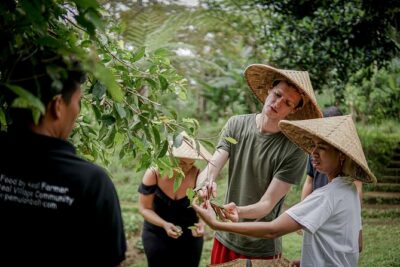
PRIVATE Balinese Cooking Class in Ubud with Dewa with Transfers
Read our review →Browse the lists this tour appears in