
Reviewed · COOKING CLASSES
authentic Balinese organic cooking class in Ubud
Pick your spices, then cook them. This four-hour Ubud experience takes you from accommodation pickup to a family farm, garden harvest, hands-on cooking, and lunch made with your own work. I like the direct link between the ingredients and the finished food, and I like that the class uses mostly manual tools rather than turning the lesson into a polished kitchen show. The main consideration is that the class depends on good weather and may feel rustic if you prefer a modern cooking school.
You pay $47 per person, with pickup and drop-off included. That makes the price fair for a half-day outing, especially since you get a welcome drink, a farm visit, cooking instruction, and a full meal. The maximum group size is 10, so this should feel more personal than a large demonstration class.
In This Review
- Key points at a glance
- Why this Ubud cooking class feels different
- Pickup starts the half-day in Ubud
- The farm and garden are part of the lesson
- Ninek leads a practical Balinese cooking lesson
- Lunch comes with a rice terrace view
- Optional extras may extend the day
- What the $47 price includes in practical terms
- Who will enjoy this class most
- Weather, group size, and booking advice
- The main strengths and limitations
- Should you book the Ubud organic cooking class?
- FAQ
- Where does the cooking class take place?
- How much does the experience cost?
- How long does the cooking class last?
- Is pickup included?
- Is a mobile ticket available?
- What happens at the beginning of the class?
- Do you pick ingredients from the farm?
- How many people can join the class?
- How many dishes might you prepare?
- What happens if the weather is poor?
Key points at a glance
- Farm-to-table cooking: Pick some of the ingredients directly from the organic farm before using them in the kitchen.
- A real Balinese food lesson: Learn how local ingredients work in Balinese dishes, including their cooking and medicinal uses.
- Six dishes in one class: The class can include guidance through six different dishes, giving you plenty to practice.
- Rice terrace setting: Eat the meal you prepared while looking over a rice terrace.
- Small group size: A maximum of 10 people keeps the class from becoming a crowded production.
- Simple, manual cooking tools: The old-fashioned setup adds character, though it may require more hands-on effort.
Why this Ubud cooking class feels different
Many cooking classes begin with bowls of measured ingredients lined up on a workbench. This one begins earlier, with the plants themselves. You visit the farm and garden, learn which leaves, roots, and spices are used, and pick some ingredients during the harvest period.
That matters because Balinese cooking is not just about following a recipe. It is about knowing how ingredients fit together, which flavors form the base of a dish, and how plants can serve more than one purpose. The cooking teacher, Ninek, is praised for explaining the ingredients, showing how to pick them, and discussing other medicinal uses.
I like this approach because you gain a clearer sense of where the food comes from. You are not simply making an attractive plate for a photograph. You are handling the raw materials and then seeing how they change in the kitchen.
The setting also gives the class a family-run feel. The driver is described as friendly and proud of the family farm, which adds a personal touch before the cooking even begins. For me, that local connection is one of the strongest reasons to choose this class over a standard city kitchen.
More Cooking Classes in Ubud
- Ubud Cooking Class Bali with Balinese Chef
★ 5.0 · 1,609 reviews - PRIVATE Authentic Balinese Cooking Class in Ubud at Putu’s Home
★ 5.0 · 644 reviews - Balinese Ubud cooking school (9 Dish Cooking and Market Tour)
★ 5.0 · 540 reviews
Pickup starts the half-day in Ubud
The experience begins with pickup at your accommodation. From there, you are taken to the farm, where you receive a welcome drink and meet the chef.
The pickup service is useful in Ubud, where roads can be busy and addresses are not always as simple as they look on a map. You do not need to arrange a separate taxi to a rural farm, and you do not have to find your own way back after lunch. The return transfer is included at the end.
The experience lasts about four hours, so the morning or early afternoon is set aside for the whole activity. Since the exact pickup time is not provided, check your confirmation carefully after booking. Confirmation is sent at the time of booking, and the mobile ticket makes it easy to keep the details on your phone.
The driver is part of the experience, not just a person behind the wheel. A warm and informative ride can set the tone for the day, especially when the driver is connected to the farm and happy to explain its role.
The farm and garden are part of the lesson
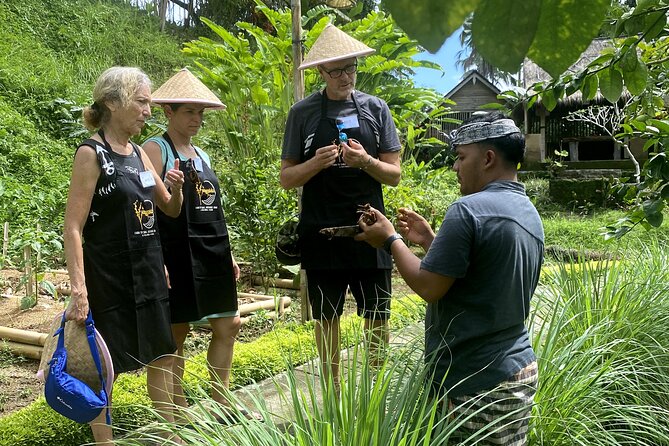
After the welcome drink and introduction, you visit the garden used for the cooking class. Several plants grow there, including ingredients used for spices and staple foods.
The important point is that the garden is not just decoration. The class uses what grows there as part of the lesson. During harvest time, you can pick ingredients directly from the farm and carry them into the kitchen for preparation.
You might see plants in a way that is quite different from how they appear in a market or restaurant dish. The chef explains what each ingredient does, how it contributes to flavor, and how it is handled before cooking. That is especially useful if you want to recreate Balinese food at home, where unfamiliar roots, herbs, and leaves can otherwise be hard to identify.
The organic focus is central to the class. It gives you a chance to connect farming practices with cooking, rather than treating the word organic as a label on a menu. Still, the experience should not be mistaken for a formal agricultural tour. The farm visit supports the cooking lesson, and the main activity remains preparing and eating the food.
Ninek leads a practical Balinese cooking lesson
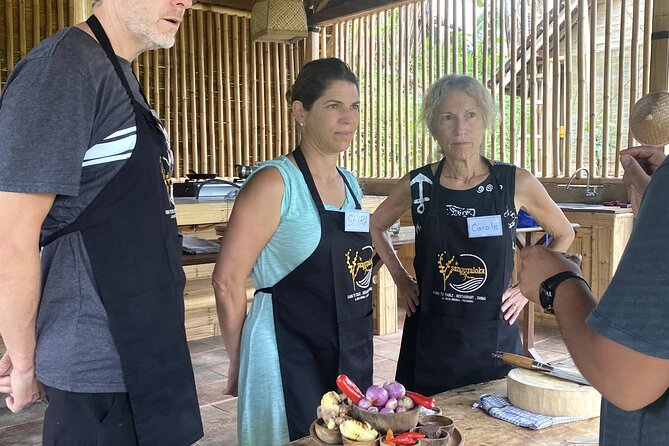
The cooking portion is hands-on. Ninek guides you through the ingredients and preparation, and one detailed account describes creating six different dishes during the class.
That is a generous amount of food for a four-hour session, though the pace may be active. You are likely to spend less time on one perfect recipe and more time learning several parts of Balinese cooking. This suits you if you want variety and a broad introduction to local food.
The chef explains the ingredients from the beginning, including their uses, before showing how they become finished dishes. This gives the class more substance than simply copying a recipe card. You can ask questions as you work, observe how the ingredients are combined, and see how manual techniques affect the preparation.
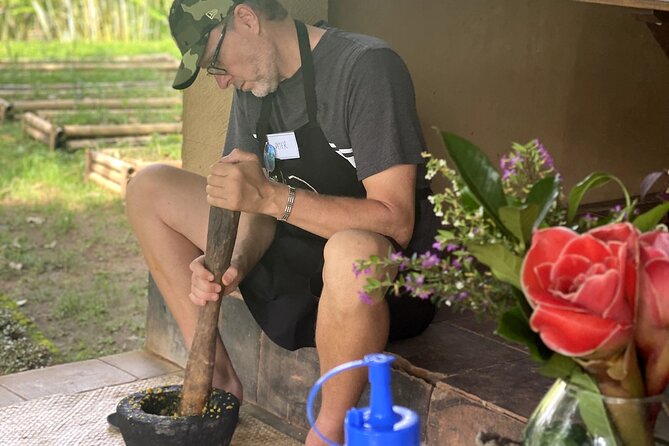
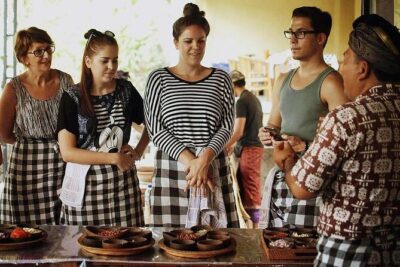
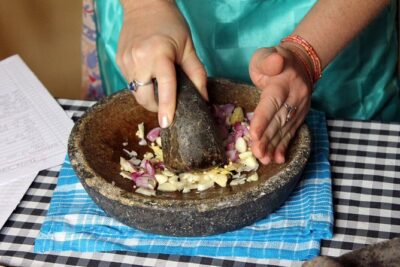
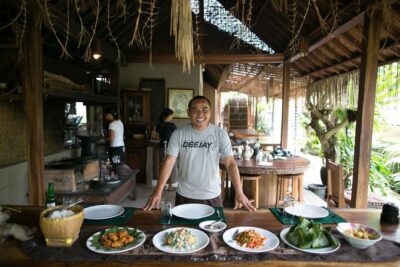
The tools are almost all manual. That may mean grinding, chopping, mixing, or preparing ingredients without the quick convenience of electric equipment. I see this as a strength for anyone who wants a traditional-feeling lesson, but it is also a practical caution. The class involves real participation, so you should expect to work rather than sit back and watch.
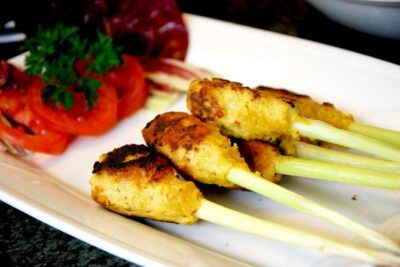
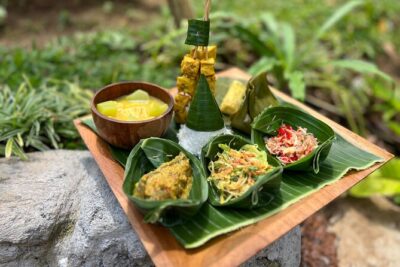
The information provided does not list the exact dishes. You will be making Balinese food, but you should not book this class expecting a fixed menu of named recipes unless the operator confirms it in advance. The number and type of dishes may depend on the ingredients available and the season.
A completely different kind of day out in Ubud:
- All-Inclusive Ubud Private Tour
★ 5.0 · 14,344 reviews - Best of Ubud Full-Day Tour with Jungle Swing
★ 5.0 · 8,571 reviews - Ubud: Monkey Forest, Jungle Swing, Rice Terrace, and Water Temple
★ 5.0 · 7,160 reviews - Best of Ubud 1-Day Private Tour
★ 5.0 · 4,451 reviews
Lunch comes with a rice terrace view
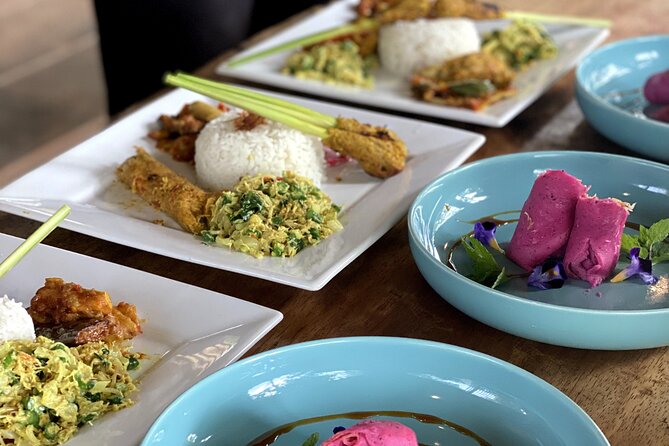
Once the cooking is finished, you eat the meal you prepared. The dining setting overlooks a rice terrace, giving the final part of the class a strong sense of place.
This is one of the best parts of the format. You do not leave the food on a plate for someone else to serve. You sit down and taste the result of the work you have just done, with the farm and rice-growing area still close by.
The view also slows the experience down. After picking, chopping, grinding, and cooking, lunch becomes a chance to relax and talk about what you made. The setting may be simple rather than formal, but that fits the family-farm character.
Food quality receives very strong praise. The dishes are described as tasty and amazing, and the cooking itself is considered as enjoyable as the eating. That combination is important. A class can have a fine view and still disappoint at the table. Here, the food appears to be one of the main reasons to book.
Optional extras may extend the day
One detailed account mentions optional activities including a swing and a natural waterfall. These are not presented as core parts of the four-hour cooking class, so you should treat them as possible additions rather than guaranteed inclusions.
Ask about the cost, timing, and weather conditions for any extra activity before you commit. The cooking class already has a clear structure, and adding other stops could change the length of the outing.
If you are mainly interested in food, the farm, garden, cooking, and lunch are enough to fill the experience. If you want to add more rural sightseeing, the optional activities may make the outing more varied, provided the schedule allows it.
What the $47 price includes in practical terms
At $47 per person, this is not the cheapest way to eat in Bali. You can find inexpensive meals around Ubud for far less. But that is not the right comparison.
You are paying for transport, instruction, ingredient gathering, cooking, and lunch. You also receive access to a family farm and garden, along with a small class capped at 10 people. For a four-hour activity, the package offers more than a restaurant meal and more personal contact than a large cooking demonstration.
The value is strongest if you care about learning. You return with an understanding of ingredients, preparation, and the link between the farm and the plate. If you only want to sample Balinese food, the price may feel high compared with simply eating at a local warung.
I would also compare the cost with the time saved by having pickup and drop-off arranged. Ubud transport can take patience, so the included transfers make the price easier to justify. The class is most worthwhile when you have half a day available and want an activity with food at its center.
Who will enjoy this class most
I would recommend this experience to:
- Home cooks who want to learn how Balinese ingredients are used.
- Food-focused visitors who prefer a meal connected to its source.
- Couples and small groups looking for a relaxed activity outside central Ubud.
- Families with older children who enjoy picking, preparing, and eating food.
- People interested in traditional methods and manual cooking tools.
- Visitors who value local family businesses over a polished commercial kitchen.
It may be less suitable if you need a tightly timed schedule or dislike outdoor conditions. The weather can affect the activity, and the garden setting may involve sun, uneven ground, or ordinary farm conditions, though no formal accessibility details are provided.
You should also be comfortable with some uncertainty about the menu. The class promises Balinese dishes and organic ingredients, but the exact recipes are not specified. Ask ahead if you have allergies, dietary restrictions, or a strong preference for certain foods. The supplied details do not confirm how special diets are handled.
Weather, group size, and booking advice
The class requires good weather. If poor weather causes a cancellation, you are offered another date or a full refund. That policy is helpful, but it means you should keep some flexibility in your Ubud schedule.
You can cancel for a full refund if you do so at least 24 hours before the start time. Cancellations or changes made less than 24 hours before the experience are not refunded or accepted, and the cutoff follows local time.
The maximum group size is 10. That is small enough for the chef to give attention across the cooking area, but it is not necessarily a private class. If you want a fully private experience, confirm that directly before booking.
The mobile ticket is convenient, and booking confirmation arrives at the time of booking. Keep the pickup details handy, especially if your accommodation is in a busy or hard-to-find part of Ubud.
The main strengths and limitations
The biggest strength is the full chain from farm to meal. You learn what the ingredients are, pick some of them, prepare them with manual tools, and eat the final dishes in a rice terrace setting.
The second strength is the personal tone. The friendly driver, the family farm, and Ninek’s detailed instruction give the class warmth. The strongest praise centers on the staff, the food, the setting, and the pleasure of learning how to make the dishes.
The main limitation is the lack of a fixed menu in the available details. You know you will cook Balinese food and may prepare six dishes, but you do not know the exact recipes. That is part of the seasonal character, yet it can be a problem for anyone planning around allergies or specific dietary needs.
The other limitation is the weather requirement. A farm and garden class cannot offer the same certainty as an indoor kitchen. Plan it for a day when you can handle a schedule change.
Should you book the Ubud organic cooking class?
Book it if you want more than a recipe lesson. The farm visit, ingredient picking, manual preparation, rice terrace lunch, and friendly family setting give you a useful connection to Balinese food.
At $47, the experience is good value for a half-day because transport and lunch are included. I would choose it early in your Ubud stay, especially if you want to learn a few food ideas you can recognize and order during the rest of your time in Bali.
Skip it if you want an exact menu, a formal indoor kitchen, or a fully predictable schedule. For everyone else, this is a warm, practical introduction to Balinese cooking, with the food and setting doing most of the talking.
FAQ
Where does the cooking class take place?
The experience takes place in Ubud, Indonesia, at a farm and garden used for the organic cooking class.
How much does the experience cost?
The price is $47 per person.
How long does the cooking class last?
The experience lasts approximately four hours.
Is pickup included?
Yes. Pickup from your accommodation is offered, and drop-off is provided at the end of the activity.
Is a mobile ticket available?
Yes. The experience offers a mobile ticket.
What happens at the beginning of the class?
You are picked up at your accommodation and taken to the farm. You receive a welcome drink, and the chef explains the class before cooking begins.
Do you pick ingredients from the farm?
Yes. During the harvest period, ingredients can be picked directly from the farm and then taken to the kitchen for preparation.
How many people can join the class?
The activity has a maximum of 10 participants.
How many dishes might you prepare?
The class can include instruction for making six different dishes, although the exact menu is not provided.
What happens if the weather is poor?
If bad weather causes the experience to be canceled, you are offered a different date or a full refund. You can also cancel at least 24 hours before the start time for a full refund.
Just added around Ubud
- Melangit White Water River Rafting★ 5.0 · 4 reviews
- UNESCO Sites Cultural Walking Tour in Bali★ 5.0 · 4 reviews
- Magical Village Tour & Private Dinner with Fireflies in Bali★ 5.0 · 4 reviews
- Balinese Cooking Experience★ 4.0 · 4 reviews
- 1 hour bali horse riding & Swim at the beach★ 3.5 · 4 reviews
- Ubud Tour : Monkey forest, Rice terrace, Water temple, Waterfall & Jungle Swing★ 5.0 · 4 reviews
- Bali Ayung River White Water Rafting with Transport★ 5.0 · 4 reviews
- Munduk: Tamblingan jungle trek, waterfall, Ulun Danu temple★ 5.0 · 4 reviews
Cooking Classes, compared.
PRIVATE Authentic Balinese Cooking Class in Ubud at Putu’s Home
Read our review →
Balinese Ubud cooking school (9 Dish Cooking and Market Tour)
Read our review →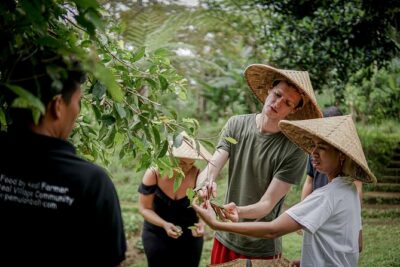
PRIVATE Balinese Cooking Class in Ubud with Dewa with Transfers
Read our review →Browse the lists this tour appears in