
Reviewed · COOKING CLASSES
Authentic Balinese Cooking Class in Ubud
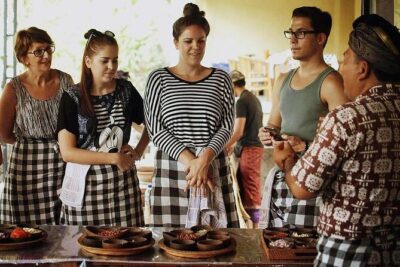
Come hungry, leave with a new skill. This five-hour Ubud experience combines hands-on Balinese cooking with a traditional market visit, a local home, and a farm where you gather some of the ingredients for lunch. I especially like the small-group setting and the chance to see how food connects with daily Balinese life. The main consideration is that the market visit is available only with the morning class, and pickup costs extra from beach areas outside Ubud.
I also like the easy pickup and drop-off from Ubud addresses, along with a choice of vegetarian or regular dishes. The class currently has a 5 out of 5 rating from 46 ratings, with 100 percent recommending it. Still, a group of up to 15 people is not truly intimate, so the experience may feel less personal when it reaches full capacity.
In This Review
- Key points at a glance
- Why this Ubud cooking class feels different
- Start at the market with the morning departure
- Visit a typical Balinese home
- Harvest spices at the farm west of Ubud
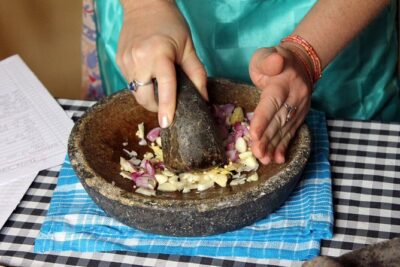
- Learn the mortar-and-pestle method
- Choose a vegetarian or regular menu
- What the $49 price really covers
- Pickup, timing, and group size
- The people who help shape the experience
- Who should book this experience
- Practical booking advice before you pay
- Should you book the Ubud cooking class?
- FAQ
- How long does the Balinese cooking class last?
- Where is the cooking class located?
- Is pickup included?
- Are transfers from other parts of Bali included?
- Does the morning class include a market visit?
- Can I choose a vegetarian menu?
- What is included in the price?
- What is the cancellation policy?
Key points at a glance
- Morning class includes a traditional market visit: You can help choose and buy local spices before cooking.
- The class takes place at a farm west of Ubud: You harvest some ingredients before preparing lunch.
- A Balinese home visit adds cultural context: You see the layout of a typical home and learn about local ways of life.
- You choose between vegetarian and regular menus: This makes the class workable for different diets.
- Transfers are included from Ubud addresses: Pickup from Sanur, Kuta, Seminyak, Canggu, Nusa Dua, Jimbaran, and Uluwatu costs extra.
- The $49 price covers the main essentials: Lunch, drinks, equipment, an apron, transport in the Ubud area, and a PDF recipe are included.
Why this Ubud cooking class feels different
Many cooking classes teach you how to follow a recipe. This one gives you a little more context before you reach the chopping board. You begin by seeing where local ingredients are bought, how a Balinese home is arranged, and how spices grow before you use them.
That sequence matters. Balinese cooking depends heavily on fresh aromatics, spice pastes, coconut, herbs, and careful preparation. Rather than treating those ingredients as items pulled from a supermarket shelf, the class shows you their place in local life.
The setting also helps. The cooking school sits on the west side of Ubud, surrounded by greenery and a countryside atmosphere. You are not spending the entire day in a sealed kitchen. The class moves between market, home, farm, and cooking area.
I would not call this a private village visit. The maximum group size is 15, and the level of personal attention will depend on how many people book that day. Even so, the format gives you more than a standard demonstration followed by a meal.
More Cooking Classes in Ubud
- Ubud Cooking Class Bali with Balinese Chef
★ 5.0 · 1,609 reviews - PRIVATE Authentic Balinese Cooking Class in Ubud at Putu’s Home
★ 5.0 · 644 reviews - Balinese Ubud cooking school (9 Dish Cooking and Market Tour)
★ 5.0 · 540 reviews
Start at the market with the morning departure
If you choose the morning option, the day begins with a visit to a traditional market. You help buy some of the spices used later in class, which gives the first part of the experience a practical purpose.
The market is likely to be the most active portion of the outing. You can expect a local shopping setting rather than a polished food hall designed for tourists. That means the surroundings may be crowded, noisy, or less tidy than a modern market, but those are part of seeing how everyday food shopping works.
I recommend the morning class if you want the full program. The market visit gives you a better sense of the ingredients before the cooking begins, and it fills out the five-hour schedule with something you would not get in an afternoon session.
The trade-off is simple: morning departure requires you to plan around an early start, and the market stop is not available at other departure times. If you already have a packed Ubud schedule, a later class may be easier, but you will miss this part.
Visit a typical Balinese home
After the market, you visit a local house and learn about Balinese culture, family life, and the way buildings are arranged within the home. This is one of the most useful parts for anyone who wants more than a food lesson.
The visit helps explain that a Balinese home is not simply a single building with rooms arranged around a hallway. The experience focuses on the placement of buildings and the way the home functions, giving you a clearer view of local daily life.
This stop can also be unpredictable in a good way. One outing included a ceremony for a baby’s first month birthday according to the Balinese calendar. That kind of moment cannot be guaranteed, but it shows why a visit to a real home can offer something a staged cultural show cannot.
You should keep your expectations sensible. This is a short cultural visit within a cooking day, not a full study of Balinese religion or architecture. The value comes from seeing a lived-in setting and having someone explain what you are looking at.
Harvest spices at the farm west of Ubud
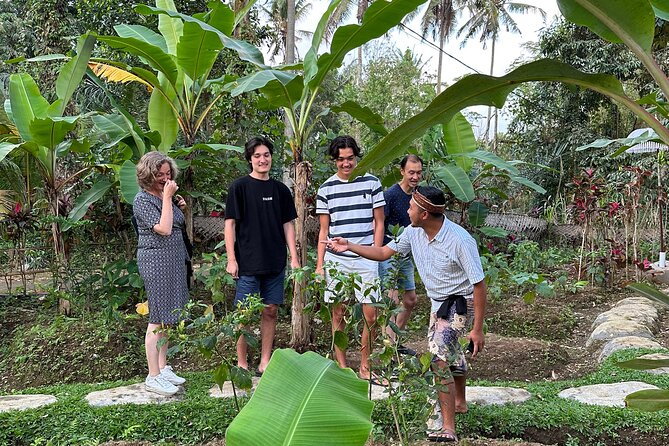
The class then moves to the farm, where you explore the grounds and gather spices for the recipes. This is a small but important detail. You are not only told that ingredients are fresh, you take part in collecting some of them.
The farm setting also gives the class a calmer rhythm after the market and home visit. You get a look at the plants behind the flavors, then carry those ingredients into the kitchen.
I like this part because it connects the meal to place. A spoonful of spice paste can seem abstract when you buy it prepared. Handling the ingredients first makes the later pounding and cooking feel more meaningful.
The supplied information does not identify every crop or promise a specific harvest, so you should not expect to pick every ingredient in the menu. Instead, think of the farm visit as a short introduction to the spices used that day.
A completely different kind of day out in Ubud:
- All-Inclusive Ubud Private Tour
★ 5.0 · 14,344 reviews - Best of Ubud Full-Day Tour with Jungle Swing
★ 5.0 · 8,571 reviews - Ubud: Monkey Forest, Jungle Swing, Rice Terrace, and Water Temple
★ 5.0 · 7,160 reviews - Best of Ubud 1-Day Private Tour
★ 5.0 · 4,451 reviews
Learn the mortar-and-pestle method
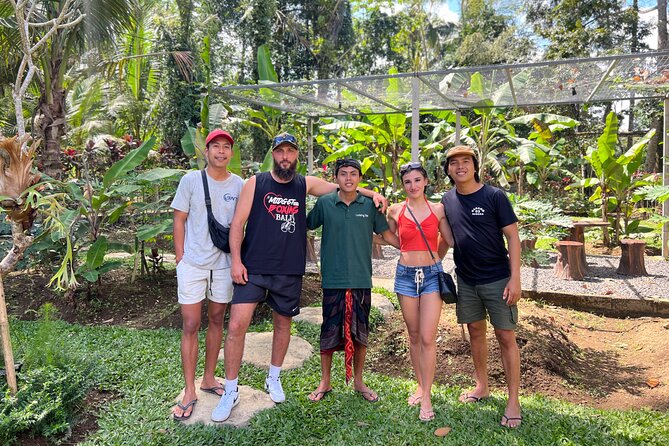
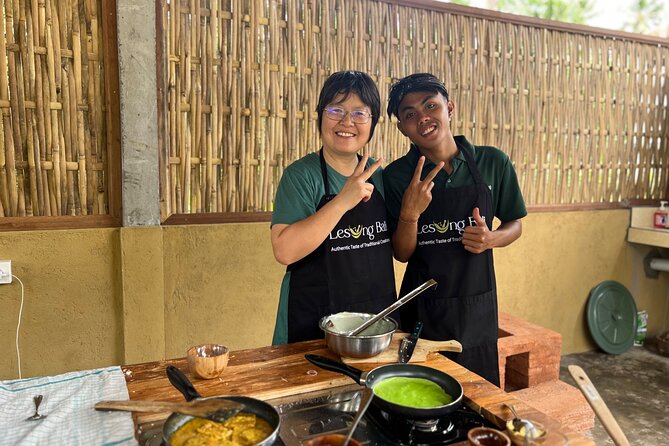
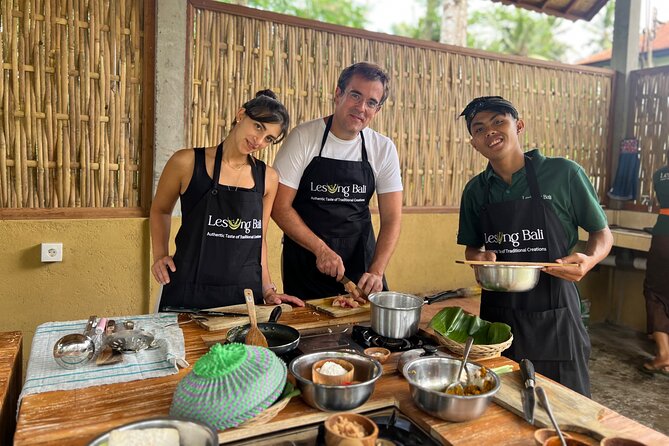
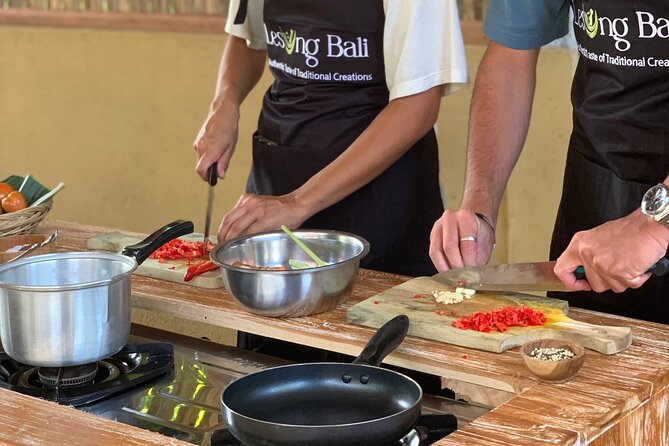
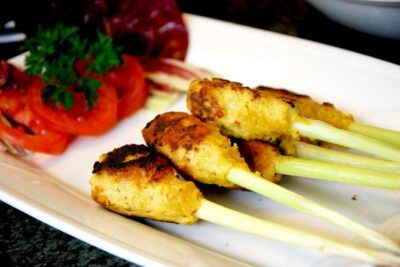
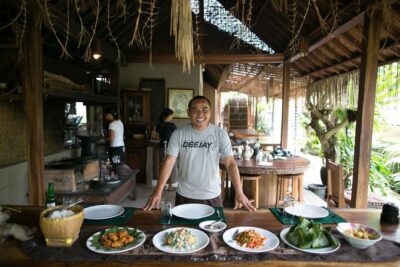
The core lesson is practical. A Balinese chef shows you how to prepare authentic dishes using fresh ingredients, and you take part in the work rather than simply watching.
A key technique is chopping and pounding spices with a lesung, a traditional mortar and pestle. This takes more effort than using a food processor, but it changes the texture and gives you a better feel for how Balinese spice pastes are made.
The chef also explains quantities, cooking methods, and what each menu requires. That guidance is helpful for beginners, since Balinese recipes can look simple on paper while involving several stages of grinding, frying, wrapping, or simmering.
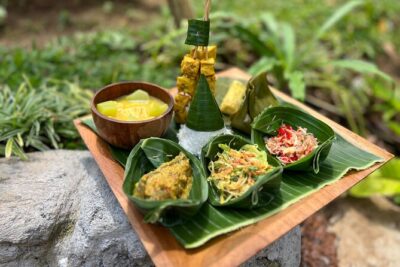
You also learn how food is prepared in banana leaves. That detail adds a traditional touch and gives you a technique you can try again at home, even if your own kitchen lacks a Balinese-style setup.
The class includes cooking utensils and an apron, so you do not need to bring special equipment. A PDF recipe is provided afterward, which is useful because you are unlikely to remember every ingredient and proportion after a busy five-hour session.
Choose a vegetarian or regular menu
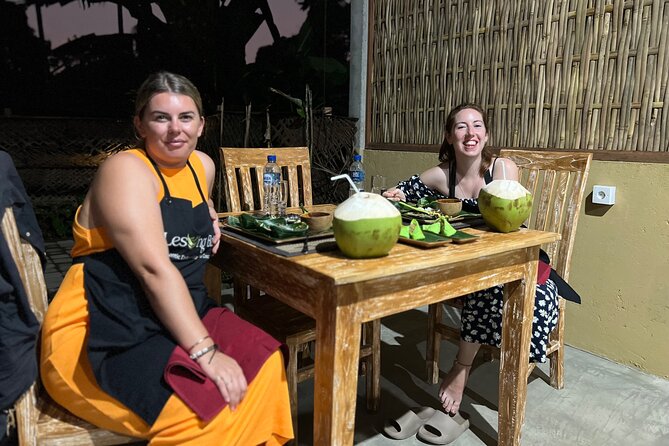
You can choose between vegetarian and regular menu options during the class. That flexibility makes the experience easier for couples, families, and mixed groups who do not all eat the same way.
The information provided does not give the exact dishes available on the day. Menus may depend on the ingredients selected and the class format, so you should not book expecting one named dish unless it is confirmed separately.
This is worth keeping in mind if you have allergies or strict dietary needs. The class clearly offers vegetarian and regular choices, but the available information does not promise specific allergy handling or a fully customized menu.
The food becomes your lunch, and lunch is included in the $49 price. You also receive bottled water and coffee or tea, so you are not paying separately for the meal or basic drinks once the class begins.
What the $49 price really covers
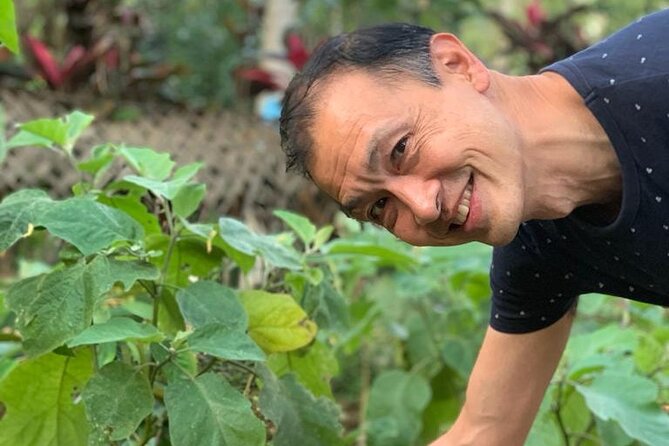
At $49 per person, this is more than a cooking demonstration. The price includes approximately five hours of activity, Ubud-area pickup and drop-off, lunch, bottled water, coffee or tea, an air-conditioned vehicle, cooking equipment, an apron, and a PDF recipe.
That is a solid package if you are staying in Ubud and would otherwise need to arrange transport to a cooking school. The included vehicle is especially useful in Bali, where getting between rural locations can take more planning than the map suggests.
The value is less clear if you are staying far from Ubud. Pickup from Sanur costs an additional 400,000 Indonesian rupiah per car. The extra charge is 450,000 rupiah per car from Kuta, Seminyak, and Canggu; 550,000 from Nusa Dua and Jimbaran; and 700,000 from Uluwatu.
Those are vehicle charges, not per-person charges, but they can change the total considerably for a solo participant or a small group. If you are based outside Ubud, compare the added transfer cost with the price of arranging your own transport.
For Ubud visitors, the combination of transport, food, instruction, and cultural stops makes the price easier to justify. For people staying on the coast, the class may still be worthwhile, but the transfer fee becomes part of the decision.
Pickup, timing, and group size
Pickup and drop-off are offered from addresses in the Ubud area. An air-conditioned vehicle is included, which matters in Bali’s heat and makes the transfers more comfortable than relying on an open-sided vehicle.
You can select from different departure times, allowing you to fit the class around other plans. The morning option is the one to choose if the market matters to you.
The total duration is about five hours. That is long enough to make this a main activity for the day, not a quick add-on between temple visits. Plan around it rather than trying to squeeze several distant attractions into the same time period.
The maximum group size is 15 people. A smaller group should allow more chances to ask questions and get help with preparation. At full size, expect a more social class with shared instruction rather than one-on-one coaching.
That group limit is still reasonable for a hands-on activity, but you should not confuse small-group with private. If you want a completely tailored lesson, this is not described as a private class.
The people who help shape the experience
The cooking instructor Putri receives specific praise for being a delight during one family’s class. That is useful context for parents, since the experience worked for a couple traveling with their son.
Another highly praised person is Ron, who was described as the highlight of a birthday outing. The birthday connection suggests that the experience can work well as a shared celebration, especially for couples who prefer an activity to a formal dinner.
Drivers also play an important role because the experience includes transfers. One driver was appreciated for being pleasant, answering questions about local culture, and making a requested stop along the way.
The information does not guarantee that Putri, Ron, or a particular driver will lead your outing. Staff assignments can change. Still, the repeated praise for friendly instruction and helpful transport gives you a reasonable idea of the service style to expect.
Who should book this experience
I would recommend this class to you if you want food, culture, and a countryside setting in one half-day outing. It suits first-time visitors who want an introduction to Balinese cooking without organizing market visits, transport, and a meal separately.
Families can also find it appealing. The combination of vehicle transfers, a farm, hands-on food preparation, and lunch offers more variety than a class held in one room. Children who enjoy practical activities may prefer this format to a long cultural lecture.
It is also a good choice for couples. One person can book it as a birthday activity, and the shared work gives you something to do together instead of simply sitting across a restaurant table.
Vegetarians have a clear menu option, but people with serious allergies should confirm the arrangements before booking. The available details mention vegetarian and regular menus, not a complete allergy policy.
You may want to skip it if your only goal is a short lesson focused on one famous Balinese dish. The market, home, farm, transport, and lunch all take time, so the class is best for you if you value the wider setting as much as the recipes.
Practical booking advice before you pay
This experience is booked an average of 21 days in advance, so I would reserve ahead if your Ubud dates are fixed. That is especially sensible if you want the morning departure or need a particular day.
Confirmation is provided at the time of booking. Pickup details still matter, so enter your Ubud address carefully and check the extra vehicle charge if you are staying outside the Ubud area.
You can cancel for a full refund if you do so at least 24 hours before the local start time. Cancellations or changes made within 24 hours are not refunded or accepted. The class also depends on good weather, and if poor weather forces cancellation, you are offered another date or a full refund.
Those terms are fair for a scheduled half-day outing, but they give you little flexibility at the last minute. I would avoid booking it on a day when your transport or sightseeing plans are uncertain.
Should you book the Ubud cooking class?
Book it if you want to understand Balinese food through its ingredients, homes, farms, and cooking methods, not just eat a prepared lunch. The strongest reasons are the morning market, the local home visit, the farm harvest, and the chance to pound spices yourself with a lesung.
The $49 price is good value when you stay in Ubud and use the included transfers. Add the outside-area vehicle fee carefully if you are based near the coast.
Choose the morning class for the fullest experience. Choose a later departure only if your schedule demands it and you are willing to miss the market. For a family, couple, or food-minded first-time visitor, this offers a friendly and useful introduction to Bali, with a recipe PDF to help the memory last beyond lunch.
FAQ
How long does the Balinese cooking class last?
The experience lasts approximately five hours.
Where is the cooking class located?
The class is on the west side of Ubud, in an area surrounded by greenery with a countryside atmosphere.
Is pickup included?
Pickup and drop-off are included for addresses in the Ubud area.
Are transfers from other parts of Bali included?
No. Extra vehicle charges apply from Sanur, Kuta, Seminyak, Canggu, Nusa Dua, Jimbaran, and Uluwatu.
Does the morning class include a market visit?
Yes. The morning class includes a visit to a traditional market to buy some of the spices used for cooking.
Can I choose a vegetarian menu?
Yes. Vegetarian and regular menu options are available during the class.
What is included in the price?
The $49 price includes Ubud-area transfers, lunch, bottled water, coffee or tea, an air-conditioned vehicle, a PDF recipe, cooking utensils, and an apron.
What is the cancellation policy?
You can cancel at least 24 hours before the local start time for a full refund. Cancellations or changes made less than 24 hours before the start time are not refunded. If poor weather causes the class to be canceled, you can choose another date or receive a full refund.
Just added around Ubud
- Kintamani Batur Jeep Sunrise Tour★ 5.0 · 3 reviews
- Bali Downhill Cycling and White Water Rafting★ 5.0 · 3 reviews
- Ubud Highlights Rice Terraces, Temple, Waterfall & Monkeys forest★ 5.0 · 3 reviews
- Bali ATV Quad Bike & Ayung River Rafting Combo with Lunch★ 5.0 · 3 reviews
- Half Day Uluwatu Temple Sunset, Kecak Dance and Seafood Dinner★ 3.5 · 3 reviews
- Blue Lagoon Snorkeling and Lunch with Tukad Cepung Waterfall★ 5.0 · 3 reviews
- Ancien Wisdom and Culture tour★ 5.0 · 3 reviews
- Full-Day Tour in Nusa Penida Island + Snorkeling Experience★ 5.0 · 3 reviews
Cooking Classes, compared.
PRIVATE Authentic Balinese Cooking Class in Ubud at Putu’s Home
Read our review →
Balinese Ubud cooking school (9 Dish Cooking and Market Tour)
Read our review →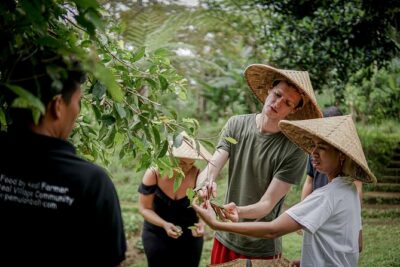
PRIVATE Balinese Cooking Class in Ubud with Dewa with Transfers
Read our review →Browse the lists this tour appears in