
Reviewed · WORKSHOPS
Bali Fruit Carving Class
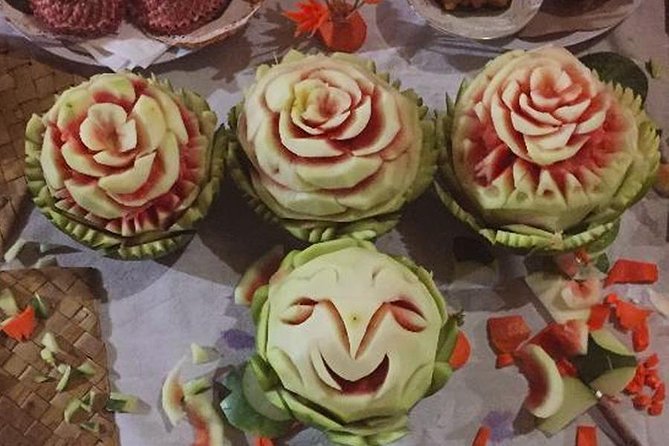
Food becomes art here. In Lodtunduh, just south of Ubud, you spend about two hours turning watermelons, papaya, carrots, and other produce into flowers, insects, animals, or even your name. I like the small maximum group of 10, which gives the instructor room to offer help, and I like that every tool and material is supplied. The peaceful outlook toward rice fields adds a pleasant Balinese setting to what could otherwise be a simple craft lesson.
The class works well for families, couples, and solo visitors who want something more hands-on than another sightseeing stop. The welcome drink, traditional snack, and certificate add value to the $39 price. The main drawback is practical: transport is not included, and the experience is non-refundable, so you need to be sure of your plans before booking.
In This Review
- Quick take: what makes this class worth your morning
- Arriving at WS Art Studio in Lodtunduh
- A relaxed welcome before the carving begins
- Learning the basic cuts from the instructor
- From watermelon and papaya to flowers and names
- Why the rice-field outlook improves the class
- What the small group size means for you
- The included items add real value to the $39 cost
- Who will enjoy this Ubud activity most
- A useful two-hour plan
- Practical limits to keep in mind
- Should you book the Bali Fruit Carving Class?
- FAQ
- Where does the Bali Fruit Carving Class take place?
- What time does the class start?
- How long does the activity last?
- How many people can join the class?
- What is included in the price?
- Is transportation included?
- What ages can participate?
- Can I cancel or change my booking?
Quick take: what makes this class worth your morning
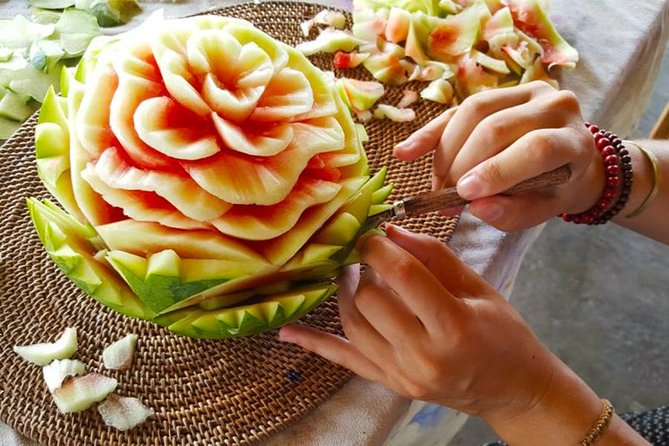
- You create edible art from fresh produce: Practice carving flowers, animals, insects, or your name into fruit and vegetables.
- The group stays small: With no more than 10 people, you should have a better chance to receive personal guidance.
- The class suits a wide age range: The stated age range is 4 to 65, making this a useful family activity.
- The setting adds calm: The studio in Lodtunduh has views toward rice fields, which can make the creative work feel relaxed rather than rushed.
- The price includes the essentials: Equipment, materials, a welcome drink, a traditional snack, and a certificate are all provided.
- It begins and ends in the same place: You meet at WS Art Studio Balinese Handicrafts at 10:00 am and return there when the activity finishes.
Arriving at WS Art Studio in Lodtunduh
Your meeting point is WS Art Studio Balinese Handicrafts, at C7X4+JFP in Lodtunduh, Ubud, Gianyar Regency, Bali 80571. The location is described as easy to find and near public transportation, which helps if you are arranging your own way there.
This is not a hotel pickup experience. You need to organize your own transport, and the $39 cost does not cover personal expenses, insurance, or a ride to and from the studio. Check your route before the morning begins, especially if you are staying elsewhere in the Ubud area.
The start time is 10:00 am. That timing gives you a useful half-day plan: attend the class in the morning, then continue with lunch, another craft activity, or sightseeing around Ubud afterward. Since the session lasts about two hours and ends back at the studio, you are not committed to a long day away from town.
You receive a mobile ticket, which is convenient for keeping the booking details on your phone. Confirmation arrives within 48 hours of booking, subject to availability, so do not leave the reservation until the last possible moment if your schedule is fixed.
A few more Ubud trips worth weighing up
- Ubud Cooking Class Bali with Balinese Chef
★ 5.0 · 1,609 reviews - Ubud Silver Class Jewelry making in bali
★ 5.0 · 978 reviews - PRIVATE Authentic Balinese Cooking Class in Ubud at Putu’s Home
★ 5.0 · 644 reviews
A relaxed welcome before the carving begins
The class includes a welcome drink and a traditional snack. These are modest inclusions, but they matter because they give the session a more local character than a bare craft lesson with tools laid out on a table.
The snack also fits the theme. You are learning how food can be shaped, presented, and enjoyed in a new way, so a traditional bite is a natural part of the experience. One particularly favorable impression of the class praised the morning tea and the calm outlook over the rice fields.
I would treat this opening as a chance to settle into the setting and look over the materials. Fruit carving requires patience and precision. You will get more from the lesson if you resist the urge to rush straight into making the fanciest design.
Learning the basic cuts from the instructor
The instructor demonstrates the technique and then guides you as you practice. The point is not simply to copy a finished decoration. You learn how to handle the fruit and make controlled cuts, then use those cuts to form recognizable shapes.
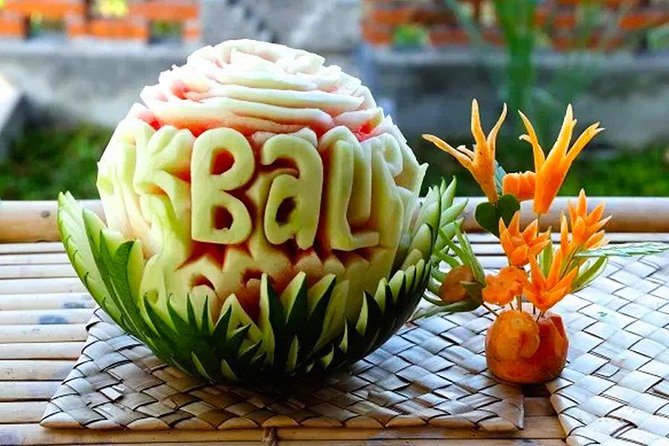
The available designs include flowers, animals, insects, and names. The choice gives you room to match the activity to your skill and mood. A young child might enjoy a simple flower or insect, while an older participant may want to attempt a more detailed design or lettering.
The class description stresses patience and precision, and that is useful advice rather than marketing fluff. Fruit is soft, but that does not make detailed carving effortless. A small slip can change the shape, and thin sections may require a careful hand. The instructor’s role is important here, particularly for children or anyone who has never used carving tools.
The activity is presented as suitable for ages 4 to 65. Children can enjoy the playful side of making edible art, while adults may appreciate the concentration required. Parents should still use their own judgment about how closely younger children need to be supervised, since the exact equipment and level of adult assistance are not specified.
From watermelon and papaya to flowers and names
Watermelons and papayas are among the fruits used in the class, with carrots also included for designs such as flowers and insects. These different foods give you more than one texture and shape to work with.
A watermelon offers a broad surface for a larger design. Papaya and carrots can work well for smaller decorative pieces or shaped details. The class gives you the chance to see how the choice of produce affects the finished result, which is part of the lesson’s appeal.
You are not limited to a formal decorative pattern. Carving your name makes the work personal, while flowers and animals provide familiar shapes that are satisfying to recognize as they take form. The phrase making dessert takes on a literal twist here, since the result is art that can also be eaten.
Do not expect a professional competition piece after two hours. The value is in learning a skill you can try again at home with suitable fruit and safe tools. One of the strongest comments about the experience pointed out that the techniques can be applied to many kinds of food. That is a good reason to see the class as a practical introduction rather than a one-time photo opportunity.
A completely different kind of day out in Ubud:
- All-Inclusive Ubud Private Tour
★ 5.0 · 14,344 reviews - Best of Ubud Full-Day Tour with Jungle Swing
★ 5.0 · 8,571 reviews - Ubud: Monkey Forest, Jungle Swing, Rice Terrace, and Water Temple
★ 5.0 · 7,160 reviews - Best of Ubud 1-Day Private Tour
★ 5.0 · 4,451 reviews
Why the rice-field outlook improves the class
The studio’s outlook toward rice fields is one of the more appealing details of the experience. Fruit carving requires focus, and a quiet view can make that concentration enjoyable. You are doing something with your hands while still getting a sense of Ubud’s rural surroundings.
This setting also helps distinguish the activity from an indoor craft workshop in a city shopping center. The class takes place in Lodtunduh, an area associated with Ubud’s art and craft scene, rather than in a generic hotel meeting room.
The view is not a separate sightseeing stop, and you should not book the experience expecting a major tour of the countryside. Its value is simpler: the surroundings provide a calm backdrop while you work. One favorable account specifically connected the rice-field view with a creative, peaceful morning.
What the small group size means for you
The class accepts a maximum of 10 participants. That is small enough to feel more personal than a large demonstration, while still allowing you to share the activity with other people.
For a hands-on lesson, group size matters. You may need help holding a tool correctly, shaping a curve, or deciding how much material to remove. A 10-person limit gives the instructor a better chance to move around and check progress.
The class is also easier to enjoy when people have different skill levels. A beginner can work slowly without feeling pressured to match an expert. Someone who already enjoys crafts can spend more time refining a design.
Still, the maximum is not a promise that every session will have only a few people. It means the group will not exceed 10. If personal attention is your main reason for booking, arrive ready to ask for guidance and explain what you want to make.
The included items add real value to the $39 cost
At $39 per person, this is not the cheapest way to spend two hours in Bali. Its value depends on whether you want an organized, guided activity with everything ready for you.
The cost includes:
- Equipment
- Fruit and other materials
- A welcome drink
- A traditional snack
- A certificate
You do not need to shop for produce, bring carving equipment, or figure out a design lesson on your own. That convenience is important for a short holiday. You pay for instruction, supplies, a prepared setting, and the chance to practice a craft under supervision.
The certificate is a small souvenir rather than a professional qualification. It can be a fun reminder of the morning, especially for children, but it should not be treated as evidence of formal training.
The price makes the most sense if you value participation over passive sightseeing. If you only want to see finished fruit displays, this class may feel expensive. If you want to make something yourself and take home a new skill, the supplies and instruction make the fee easier to justify.
Who will enjoy this Ubud activity most
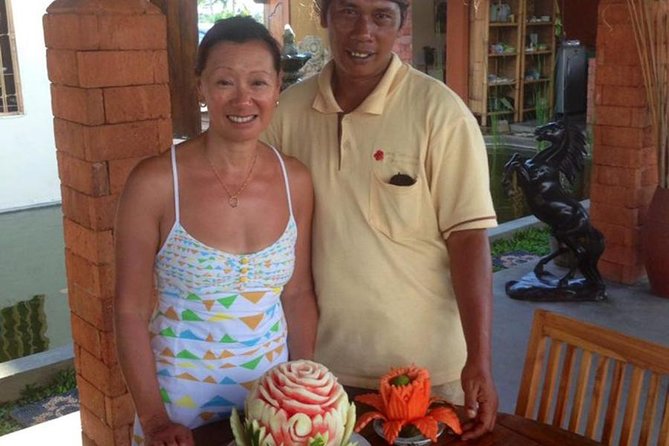
This is a good pick for families with children in the stated 4 to 65 age range. The designs are playful, the work is tactile, and the activity gives children a clear project rather than asking them to stand quietly at a monument.
Couples may also like it because the class creates a shared task. You can choose different designs, compare results, and enjoy the snack and drink without spending the morning moving between crowded sights.
Solo visitors who enjoy crafts, food presentation, or local creative activities should find the small group format comfortable. You do not need to arrive with artistic training. The instructor teaches the technique, and the process rewards care more than natural talent.
I would be less likely to recommend it to someone looking for a fast, polished sightseeing excursion. This is a slow activity. You need to enjoy practice, small corrections, and the occasional imperfect cut.
A useful two-hour plan
Here is how I would think about the morning:
- Arrive at the studio before the 10:00 am start and have your mobile ticket available.
- Begin with the welcome drink and get familiar with the setting.
- Watch the instructor demonstrate the carving method.
- Choose a design such as a flower, animal, insect, or your name.
- Practice with the supplied fruit and vegetables, including watermelon, papaya, and carrots.
- Ask for help as you shape and refine your piece.
- Enjoy the traditional snack during the session.
- Receive the certificate and finish back at the studio after about two hours.
The exact order of the drink, snack, demonstration, and certificate may vary. The important point is that the session combines instruction and practice, rather than simply showing you a finished piece.
Practical limits to keep in mind
The experience does not include transport. You also pay for any personal expenses yourself, and insurance is not included. Plan the route to Lodtunduh before the class so you are not trying to solve local transport at the last minute.
The activity is non-refundable and cannot be changed for any reason. If you cancel or request an amendment, the amount paid will not be returned. Book only after checking your Ubud schedule.
Confirmation is sent within 48 hours, subject to availability. The class is near public transportation, but the supplied information does not specify a particular bus, stop, or walking route. Use the studio address and map location when arranging your journey.
Most people can participate, and the stated age range is 4 to 65. If you have a specific mobility, medical, or tool-related concern, the available details do not spell out the arrangements, so ask the provider before paying.
The experience has a top rating from three published assessments, with praise focused on the fruit-carving skill, the calm rice-field view, the morning tea, and the instructor’s courteous manner. The number of ratings is small, so I would take the perfect score as encouraging rather than as a complete record of every possible class experience.
Should you book the Bali Fruit Carving Class?
Book it if you want a creative morning in Ubud, prefer doing something with your hands, and like the idea of learning a skill you can repeat with other foods. The small group limit, included materials, snack, drink, and rice-field outlook give the $39 price a fair case.
It is especially suitable for families and anyone seeking a break from temples, markets, and long car rides. Choose it with care if your schedule may change, since the booking cannot be refunded or amended and transport is your responsibility.
For the right person, this is a cheerful, focused two-hour activity with a distinctly Balinese craft flavor. You may not leave with a perfect masterpiece, but you should leave with a new way to look at a watermelon.
FAQ
Where does the Bali Fruit Carving Class take place?
The class takes place at WS Art Studio Balinese Handicrafts in Lodtunduh, Ubud, Gianyar Regency, Bali 80571, Indonesia. The location code is C7X4+JFP.
What time does the class start?
The class starts at 10:00 am.
How long does the activity last?
The activity lasts approximately two hours.
How many people can join the class?
The maximum group size is 10 travelers.
What is included in the price?
The price includes a certificate, welcome drink, traditional snack, equipment, and materials.
Is transportation included?
No. Transport service is not included, so you must arrange your own way to and from the studio.
What ages can participate?
The stated age range is 4 to 65.
Can I cancel or change my booking?
No. The experience is non-refundable and cannot be changed for any reason. A cancellation or amendment request does not result in a refund.
Just added around Ubud
- Kintamani Batur Jeep Sunrise Tour★ 5.0 · 3 reviews
- Bali Downhill Cycling and White Water Rafting★ 5.0 · 3 reviews
- Ubud Highlights Rice Terraces, Temple, Waterfall & Monkeys forest★ 5.0 · 3 reviews
- Bali ATV Quad Bike & Ayung River Rafting Combo with Lunch★ 5.0 · 3 reviews
- Half Day Uluwatu Temple Sunset, Kecak Dance and Seafood Dinner★ 3.5 · 3 reviews
- Blue Lagoon Snorkeling and Lunch with Tukad Cepung Waterfall★ 5.0 · 3 reviews
- Ancien Wisdom and Culture tour★ 5.0 · 3 reviews
- Full-Day Tour in Nusa Penida Island + Snorkeling Experience★ 5.0 · 3 reviews
Workshops, compared.
PRIVATE Authentic Balinese Cooking Class in Ubud at Putu’s Home
Read our review →
Ubud Monkey Forest Silver Class – Craft Your Own Silver Jewelry
Read our review →

PRIVATE Balinese Cooking Class in Ubud with Dewa with Transfers
Read our review →Browse the lists this tour appears in