
Reviewed · WALKING TOURS IN UBUD
UNESCO Sites Cultural Walking Tour in Bali
Sacred water and rice fields make a memorable morning. This six-hour outing from Ubud brings together Tirta Empul Temple, a purification ritual, rice-paddy walking, and Gunung Kawi Sebatu Temple, with meals and transport included. I like the clear mix of spiritual practice and everyday Balinese life, and I like that the walk explains Subak, Bali’s traditional irrigation system, rather than treating the paddies as a backdrop.
The strongest part may be the personal guiding. Guides named Wayan, Nyoman, and Dewa receive especially warm praise for kindness, cultural insight, and professional care. The main consideration is physical effort: you should be comfortable walking for several hours, and the purification ritual may not suit anyone who prefers a purely sightseeing-focused day.
In This Review
- Key points to know before booking
- Why this six-hour Bali tour works
- Tirta Empul: a sacred bath with clear ground rules
- Breakfast and lunch at Friends in Bali
- Walking the rice paddies and learning Subak
- Gunung Kawi Sebatu and its cave temple
- The guides are a major part of the value
- What the $58 price includes
- Who should book this cultural walk?
- Should you book the Tirta Empul and Sebatu tour?
- FAQ
- How long does the tour last?
- Is hotel pickup and drop-off included?
- Does the tour include the Tirta Empul purification ritual?
- Are meals and drinks included?
- How much walking is involved?
- What is the cancellation policy?
Key points to know before booking
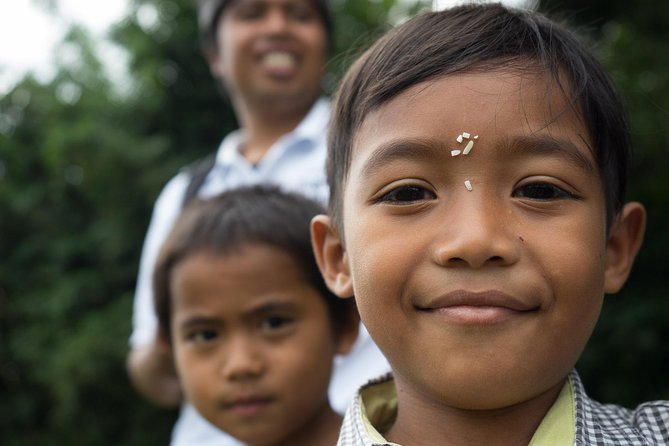
- Tirta Empul comes first: You receive an explanation of the temple before taking part in a purification bath at its holy spring.
- The day includes food: A light breakfast and Balinese lunch are served at Friends in Bali, with a view mentioned as part of the stop.
- Subak gives the rice walk a purpose: You learn how Bali’s traditional irrigation system supports farming and community life.
- Gunung Kawi Sebatu adds a quieter temple visit: The cave temple brings history, water, and local religious tradition into the second half of the day.
- Several costs are already covered: Hotel pickup and drop-off, guiding, mineral water, coconut water, temple cloths, meals, admissions, and a local school charity are included.
- Small-group limits help: The maximum group size is 20 people, though the actual number on a given departure is not specified.
Why this six-hour Bali tour works
Bali is easy to experience as a parade of temples, cafés, and scenic viewpoints. This outing takes a more grounded route. You move from a major holy-water site to a meal stop, then on foot through rice paddies and into another temple complex.
That order matters. Tirta Empul introduces Balinese religious practice in a direct way. The rice walk then shifts your attention to work, water, and village life. Gunung Kawi Sebatu finishes the day with another sacred setting, but one described as a cave temple with a more intimate feel.
I also like the balance between organized sightseeing and conversation. The supplied details emphasize guides who explain customs, daily life, politics, and local people, not just dates and architectural labels. If you want a guide who can help connect what you see to modern Bali, that is a useful strength.
The tour starts at 8:30 a.m. and returns to the meeting point in Ubud. Pickup and drop-off are included, which saves you the trouble of arranging transport between separate sites. For a six-hour activity, that matters. You spend your energy on the temples and walk, not on finding drivers and negotiating routes.
More Walking Tours in Ubud
- Sidemen Trekking: A Walk from a Different Perspective
★ 5.0 · 94 reviews - Ubud Guided Walking Tour
★ 5.0 · 79 reviews - Ubud Countryside Tour: Campuhan Ridge Walk and Rice Terrace
★ 5.0 · 72 reviews
Tirta Empul: a sacred bath with clear ground rules
The first stop gives you about two hours at Tirta Empul Temple, and admission is included. Your guide explains the temple’s background and escorts you through the purification ritual at the holy spring.
This is not simply a quick photo stop. The ritual is the heart of the morning, so you should approach it with respect and a willingness to follow local customs. Balinese cloths are provided for the temple visit and purification bath, which makes the practical side easier. You do not need to arrive with the required temple wrap listed as part of your own luggage.
The water ritual can be meaningful because it asks you to participate rather than watch from the edge. At the same time, participation is a personal choice. If you are uncomfortable with religious ceremonies, wet clothing, or the idea of entering a holy spring, you may prefer to observe and ask your guide questions instead. The provided information does not state whether nonparticipation changes the tour price, so clarify that before booking if it matters to you.
Two hours allows time for instruction, changing, the ritual, and a proper look around. It also means the schedule is not built around rushing you through the site. Bring a respectful attitude and listen closely to the guide’s directions.
Breakfast and lunch at Friends in Bali
The meal stop lasts about one hour and is listed as Friends in Bali. A light breakfast and a Balinese lunch are provided, along with mineral water and coconut water.
That combination is practical. The early start means breakfast keeps you going before the walk, while lunch gives you a real pause before or around the second temple visit. The description also points to a view from the meal setting, so this is more than a fuel stop, though exact dishes and dietary arrangements are not provided.
A few personal accounts also refer to a coffee plantation or tea-house style beginning. Since the formal stop information identifies Friends in Bali as the place serving breakfast and lunch, I would treat those references as part of the broader visit rather than assume a separate plantation tour is guaranteed. If coffee is a priority, ask the provider what the current route includes.
Alcohol is not included, but it can be purchased. That is not likely to matter on a morning walking tour, though it is useful to know if you are planning a longer meal stop. The included drinks are the better fit for a hot day and an active schedule.
Walking the rice paddies and learning Subak
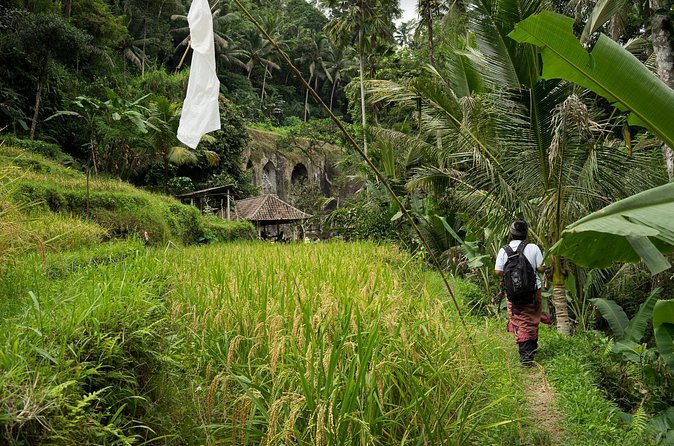
The rice-paddy section is where the tour moves beyond temple architecture. You walk through agricultural areas while learning about Subak, Bali’s traditional irrigation system.
This detail gives the walk substance. You are not only looking at green fields or taking pictures. You are learning how water is managed through a shared system tied to farming and community life. The guide’s explanation can help you notice why channels, terraces, and water flow matter.
The route lasts about two hours at Gunung Kawi Sebatu, including the rice-paddy walk and temple visit. The exact walking distance, trail surface, and amount of elevation are not stated, so sensible shoes are important. The activity calls for moderate physical fitness and is not recommended for people with back problems, heart complaints, other serious medical conditions, or pregnant women.
You should also expect outdoor exposure. The supplied information does not promise shade, restrooms along the walk, or weather protection, so carry only what you need and be ready for a warm, active morning. Mineral water and coconut water are supplied, which helps, but you may still want sun protection and comfortable clothing that works for temple visits.
The rice walk may be the best fit for you if you want to see ordinary Balinese life alongside sacred places. It gives the day a slower pace and a sense of place that a vehicle-only temple circuit cannot provide.
A completely different kind of day out in Ubud:
- All-Inclusive Ubud Private Tour
★ 5.0 · 14,344 reviews - Best of Ubud Full-Day Tour with Jungle Swing
★ 5.0 · 8,571 reviews - Ubud: Monkey Forest, Jungle Swing, Rice Terrace, and Water Temple
★ 5.0 · 7,160 reviews - Best of Ubud 1-Day Private Tour
★ 5.0 · 4,451 reviews
Gunung Kawi Sebatu and its cave temple
The final major stop is Gunung Kawi Sebatu Temple, with admission included. The visit combines the rice-paddy route with a cave temple described as having a magical quality and a long religious story.
The attraction here is contrast. Tirta Empul is known in this experience for the purification ritual. Gunung Kawi Sebatu offers a chance to look at another sacred site, then consider how water, caves, and temple spaces shape Balinese worship. Your guide is there to explain what you are seeing, which is especially useful if temple layouts and ceremonies are unfamiliar to you.
The two-hour allocation should give you more than a hurried circuit, but remember that it includes walking through the paddies. If you are most interested in architecture, the first temple receives the clearest time allocation for religious participation. If you prefer a mix of scenery, local systems, and culture, the second half is likely to feel more rewarding.
The word UNESCO appears in the tour title, but the supplied details do not identify a specific UNESCO designation for each stop. I would book this for the cultural content and the sites themselves, rather than expecting a formal UNESCO-inscription lecture.
The guides are a major part of the value
The best comments focus on the guides, and the names provided are useful: Wayan, Nyoman, and Dewa. Wayan is praised for kindness and generosity, Nyoman for being friendly and professional, and Dewa for taking thoughtful care of the people in his group.
That pattern suggests a tour where the human element matters as much as the route. The guide is not just there to move you from one entrance to another. You can ask about customs, local people, daily life, and politics, subjects that help explain what you see beyond the standard temple facts.
Guide quality can vary from departure to departure, so no particular person is guaranteed. Still, the repeated emphasis on personal care is a strong reason to consider this experience. If you want quiet independent sightseeing, a private driver, or complete control over how long you linger, this may feel too structured. If you want help making sense of Bali, the guide-led format is a plus.
One account describes the beginning at a tea house as uncomfortable because it felt tourist-oriented. That is a fair warning to keep in mind. The experience may include commercial elements around food, coffee, or local products, and the exact presentation can change. I would ask questions, enjoy what interests you, and skip any purchase that does not appeal to you.
What the $58 price includes
At $58 per person, the value depends on how much of the day you would otherwise arrange yourself. The price includes round-trip hotel transport, a guide, admission to both listed temples, a light breakfast, Balinese lunch, mineral water, coconut water, and temple cloths.
It also includes a charity contribution to a local school. That gives the fee a community angle, though the supplied information does not explain the amount or how the donation is handled. If this point matters to you, ask the provider for details.
Buying the same pieces separately could involve transport, entrance fees, food, drinks, appropriate temple clothing, and a guide. The package removes that planning work and gives you a full morning and early afternoon around Ubud. It is not the cheapest way to see a temple if you only want a quick visit, but it is a fair price for a guided cultural day with meals and transport included.
Souvenir photos are extra and available only through advance reservation. Alcohol is also extra. Those are easy costs to avoid if you are watching your budget.
Who should book this cultural walk?
I would recommend it to you if you want:
- A guided introduction to Balinese religious customs
- A real purification ritual rather than temple viewing alone
- Rice-field walking with an explanation of Subak
- Meals included in a full-day cultural outing
- Transport from Ubud without arranging a private car
- Personal conversation with a local guide
- A small-group setting capped at 20 people
I would be more cautious if you want a relaxed sightseeing day with little walking. The tour requires moderate fitness, and the combination of a ritual, outdoor paths, and temple visits can be tiring. It is also not recommended for pregnant women or people with back, heart, or other serious medical conditions.
Dress and behavior matter at both temples. The provided Balinese cloths help, but they do not remove the need for respectful conduct. Listen to your guide, follow instructions around the holy spring, and remember that these are active religious places, not stage sets.
Pickup is offered from Ubud, and the activity ends back at the meeting point. The stated maximum is 20 people. Confirmation arrives when you book, and cancellation is free if you cancel at least 24 hours before the 8:30 a.m. start. Within 24 hours, refunds are not available and changes are not accepted.
Should you book the Tirta Empul and Sebatu tour?
Book it if you want Bali explained through ritual, farming, and local conversation, not only photographed from a car window. The included meals, drinks, transport, admissions, and temple cloths make $58 a sensible package price, while the highly praised guides add much of the experience’s real value.
Skip it if you dislike religious participation, need a very gentle walking schedule, or prefer to explore at your own pace. For everyone else, this is a well-rounded Ubud day, especially if Wayan, Nyoman, or Dewa is available to guide you.
FAQ
How long does the tour last?
The experience lasts approximately six hours. It starts at 8:30 a.m. and ends back at the meeting point in Ubud.
Is hotel pickup and drop-off included?
Yes. Hotel pickup and drop-off are included, and the listed start area is Ubud in Gianyar Regency, Bali.
Does the tour include the Tirta Empul purification ritual?
Yes. The guide explains the temple and escorts you to experience the purification ritual at the holy spring. Balinese cloths for the temple visit and purification bath are included.
Are meals and drinks included?
A light breakfast and Balinese lunch are included. Mineral water and coconut water are also provided. Alcoholic drinks are not included but are available to purchase.
How much walking is involved?
The tour includes a rice-paddy walk and a visit to Gunung Kawi Sebatu Temple. The activity recommends moderate physical fitness, but an exact walking distance is not provided.
What is the cancellation policy?
You can cancel for a full refund if you do so at least 24 hours before the experience start time. Cancellations or changes made less than 24 hours before the start are not accepted for a refund.
Just added around Ubud
- Melangit White Water River Rafting★ 5.0 · 4 reviews
- Magical Village Tour & Private Dinner with Fireflies in Bali★ 5.0 · 4 reviews
- 1 hour bali horse riding & Swim at the beach★ 3.5 · 4 reviews
- authentic Balinese organic cooking class in Ubud★ 5.0 · 4 reviews
- Balinese Cooking Experience★ 4.0 · 4 reviews
- Ubud Tour : Monkey forest, Rice terrace, Water temple, Waterfall & Jungle Swing★ 5.0 · 4 reviews
- Munduk: Tamblingan jungle trek, waterfall, Ulun Danu temple★ 5.0 · 4 reviews
- Bali Ayung River White Water Rafting with Transport★ 5.0 · 4 reviews
Walking Tours in Ubud, compared.
Sidemen Trekking: A Walk from a Different Perspective
Read our review →

Ubud Countryside Tour: Campuhan Ridge Walk and Rice Terrace
Read our review →
Browse the lists this tour appears in