
Reviewed · HIKING & TREKKING
Sidemen Trekking: A Walk from a Different Perspective
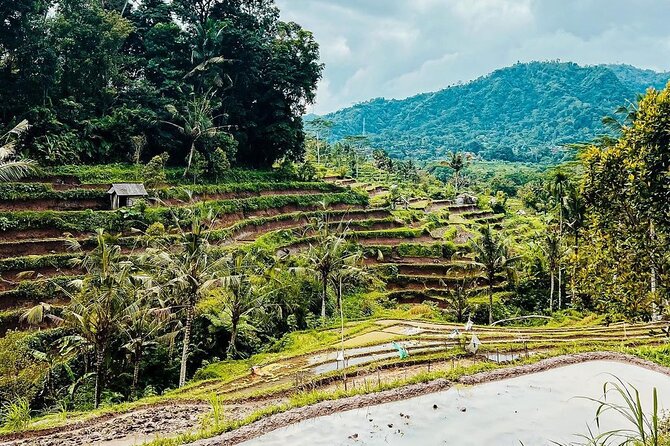
Sidemen rewards slow walking. This two-hour outing takes you from the traditional market into rice fields, village lanes, temple grounds, and narrow irrigation paths, with Mount Agung often rising in the distance. I like the way the tour shows everyday Bali rather than a polished resort version, and I especially like the local guides, including Adi, Daria, Darya, and Wayan, who explain farming, religion, food, and village life along the way.
I also like the price: at $13.75 per person, bottled water and a small group of no more than 10 people make this a strong-value introduction to rural Sidemen. The main consideration is footing. This is an easy walk in terms of stamina, but some rice terrace edges and water channels are narrow, uneven, slippery, or muddy, so it is not ideal if you have poor balance or want a smooth paved stroll.
In This Review
- Key points to know before you go
- Starting at Pasar Sidemen
- Walking toward the rice terraces
- Following the irrigation channels
- Crossing the wooden bridge
- Villages, temples, and everyday Bali
- What the Mount Agung views are really like
- How hard is this two-hour walk?
- Why the $13.75 price offers good value
- Planning your start and ride home
- The guides make the difference
- Who should book this Sidemen experience?
- Should you book it?
- FAQ
- Where does the Sidemen trekking tour start?
- Where does the trek finish?
- How long does the experience last?
- What is the price?
- Is bottled water included?
- Is hotel pickup included?
- What should I bring?
- Is this a difficult hike?
- Can I visit the traditional market before the trek?
- What happens if the weather is poor?
Key points to know before you go
- The route follows real farm paths: You walk along irrigation channels and narrow tracks used by local farmers, not a purpose-built hiking trail.
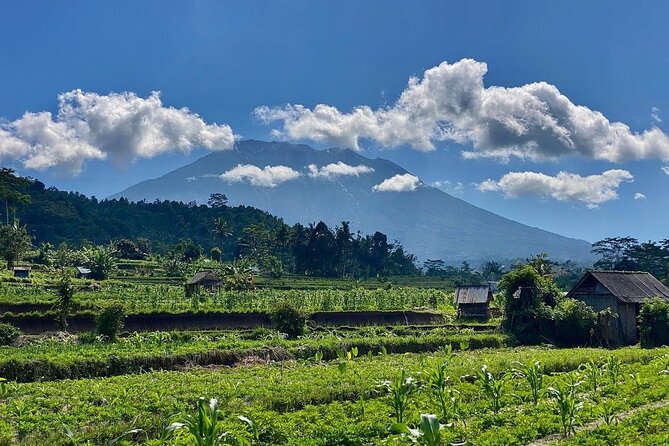
- Mount Agung provides the backdrop: Several viewpoints look across the rice terraces toward Bali’s famous volcano.
- The guides are the heart of the experience: Adi, Daria, Darya, Wayan, and Adidas are praised for their humor, local connections, and explanations of village life.
- It is gentle but not effortless: The walk goes up and down streets and fields, with slippery sections and places where balance matters more than fitness.
- The finish is at Warung Ume Anyar: You can stop for a meal or drink, but you need to arrange your ride home in advance.
- The morning market is an optional bonus: Pasar Sidemen opens from 5:00 AM to 10:00 AM, making an early session useful if you want to look around before walking.
Starting at Pasar Sidemen
The meeting point is Pasar Sidemen, the traditional market on Jl. Sidemen. Look for the shop with the sign Upa Boga, which is the exact starting point. This detail matters because simply arriving at the market may not put you beside the guide.
The market is open from 5:00 AM to 10:00 AM. If you want to see local buying and selling before the walk, book a morning departure and arrive with enough time to look around. The supplied tour information does not promise a guided market visit, so think of this as an optional extra rather than a formal part of the trek.
From the market, the route quickly shifts from town life to the countryside. That change is one of the pleasures of the morning. You begin among shops and village activity, then move toward the fields where rice, chilies, flowers, and other crops are grown.
A guide adds value right away. You are not simply following a path while taking photographs. You can ask how crops are planted, how rice is processed, and how farming connects with local cooking and household life.
More Trekking Tours in Ubud
- Mount Batur Sunrise Hike and Natural Hot Spring Option
★ 5.0 · 1,927 reviews - Mount Batur Sunrise Hike with Breakfast
★ 5.0 · 1,757 reviews - Mount Batur Sunrise Trekking Private All Inclusive
★ 5.0 · 906 reviews
Walking toward the rice terraces
The route climbs from the village toward the rice paddies. The path is not always clearly marked, which is exactly why a local guide is useful. Without someone who knows the area, you could easily miss the small tracks leading between fields.
Expect a mixture of village streets, farm paths, and narrow raised edges beside the paddies. One section may feel almost flat and easy, while another asks you to step carefully over uneven ground. The walk is described by several people as relaxed and manageable, but you should not confuse that with a standard footpath.
Good shoes matter. Hiking shoes or sturdy walking shoes are required, and sandals are a poor choice for muddy or slippery sections. Bring a sun hat, sunscreen, and sunglasses as well. Bottled water is included, but you should still arrive ready for sun and humidity.
The best part of this section is the change in viewpoint. From the road, rice terraces can look like a scenic backdrop. Inside them, you see the narrow paths, water flow, planted crops, and working spaces that make the terraces function.
Following the irrigation channels
The walk then follows the irrigation system that brings water down from higher ground. This is a fine example of how the tour turns scenery into understanding. You see that the rice fields are not just green steps on a hillside. They depend on carefully directed water and regular work.
The route can be narrow beside the channels. A few descriptions note that you need good balance, especially along raised rice paddy edges and waterways. You may need to watch each step rather than walk while looking through your camera.
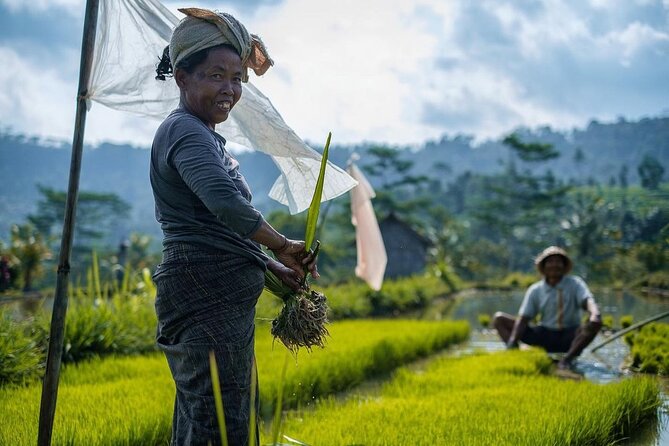
That is also where the experience feels most different from a normal village sightseeing walk. You are using paths that local farmers use, and the route can bring you close to working fields. The guide may explain the rice-growing process, seasonal changes, and other crops such as chilies and plants used for offerings or food.
December can look different from the classic images of bright green rice. Some crops may already have been harvested, with new crops being planted. That is not a flaw. It gives you a more accurate sense of farming as a seasonal process rather than a permanent postcard.
Crossing the wooden bridge
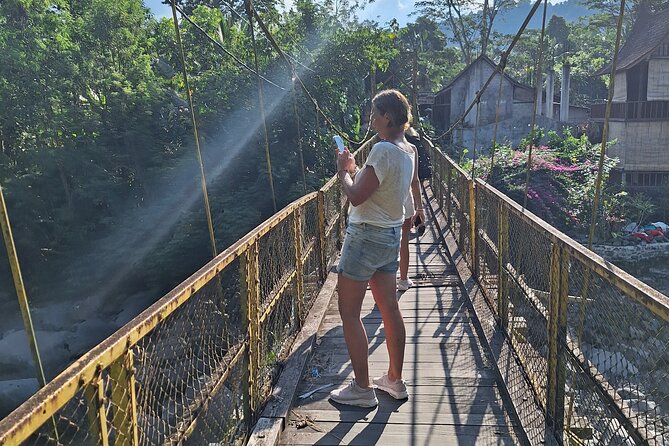
One memorable feature is a hanging wooden bridge suitable for motorbikes and people. The itinerary describes crossing it while following the irrigation route toward Mount Agung. The bridge adds a small sense of adventure without turning the outing into a hard hike.
You should expect a practical local crossing, not a theme-park attraction. Conditions may feel more exposed than on a normal road, and you should follow the guide’s pace. If narrow bridges make you uneasy, this is worth considering before booking.
The bridge also shows how village transport works beyond the main roads. A motorbike can use the same crossing, and the route gives you a glimpse of how closely daily movement, farming, and water management are tied together.
More Walking Tours in Ubud
- Ubud Guided Walking Tour
★ 5.0 · 79 reviews - Ubud Countryside Tour: Campuhan Ridge Walk and Rice Terrace
★ 5.0 · 72 reviews - Hikaria: Bali’s First Immersive Night Walk
★ 5.0 · 16 reviews - Myth of Pejeng Walking Tour
★ 5.0 · 6 reviews
Villages, temples, and everyday Bali
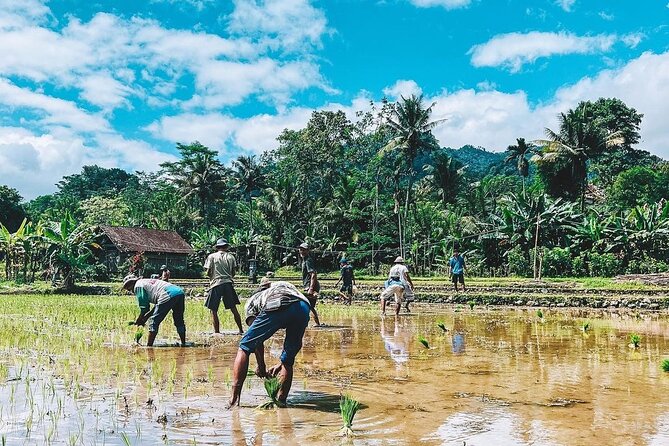
The trek passes through the village and by a temple used by local people for prayer. This is an important part of the walk because Balinese Hindu practice is closely woven into daily routines. Guides explain religious beliefs, offerings, traditions, and the role of temples in village life.
The emphasis is on seeing these places respectfully, not treating them as photo props. You may notice flowers used in offerings and hear how religion connects with work, family, food, and community habits.
The village section also gives the guides room to share personal knowledge. Daria and Darya are described as locals from the Sidemen area, while Wayan guided one particularly personal walk through his village. Adi is praised for combining local facts with jokes and easy conversation.
One quality repeatedly comes through: the guides know the people and paths around them. That can make the walk feel more like an introduction by a local friend than a lecture delivered from a script. You can ask questions, compare cultures, and learn how the area has changed over time.
What the Mount Agung views are really like
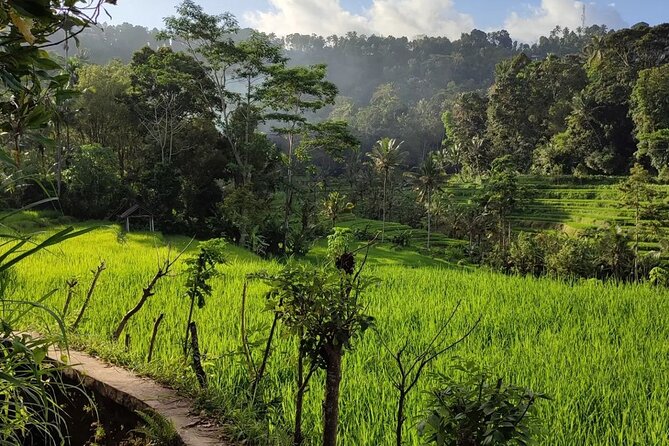
Several viewpoints open across the rice terraces toward Mount Agung. The volcano is not just a distant scenic object here. It helps you understand the scale of the area and gives the paddy fields a strong visual focus.
Weather controls how much you see. On a clear morning, Mount Agung can be an impressive backdrop. Clouds or rain may soften or hide the view, and the tour requires good weather to operate.
The scenery changes as you walk. At one point you may look across terraces from a distance; later, you are inside the fields, watching the route curve beside water or between crops. I prefer this shifting perspective to stopping at one famous viewpoint and leaving.
Bring your phone or camera, but keep your attention on the ground in narrow sections. The best photographs may come from the wider viewpoints, while the most memorable parts may be the less polished scenes of farmers, water channels, village lanes, and small bridges.
How hard is this two-hour walk?
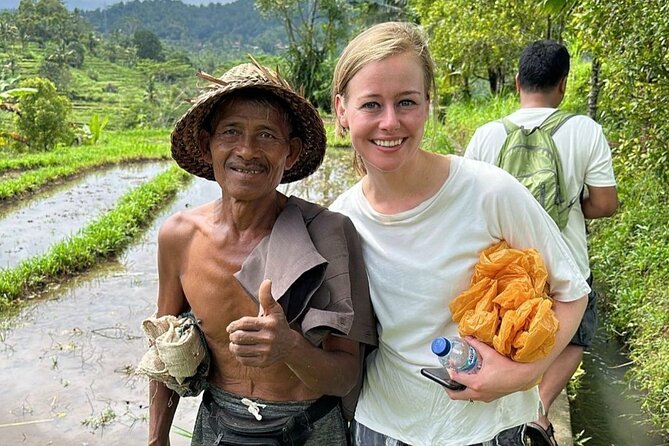
The tour lasts about two to two and a half hours, and the walking distance is described in one account as almost 4 kilometers. The route includes some uphill and downhill movement, but it is generally considered easy in terms of exertion.
The challenge is balance, not speed. Rice terrace edges can be narrow, and some surfaces may be wet or slippery. You should be comfortable stepping carefully, adjusting your pace, and possibly getting your shoes dirty.
I would choose this tour if you enjoy walking but do not want a demanding mountain hike. I would be cautious if you are elderly, unsteady on your feet, or looking for a completely level route. One description specifically warns that the walk may not suit older people unless they are fit and agile.
There are frequent stops for photographs and explanations, so the pace is not a race. That makes it suitable for people who want time to listen and look around. It also means that anyone expecting a serious trekking challenge may find the outing too easy.
Why the $13.75 price offers good value
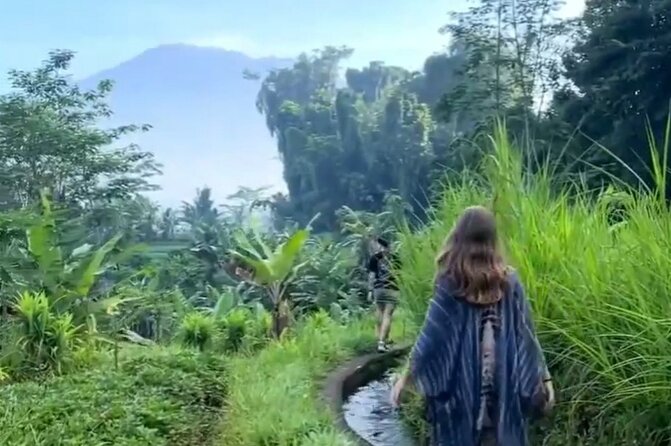
At $13.75 per person, this is inexpensive for a two-hour guided outing in one of Bali’s most scenic rural areas. Bottled water is included, and the group is limited to a maximum of 10 people. The small group size should make it easier to hear the guide and ask questions.
The real value is not in the water or the walking alone. It is in having someone lead you along paths that are not obvious and explain what you are seeing. Without that local context, you might admire the rice terraces but miss how irrigation, crops, temples, and family life fit together.
Tips are not included, so carry some cash if you feel the guide added value. Hotel pickup and drop-off are also not included, which keeps the listed price low but requires more planning.
Group discounts are available. If you are traveling with several people, check the final booking price to see how much the per-person cost changes.
Planning your start and ride home
You need to reach Pasar Sidemen on your own. If you are staying in Sidemen, arrange transport through your hotel. The operator does not recommend Grab for hotel pickup because some Sidemen hotels allow Grab drivers to drop off guests but not collect them.
The walk finishes at Warung Ume Anyar Restaurant in Ogang Village. This is a useful ending point, since you can relax with a drink or meal after walking. It is not, however, a guaranteed ride connection.
Arrange your driver before you start. Ask for pickup at Warung Ume Anyar roughly two to two and a half hours after the trek begins. Grab may be available, but there are only a few drivers in the area, and some may ask for offline payment or an extra fee.
If you need to return to the starting point on foot, the route back is about 3 kilometers or 30 to 40 minutes along the main road. That option is practical in a pinch, but it adds walking after the trek and is not the most relaxing way to finish.
Do not schedule a tight activity immediately afterward. Allow the full two and a half hours, plus time for transport, a meal, or a delayed pickup.
The guides make the difference
The strongest part of this experience is the guiding. Adi is praised for being funny, relaxed, and well informed about rice cultivation and village life. Daria and Darya are described as patient locals who explain farming, religion, history, and changes in the community.
Adidas is also singled out for making the outing fun while explaining traditional Balinese work, learning, and cooking. The different spellings and names suggest that the guide may vary by departure, so do not book solely around one particular person unless the operator confirms who will lead your walk.
The best guides here do more than point out crops. They connect the fields to local meals, offerings, religious practice, and the changing economy of Bali. They also make the walk interactive by answering questions and taking interest in your culture.
That personal exchange is especially valuable if you want more than photographs. You leave with a better sense of how rural Sidemen works, not just a collection of scenic images.
Who should book this Sidemen experience?
Book it if you want a short, affordable way to see rural Bali from inside the fields. It suits people who enjoy local culture, gentle walking, photography, and conversations about farming and religion.
It is also a good choice if you are staying in or near Sidemen and want an activity that fits into a morning. The early market option adds extra interest for early risers.
You should think twice if you want a demanding hike, a fully paved path, or guaranteed transport back to your hotel. The title says trekking, but the activity is better understood as a guided countryside walk with uneven footing.
Free cancellation is available if you cancel at least 24 hours before the start time. Changes or cancellations made later are not refunded, and poor weather may lead to a different date or a full refund.
Should you book it?
I would book this walk for the local perspective, not for athletic challenge. The rice terraces, irrigation channels, village temple, wooden bridge, and Mount Agung views give you plenty to see, but the guide’s explanations turn those sights into something more meaningful.
At $13.75, it is an easy value call for most reasonably fit walkers. Bring proper shoes, protect yourself from the sun, watch your footing, and arrange your pickup before setting out. If you do that, this is a fine way to trade Bali’s busy resort scene for two useful hours in the countryside.
FAQ
Where does the Sidemen trekking tour start?
The tour starts at Pasar Sidemen, the Sidemen Traditional Market, on Jl. Sidemen. Meet at the shop marked Upa Boga.
Where does the trek finish?
The walk ends at Warung Ume Anyar Restaurant in Ogang Village. You can stop there for a meal or drink after the trek.
How long does the experience last?
The walk takes approximately two to two and a half hours. Allow extra time for transport after finishing.
What is the price?
The listed price is $13.75 per person. Group discounts are available.
Is bottled water included?
Yes. One of the included items is bottled water.
Is hotel pickup included?
No. Hotel pickup and drop-off are not included, so you must arrange your own transport to Pasar Sidemen and from Warung Ume Anyar.
What should I bring?
Bring a sun hat, hiking boots or sturdy shoes, sunscreen, and sunglasses. Good footwear is important because parts of the route can be narrow, uneven, slippery, or muddy.
Is this a difficult hike?
The walk is generally easy in terms of fitness, with stops for photos and explanations. However, some rice terrace paths and waterways require good balance.
Can I visit the traditional market before the trek?
Yes, Pasar Sidemen is open from 5:00 AM to 10:00 AM. Book a morning session if you want time to visit the market before walking.
What happens if the weather is poor?
The activity requires good weather. If it is canceled because of poor weather, you will be offered another date or a full refund.
Just added around Ubud
- Kintamani Batur Jeep Sunrise Tour★ 5.0 · 3 reviews
- Bali Downhill Cycling and White Water Rafting★ 5.0 · 3 reviews
- Ubud Highlights Rice Terraces, Temple, Waterfall & Monkeys forest★ 5.0 · 3 reviews
- Bali ATV Quad Bike & Ayung River Rafting Combo with Lunch★ 5.0 · 3 reviews
- Half Day Uluwatu Temple Sunset, Kecak Dance and Seafood Dinner★ 3.5 · 3 reviews
- Blue Lagoon Snorkeling and Lunch with Tukad Cepung Waterfall★ 5.0 · 3 reviews
- Ancien Wisdom and Culture tour★ 5.0 · 3 reviews
- Full-Day Tour in Nusa Penida Island + Snorkeling Experience★ 5.0 · 3 reviews
Hiking & Trekking, compared.

Mount Batur Sunrise Hike and Natural Hot Spring Option
Read our review →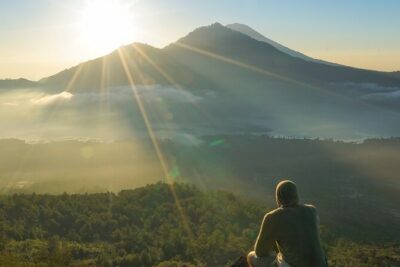
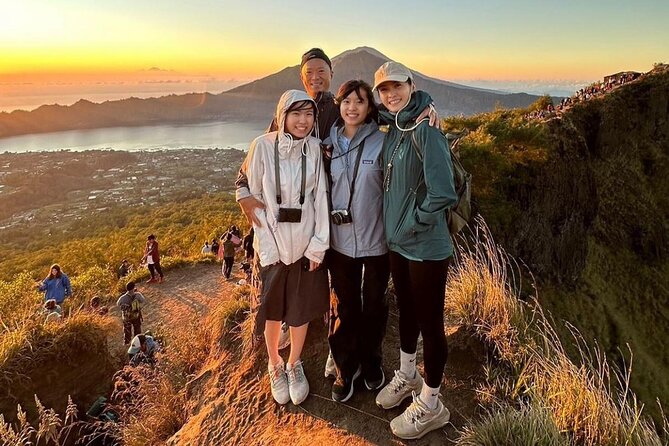

Mount Batur Sunrise Trekking Private All Inclusive
Read our review →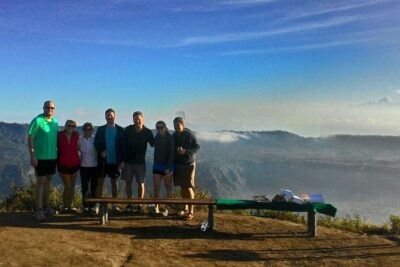
Mount Batur Sunrise Trekking Private Tour with Breakfast and Hotel Transfer
Read our review →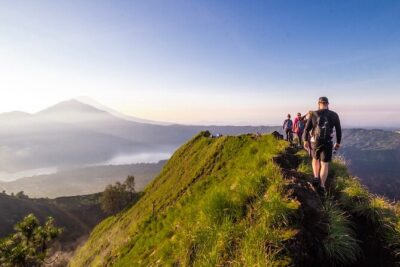

Mount Batur Sunrise Trekking (Private Tour and Breakfast at Restaurant)
Read our review →
Private Tour Mount Batur Sunrise Trekking and Natural Hot Spring
Read our review →Browse the lists this tour appears in