
Reviewed · SNORKELING
Reef Rehabilitation Course and Snorkeling
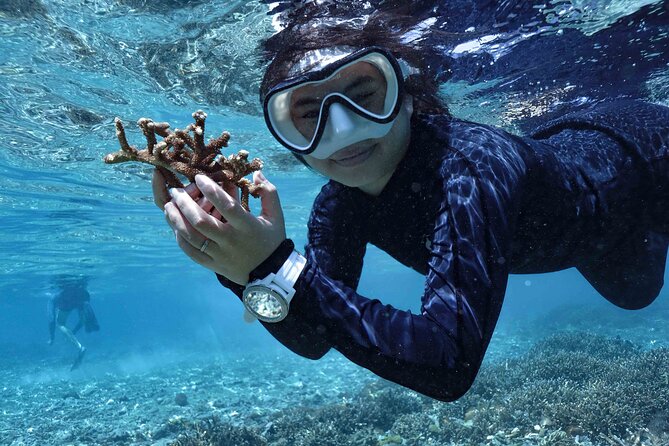
Coral work beats another beach day. This six-hour Nusa Penida experience combines a reef education session with three guided snorkeling activities, a local lunch, and hands-on coral planting. Each person prepares and plants 70 coral fragments, covering about 4 square meters of reef.
I like the clear, measurable contribution and the small group limit of 10 people. I also like that Nyoman, Festi, and their team connect reef work with local life, including a Saturday visit to a school. The main consideration is physical: you should swim comfortably and have moderate fitness, since the day includes repeated snorkeling, underwater knot work, and reef planting.
In This Review
- Key details to know before booking
- Why this Nusa Penida reef course feels different
- Starting at Ecotourism Nusa Penida Buyuk
- Learning what coral needs to survive
- Seeing the coral nursery up close
- Collecting fragments and preparing the ropes
- Planting 70 corals across four square meters
- Saturday adds a school and community connection
- What the $62.61 price includes
- Who will enjoy this experience most
- Practical points for a smoother day
- Should you book this reef rehabilitation course?
- FAQ
- Where does the Reef Rehabilitation Course and Snorkeling experience start?
- Where does the experience end?
- How long does the course last?
- How many corals does each person plant?
- Is lunch included?
- Is snorkeling equipment provided?
- Do I need to be able to swim?
- How many people can join the activity?
Key details to know before booking
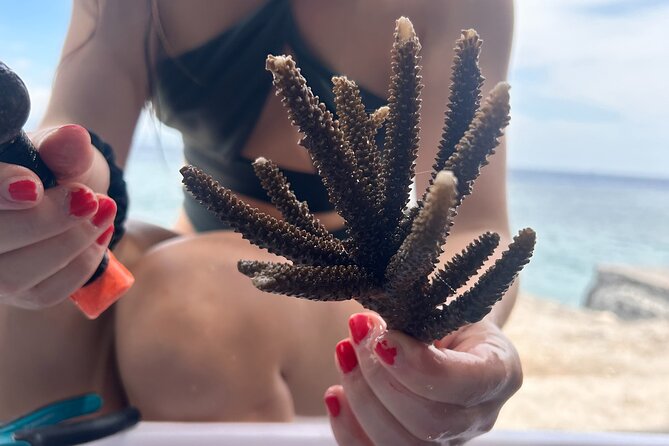
- Plant 70 corals per person: Your work is planned to restore about 4 square meters of reef.
- Three guided snorkeling sessions: You see the nursery, collect coral fragments, and help attach them below the surface.
- Small groups of up to 10: That allows more direct instruction during the hands-on work.
- Saturday school visit: Saturday departures include English teaching and conservation activities with local children.
- Lunch and equipment included: Snorkeling gear, restoration materials, lunch, and a gift for local children are covered.
- Moderate physical effort required: You need to swim comfortably and manage activity in the water.
Why this Nusa Penida reef course feels different
Many conservation outings stop at a presentation or a symbolic adoption certificate. Here, your contribution is physical and specific. You learn how coral restoration works, handle fragments, prepare ropes, and place the coral yourself.
That makes the $62.61 price easier to judge. You are not simply paying for a few hours of snorkeling. The fee covers instruction, equipment, lunch, restoration supplies, and a real planting task. The program also includes a gift for local children, which gives the day a community element beyond the reef.
I especially like the promise of 70 corals per person. It gives you a clear sense of scale. You are not told only that your booking helps conservation. You can point to the number of fragments you prepared and the reef area your work is intended to support.
The experience comes from a local community with seven years of coral restoration work. That matters because reef repair requires more than enthusiasm. Conditions in the water, coral handling, rope placement, and nursery care all affect the result. The team’s long-running local focus gives the activity a practical foundation.
Still, keep your expectations sensible. Coral restoration is not instant. You will not plant 70 large, mature colonies in one morning. You will work with coral fragments and learn how the nursery and ropes support their growth over time.
More Snorkeling Trips in the Nusa Islands
- ️Nusa Penida by Private Boat – Snorkeling 4 spots, Swim with Mantas + Land Tour
★ 5.0 · 6,424 reviews - One Day Nusa Penida Island West with Snorkeling
★ 4.5 · 560 reviews - Snorkeling Manta Ray Safari in Nusa Penida
★ 4.0 · 167 reviews
Starting at Ecotourism Nusa Penida Buyuk
The experience begins at Ecotourism Nusa Penida Buyuk on Jalan Ped in Nusa Penida. The tour ends at the same meeting point, so you do not need to arrange a separate finish location.
The meeting point is useful to note when planning your day on the island. The package does not list hotel pickup, transfers, or personal transport, so you should make your own way to the starting point and allow enough time to arrive ready for a six-hour activity.
You receive confirmation when you book, and the ticket is mobile. That keeps the arrival process simple, though you should still have your booking details ready on your phone.
The group is capped at 10 people. This is a good size for a practical conservation lesson. A larger group could make underwater instruction awkward, especially when everyone is learning to handle coral and tie ropes. With fewer people, you have a better chance of hearing the explanation and getting help during the planting work.
Learning what coral needs to survive
The day begins with a coral conservation presentation. You learn about coral biology, the role coral plays in ocean ecosystems, and the conditions that affect reef health.
This opening lesson is important because it gives purpose to everything that follows. You are not simply collecting pieces and fastening them to a rope. You learn why coral fragments are grown in nurseries, how damaged reef areas can be restored, and why careful handling matters.
The lesson also helps you pay attention during the snorkeling sessions. Instead of seeing the nursery as a collection of underwater structures, you can look for the difference between the growing coral fragments, the support systems, and the surrounding reef environment.
The information is designed for an active experience rather than a long classroom lecture. You should expect the presentation to prepare you for the work in the water, not to function as a specialist marine biology course.
Seeing the coral nursery up close
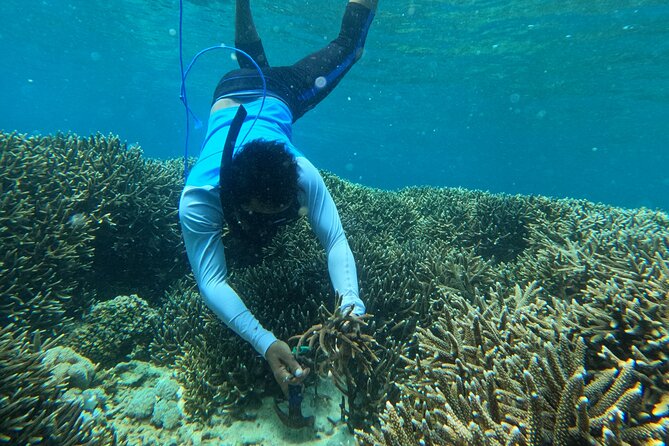
One of the most useful parts of the program is the visit to the coral nursery. You see how the team cultivates coral before it is placed on the reef.
This step gives you a clearer picture of restoration as a process. A nursery provides a controlled place for fragments to grow before they are attached to a restoration structure. You get to see the practical side of the work, including the materials used and the way the team organizes coral for planting.
The first guided snorkeling session lets you observe this work in its actual setting. You should be prepared to use snorkeling equipment and follow instructions in the water. The course includes the necessary snorkeling gear, so you do not need to bring your own equipment unless you prefer to use personal gear.
The nursery visit is also where the activity becomes more meaningful than a standard reef sightseeing trip. You are looking at a working conservation site, not only passing through a scenic area. That difference may matter if you want your time in Nusa Penida to support local environmental work.
A completely different kind of day out in the Nusa Islands:
- Open Water Course in Nusa Lembongan – Get Certified on remote island (next Bali)
★ 5.0 · 864 reviews - Bali to Nusa Penida: Premium Private Full Day Tour-All Inclusive
★ 5.0 · 764 reviews - 2 Days Discover Scuba Diving in Nusa Lembongan – Scuba Initiation
★ 5.0 · 506 reviews - One Day Nusa Penida Island West & East
★ 4.5 · 425 reviews
Collecting fragments and preparing the ropes
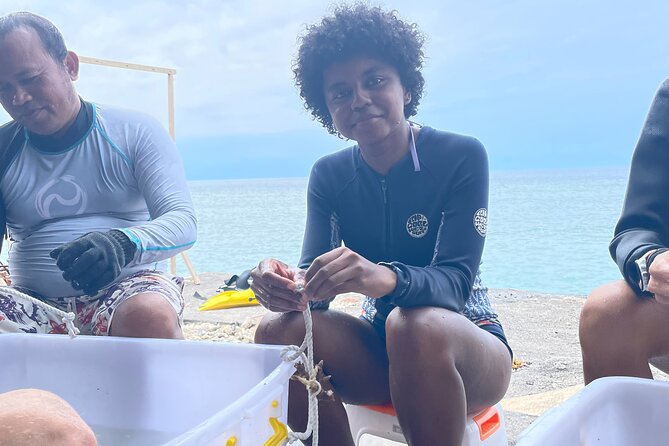
After seeing the nursery, you harvest coral fragments for planting. The team provides the material used in the restoration work and guides you through the handling process.
This is a hands-on task, so listen closely to the instructions. Coral is living material, and the aim is to prepare it carefully rather than treat it like a souvenir or decoration. The program places you directly into the restoration process, which is one of its strongest features.
You then take a lunch break at Coral Cafe. Lunch is included, giving you a proper pause between the water-based activities. The meal is described as local, so this part adds a taste of island life instead of treating the day as a purely technical conservation workshop.
Do not expect a luxury dining experience or a menu designed around personal preferences. The information provided does not list specific dishes or dietary arrangements. If you have food restrictions, ask the operator before booking rather than assuming the included lunch will suit you.
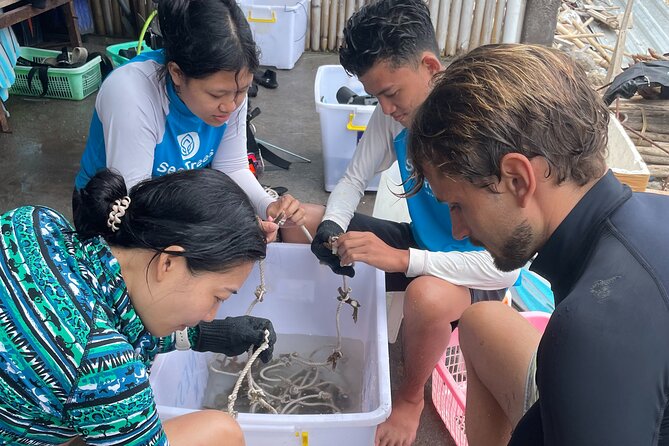
After lunch, you learn how to tie knots underwater. This may sound like a small skill, but it is central to preparing the coral ropes. You practice the technique before using it to secure the collected fragments.
Underwater knot-tying is also where the physical demands become clearer. You need to remain comfortable in the water, follow directions, and work calmly while snorkeling. If you are uneasy in open water or tire quickly, this portion may feel more difficult than the presentation and nursery visit.
Planting 70 corals across four square meters
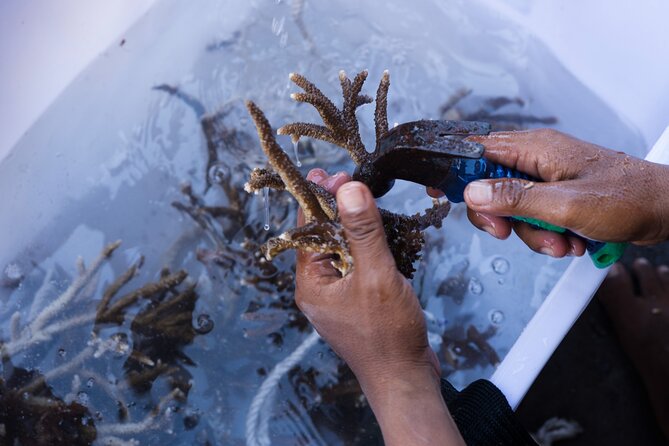
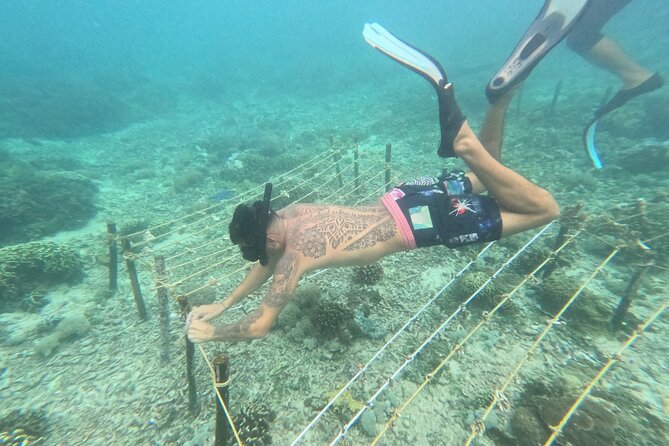
The main task is preparing the ropes with your collected coral fragments and placing them on the seabed. Each person plants 70 corals, with an intended restoration area of about 4 square meters.
That number makes the activity feel substantial. You have a clear job to complete, and the work is shared across the small group. The final planting is not a quick photo opportunity. It involves handling materials, using the knot technique, and positioning the coral as instructed.
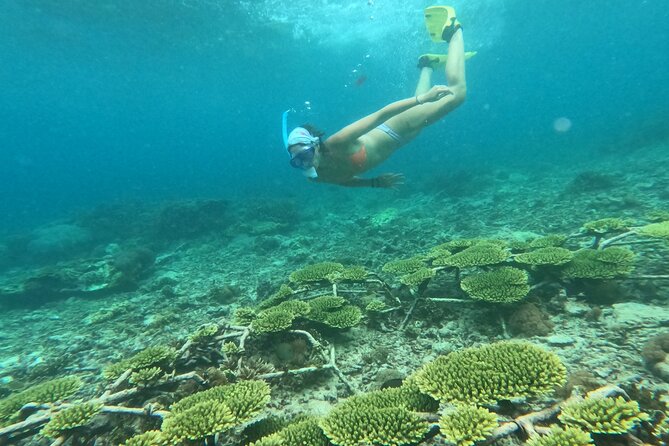
The third guided snorkeling activity takes place during this planting stage. By the end of the three water sessions, you will have seen the nursery, worked with coral fragments, and helped secure them in their reef setting.
Conditions in the sea can affect how easy this feels. The available information does not give a specific water temperature, current forecast, or exact planting site. You should therefore treat the schedule as approximate and accept that the pace may depend on local ocean conditions.
You also should not expect every fragment to survive. Reef restoration is a long-term effort, and natural conditions remain part of the challenge. The value of the activity is in supporting an established local program and learning the work involved, not in receiving a guarantee about the final growth of every coral.
Saturday adds a school and community connection
Saturday departures include a visit to a local school. The group teaches English and takes part in conservation activities such as beach cleanups with the children.
This is a welcome addition because it links the reef project to the community on land. Coral care can otherwise feel separate from everyday island life. Meeting children through a school activity shows that conservation also depends on education and local participation.
A gift for the local kids and school is included. You should see this as a small community contribution rather than a major donation program. The available details do not specify the gift, the lesson plan, or the length of the school visit, so the exact Saturday schedule may vary.
If this part matters to you, check that your chosen date is a Saturday. It is not described as part of every departure.
What the $62.61 price includes
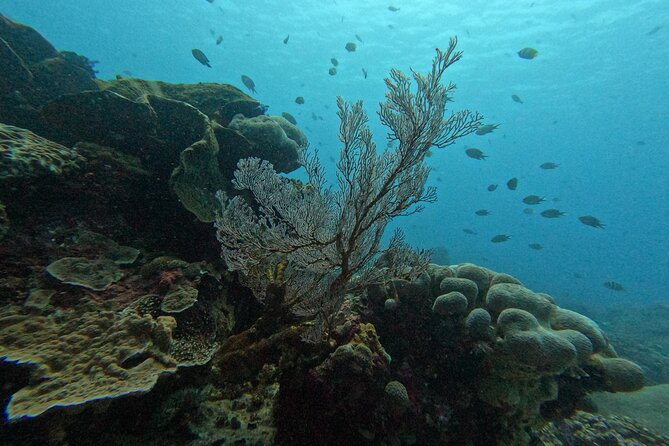
At $62.61 per person, this is not the cheapest way to spend six hours in Nusa Penida. A basic snorkeling trip may cost less if your only goal is to see fish and coral.
The comparison changes when you count what is included. You receive snorkeling equipment, lunch, restoration materials, the conservation presentation, instruction in underwater knot-tying, three guided snorkeling sessions, and the chance to plant 70 corals. A school gift is also part of the package.
The provider notes that comparable work through typical nongovernmental organizations can cost hundreds of dollars. I would not treat that statement as a guarantee of market value, but the price does appear reasonable for a small, practical course with materials and food included.
The strongest value is educational and participatory. You leave with a better understanding of coral nurseries and reef repair, plus a direct role in the planting. If you value a structured conservation experience more than a long sightseeing route, the price makes sense.
Personal expenses are not included. The package also does not list transport to the meeting point, so you need to budget for getting to Ecotourism Nusa Penida Buyuk.
Who will enjoy this experience most
I would recommend this course to you if you want your water activity to have a clear purpose. It suits people who enjoy learning by doing, care about marine conservation, and are happy to spend part of a holiday following instructions rather than simply floating over a reef.
It is also a good choice for small groups, couples, and families with older children who can swim comfortably and manage moderate physical activity. The 10-person limit should make the day more personal than a large boat excursion.
You should think twice if you dislike structured activities, cannot swim comfortably, or want a relaxed snorkeling session with no manual work. The coral planting requires effort, and the underwater knot lesson may be frustrating if you are not comfortable in the water.
The course also suits repeat visitors to Bali who have already seen the usual beach and snorkeling stops. It gives you a way to spend time with a local conservation team and connect ocean work with a school and community program.
Practical points for a smoother day
Wear clothing suitable for repeated time in the water and bring anything you normally need for a six-hour outdoor activity. Snorkeling equipment is supplied, but the information does not specify whether towels, sunscreen, or personal clothing items are provided.
Bring a phone with your mobile ticket available. The operator confirms bookings at the time of reservation, and the meeting point is also the return point.
The cancellation terms are forgiving if your plans change early. You can receive a full refund by canceling at least 24 hours before the local start time. Changes or cancellations made within 24 hours are not accepted for a refund.
The experience has a five-star rating from seven reviews, and the praise focuses on the coral garden, the clear instructions, and the work of Nyoman, Festi, and their team. That fits the strongest feature of the course: you are not handed a vague conservation message, you are shown how to handle coral, tie it to ropes, and place it on the seabed.
Should you book this reef rehabilitation course?
Book it if you want a hands-on conservation day rather than a standard snorkeling outing. The combination of reef education, nursery work, lunch, underwater knot-tying, and 70 planted corals gives the $62.61 price real substance.
Choose another activity if you cannot swim comfortably, want hotel transportation included, or prefer a quiet day with no scheduled physical task. For everyone else, this is a focused and worthwhile way to spend six hours in Nusa Penida, especially on a Saturday when the school and beach cleanup activities add a useful community link.
FAQ
Where does the Reef Rehabilitation Course and Snorkeling experience start?
It starts at Ecotourism Nusa Penida Buyuk on Jalan Ped, Nusa Penida, Klungkung Regency, Bali 80771, Indonesia.
Where does the experience end?
The activity ends back at the same meeting point.
How long does the course last?
The experience lasts approximately six hours.
How many corals does each person plant?
Each person plants 70 corals, covering about 4 square meters of reef.
Is lunch included?
Yes. A local lunch at Coral Cafe is included.
Is snorkeling equipment provided?
Yes. Snorkeling equipment and the materials needed for coral restoration are included.
Do I need to be able to swim?
Yes. You should be able to swim comfortably and have a moderate level of physical fitness.
How many people can join the activity?
The maximum group size is 10 people.
Just added around the Nusa Islands
- ATV Quad Bike Kuber Through Waterfall, Tunnel And Rice Field★ 5.0 · 3 reviews
- Snorkeling with Manta Rays in Their Habitat with Manta Point★ 4.5 · 3 reviews
- Snorkeling adventure to the manta ray habitat in Nusa Penida★ 5.0 · 3 reviews
- Gong Sound Healing on Nusa Lembongan, Bali★ 5.0 · 3 reviews
- Nusa Penida Private Car Charter★ 5.0 · 4 reviews
- Three Islands Snorkeling (3 Spots) Manta Rays – From Lembongan★ 4.5 · 5 reviews
- Mangrove Reforestation and Exploration around the Nusa Islands★ 5.0 · 5 reviews
- Nusa Penida Jet Ski Trip★ 4.0 · 5 reviews
Snorkeling, compared.
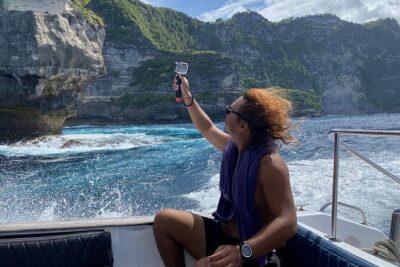
Nusa Penida by Private Boat – Snorkeling 4 spots, Swim with Mantas + Land Tour
Read our review →Bali Snorkeling Tour at Blue Lagoon Beach – All-Inclusive
Read our review →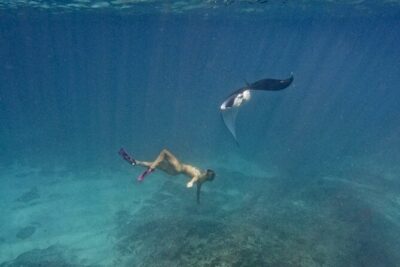
Nusa Penida day trip: boat, 4 snorkeling, Manta rays & Land tour
Read our review →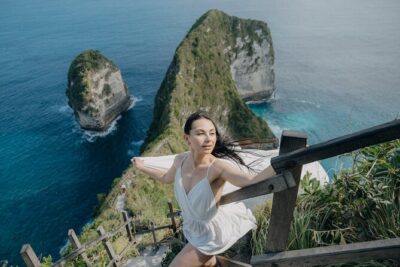
Nusa Penida Snorkeling Adventure (Private & All-Inclusive)
Read our review →
All Inclusive : Bali Blue Lagoon Snorkeling, Lunch, and Transport
Read our review →
Bali Blue Lagoon Snorkeling – Lunch and Transport All Inclusive
Read our review →
One Day Nusa Penida Island West with Snorkeling
Read our review →
Blue Lagoon Snorkeling – Lunch – Kantolampo – Tibumana Waterfall
Read our review →Browse the lists this tour appears in