
Reviewed · 3-DAY EXPERIENCES
3-Day Freediving Level 1 Course
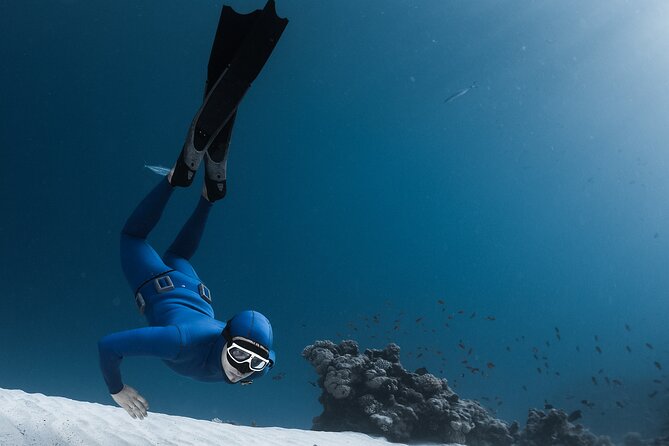
The quietest way to meet the ocean. This three-day course in Nusa Penida gives you a careful introduction to freediving, with classroom lessons, pool practice, and open-water sessions around coral and tropical fish. I especially like the maximum of four students per instructor, and I like that equipment, certification, and digital learning materials are included. The main caution is simple: this is a full three-day course, running from 8:30 a.m. to 4:30 p.m., so it is not a casual half-day activity.
You do not need prior freediving experience, but you must be able to swim and have a moderate level of fitness. At the end, most students are aiming for a breath hold of more than two minutes and a descent of roughly 15 to 20 meters, or 50 to 65 feet. Those are useful targets, not promises, and your progress will depend on comfort in the water, practice, and how your body responds.
In This Review
- Key points to know before booking
- Why Nusa Penida works for a first freediving course
- Day one: theory, calm breathing, and confined water
- Day two: building technique before the sea
- Day three: open water around coral and fish
- What the small group changes
- Equipment, certification, and what the $450 covers
- Who should take this course
- Practical details worth planning around
- The teaching style is the real value
- Should you book the Nusa Penida course?
- FAQ
- How long is the freediving course?
- Do I need previous freediving experience?
- How many students are assigned to each instructor?
- How deep can students usually descend by the end?
- How long can students usually hold their breath by the end?
- What is included in the $450 price?
- Are lunch, accommodation, and private transportation included?
Key points to know before booking
- Small classes keep the instruction personal: The course has no more than four students per instructor, giving you frequent feedback and close supervision.
- Three kinds of practice are included: You work through theory on land, two confined-water sessions, and three open-water sessions.
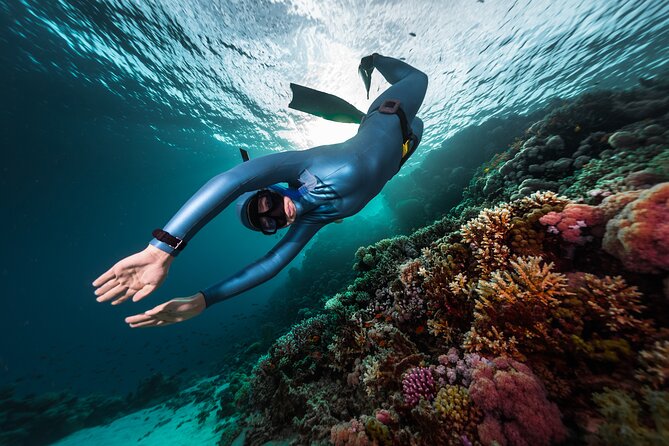
- Nusa Penida adds real underwater scenery: You can expect coral, tropical fish, and underwater photos of your progress.
- All core equipment is provided: You do not need to purchase special freediving gear for this course.
- The course is aimed at complete beginners: Swimming ability is required, but previous water-sport experience is not.
- The $450 price covers more than pool time: Equipment, taxes, certification, and digital study materials are part of the package, while lunch, lodging, and private transport are extra.
Why Nusa Penida works for a first freediving course
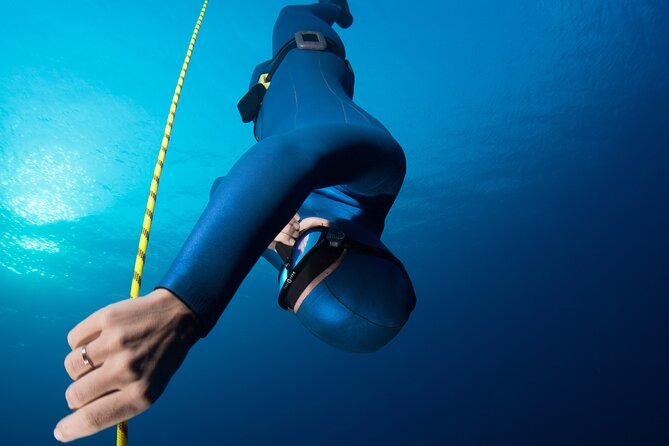
Nusa Penida is a practical place to learn because the course moves from controlled practice to the open sea in measured steps. You are not simply taken into the water and told to hold your breath. The schedule gives you time to understand breathing, body position, safety, and the mental side of staying calm underwater.
That progression matters. Freediving can look effortless from the surface, but the quiet part takes discipline. You need to relax your body, manage your breath, and avoid turning every attempt into a contest. A structured course helps you replace guesswork with repeatable habits.
The setting also gives the training a clear purpose. Pool work helps you focus on technique without distractions. In the sea, you can put those skills to use among coral and tropical fish, with the added pleasure of seeing your body move through a real marine environment.
There is also a useful emotional progression. Some beginners feel uneasy at first about being underwater without breathing. The course allows you to build comfort gradually, rather than treating nervousness as a problem. Supportive instructors, including teachers praised by name such as Artem, Roberto, Seva, Gaston, Hamza, Sabli, and Chiara, are a major part of that process.
A few more the Nusa Islands trips worth weighing up
- Best of Bali 3-Day Packaged Tour
★ 5.0 · 503 reviews - All inclusive Private 3 day tours package : Bali highlights
★ 5.0 · 348 reviews - More Complete: Discover Bali In 3 Days Private Tour Package
★ 5.0 · 167 reviews
Day one: theory, calm breathing, and confined water
Each day runs from 8:30 a.m. to 4:30 p.m., including a lunch break. The first day begins with theory and practical preparation, giving you the language and safety rules you need before spending serious time underwater.
You can expect the land sessions to cover the foundations of freediving. The point is not to memorize impressive numbers. It is to learn how to approach a breath hold without panic, how to move efficiently, and how to respect the limits of your body.
The first confined-water session is especially useful for beginners. A pool or similar controlled setting lets you pay attention to breathing and technique without the movement and visual distractions of the sea. If you arrive worried about your first breath hold, this is where you start to settle in.
I like this measured approach because it gives you room to make small corrections. An instructor can watch your movement, offer feedback, and help you avoid wasting energy. With a maximum of four students per instructor, you should receive more individual attention than you would in a large group class.
Do not expect day one to feel like a holiday outing. It is a proper training day, and the mix of theory and practice requires concentration. You may finish tired, but you should also have a clearer idea of what your body can do and what still needs work.
Day two: building technique before the sea
The second day continues the practical work and prepares you for the open-water sessions. The course includes two confined-water sessions in total, so one of them takes place during this early part of the program.
This stage is where technique begins to replace effort. Beginners often assume that going farther underwater means trying harder. In practice, unnecessary movement costs breath and makes the experience less comfortable. The course aims to help you stay relaxed and use your energy wisely.
The instructors’ manner matters here. The strongest praise for this school centers on patience, clear explanations, encouragement, and thoughtful challenges. That combination is important. You want an instructor who will not rush you, but you also want useful guidance that helps you move forward.
Artem, for example, was praised for taking care of each student while still encouraging progress. Roberto was singled out for helping a nervous beginner feel comfortable. Seva was noted for being patient, kind, funny, and reassuring. Those details suggest a teaching style that is supportive without becoming vague or overly cautious.
The course is also small enough for you to watch other students and learn from their practice. You may notice that one person is comfortable with breath holds while another is better at staying streamlined underwater. That can be encouraging, especially if you are new and are tempted to compare your first attempts with someone else’s.
Day three: open water around coral and fish
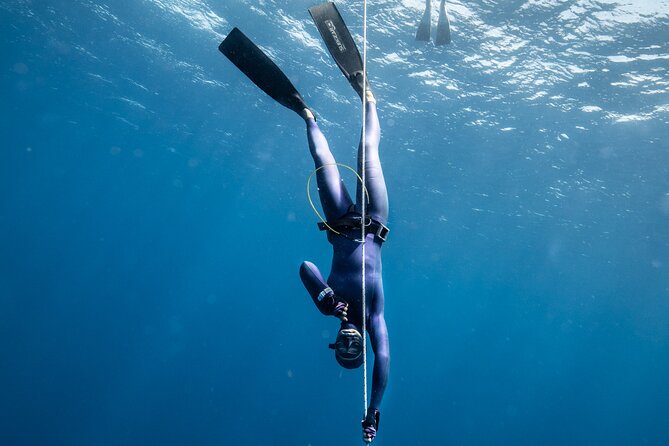
The third day brings the skills into the sea. Across the course, you complete three open-water sessions, and these are the sessions that connect the training with Nusa Penida’s underwater appeal.
The sea adds a different kind of challenge. Water movement, changing depth, visibility, and the sheer scale of the setting can make you feel less secure than you did in the pool. That is exactly why the earlier preparation matters. You have already practiced the basics in a controlled place before asking your body and mind to handle open water.
Most students finish the course able to descend about 15 to 20 meters on one breath and hold their breath for more than two minutes. Again, treat these as typical end-of-course goals rather than a guarantee. A safe course should care more about your technique and control than about forcing you to reach a number.
The open water is also where the experience becomes memorable. You are not practicing beside a tiled wall. You are moving through a tropical marine setting, with coral and fish around you. Underwater photos are included, so you can take home a visual record of your progress rather than relying only on memory.
Those photos have real value for a beginner. Freediving can feel difficult to describe because much of the experience is internal: your breathing, calmness, and sense of movement. A photo gives you something tangible, and it may show improvements in body position that you did not notice at the time.
A completely different kind of day out in the Nusa Islands:
- ️Nusa Penida by Private Boat – Snorkeling 4 spots, Swim with Mantas + Land Tour
★ 5.0 · 6,424 reviews - Open Water Course in Nusa Lembongan – Get Certified on remote island (next Bali)
★ 5.0 · 864 reviews - Bali to Nusa Penida: Premium Private Full Day Tour-All Inclusive
★ 5.0 · 764 reviews - One Day Nusa Penida Island West with Snorkeling
★ 4.5 · 560 reviews
What the small group changes
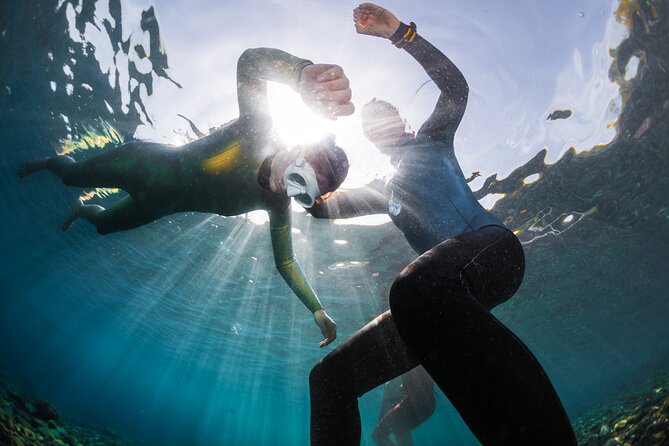
A four-to-one student-to-instructor limit is one of the strongest features of this course. In a skill-based water activity, group size affects more than comfort. It affects how often you receive feedback, how quickly questions are answered, and how closely the instructor can monitor each attempt.
A small class does not mean every minute is private instruction. You will still share sessions with other students. But the ratio gives the instructor a realistic chance to notice when you are tense, inefficient, or ready for a modest challenge.
That is particularly important for safety. Freediving requires careful habits, and a beginner should not be left to copy techniques from a video or a more experienced friend. The course is built around supervised learning, with theory on land and practice in confined and open water.
The personal approach also seems to be a major reason the school receives such strong praise. Students have described the instructors as professional, caring, encouraging, and well organized. Those qualities are not decoration. They can determine whether a nervous beginner enjoys the course or spends three days fighting anxiety.
Equipment, certification, and what the $450 covers
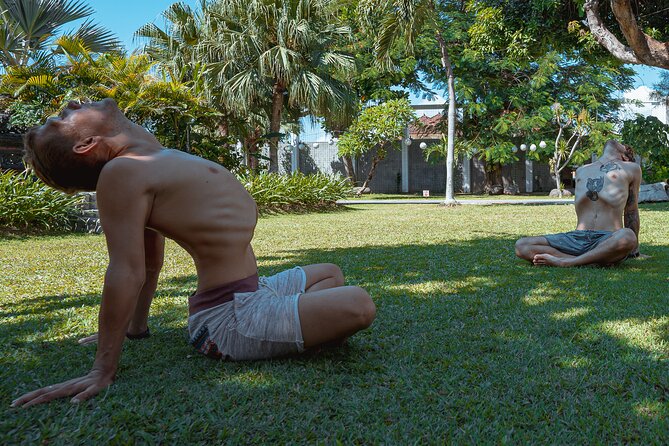
The price is $450 per person. That is not a small amount, especially once you add accommodation, meals, and getting around Nusa Penida. Still, the package includes the essential freediving equipment, all fees and taxes, a freediving certification, digital learning materials, and underwater photos.
That makes the price easier to assess. You are paying for three full training days, not just access to the water. You also avoid buying special equipment before you know if freediving suits you. For a first course, that is a sensible advantage.
Lunch is not included, so plan for the daily break. Accommodation is also separate, as is private transportation. The meeting point is Freedive Nusa, on Jl. Ped-Buyuk in Ped, Nusa Penida, and the activity ends back there each day.
The lack of private transport may be a benefit or a nuisance, depending on your plans. If you are already staying nearby, meeting at the school should be straightforward. If you are staying elsewhere on the island, arrange your own ride and allow enough time to arrive before 8:30 a.m.
Who should take this course
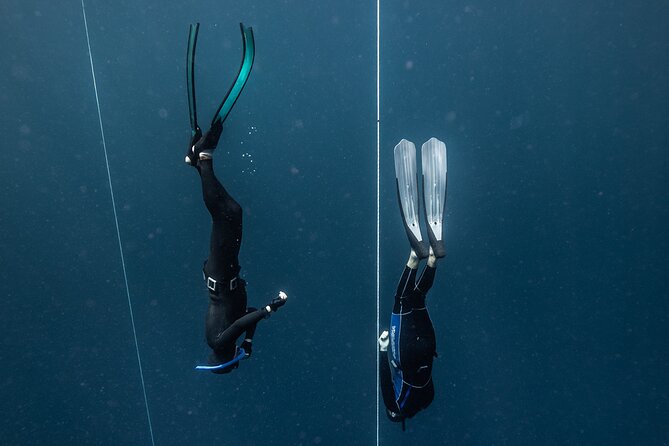
This course suits you if you can swim, have moderate physical fitness, and want a serious introduction rather than a quick ocean activity. You do not need previous freediving experience, and the teaching is designed to help first-timers build confidence step by step.
It is also a good choice if you like learning through practice. You will spend three days moving between explanations and water sessions, so the course rewards patience. You will probably get more from it if you are willing to listen carefully, repeat drills, and accept that progress may come in small steps.
The course may suit you especially well if you are nervous about breath holding. The gradual approach and small group can help you develop confidence without being pushed into an uncomfortable situation too early.
You should think twice if you want a flexible schedule or a short activity between other sightseeing plans. The hours are long and fixed, from 8:30 a.m. to 4:30 p.m. on each of the three days. It is best treated as the main event of your Nusa Penida stay.
Practical details worth planning around
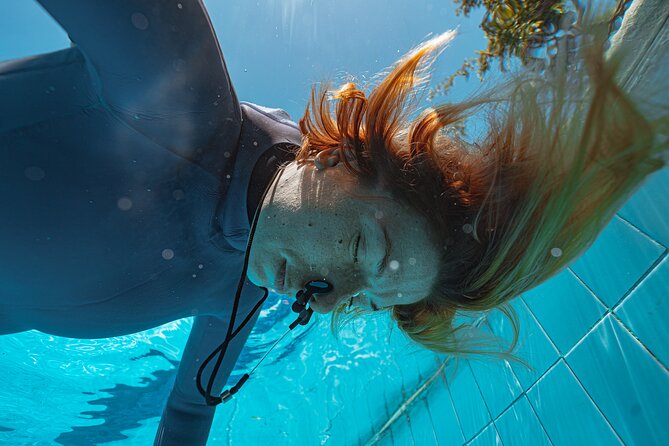
Confirmation is provided at booking, and the activity operates Monday through Sunday from 8:30 a.m. to 4:30 p.m. The stated operating period runs through December 8, 2026, so check the available date when you reserve.
You need to be able to swim. The course also recommends a moderate level of physical fitness, which is reasonable given the long days and repeated water sessions.
Bring a plan for lunch and transport. Neither lunch nor private transportation is included. You also need to arrange accommodation separately, since the $450 price covers the course rather than a stay on the island.
The cancellation terms are fairly forgiving if your plans change early. You can cancel at least 24 hours before the start time for a full refund. Changes or cancellations made less than 24 hours before the local start time are not accepted for a refund.
The teaching style is the real value
Equipment and certification are useful, but the instructor relationship may shape your experience more than either. A beginner needs clear safety guidance, honest feedback, and encouragement that does not feel like pressure.
The strongest teaching comments point to a relaxed but purposeful style. Gas and Chiara were praised for making theory easy to remember and for giving helpful feedback in the water. Hamza was described as especially patient and kind, helping a student gain confidence. Gaston was praised for professionalism and support.
You should still remember that instructors can vary from one course date to another. The named teachers reflect the staff experiences available at different times, not a promise that one particular person will teach your group. If having a specific instructor matters to you, ask before booking.
The overall rating is 5 out of 5 from 54 reviews, with 100 percent recommending the experience. That is a strong record, and the praise is consistent: clear teaching, good equipment, careful organization, and friendly staff. I would treat those as meaningful signs, while still remembering that freediving asks something physical and mental from you.
Should you book the Nusa Penida course?
I would book this course if you want to learn freediving properly and have three days to give it. The small classes, structured progression, included equipment, certification, and underwater photos make the $450 fee reasonable for a first course, especially if you would otherwise need to rent or buy gear.
I would not book it as a casual add-on to a packed island itinerary. The schedule is demanding, lunch and transport are extra, and your best results will come when you arrive rested and ready to focus.
For a complete beginner who can swim, this is a strong starting point. You get a controlled introduction, supportive instruction, and a real open-water setting instead of a single hurried attempt. Just keep the depth and breath-hold figures in perspective: the goal is safe progress, not winning a contest with your lungs.
FAQ
How long is the freediving course?
The course lasts three days. Each day runs from 8:30 a.m. to 4:30 p.m., including a lunch break.
Do I need previous freediving experience?
No. Previous freediving or water-sport experience is not required. You do need to be able to swim.
How many students are assigned to each instructor?
The course has a maximum of four students per instructor.
How deep can students usually descend by the end?
Most students can descend to about 15 to 20 meters, or roughly 50 to 65 feet, on one breath by the end of the course.
How long can students usually hold their breath by the end?
Most students can hold their breath for more than two minutes at the end of the three-day course.
What is included in the $450 price?
The price includes freediving equipment, all fees and taxes, freediving certification, and digital learning materials. Underwater photos are also provided.
Are lunch, accommodation, and private transportation included?
No. Lunch, accommodation, and private transportation are not included. The activity starts and ends at Freedive Nusa in Ped, Nusa Penida.
Just added around the Nusa Islands
- ATV Quad Bike Kuber Through Waterfall, Tunnel And Rice Field★ 5.0 · 3 reviews
- Snorkeling with Manta Rays in Their Habitat with Manta Point★ 4.5 · 3 reviews
- Snorkeling adventure to the manta ray habitat in Nusa Penida★ 5.0 · 3 reviews
- Gong Sound Healing on Nusa Lembongan, Bali★ 5.0 · 3 reviews
- Nusa Penida Private Car Charter★ 5.0 · 4 reviews
- Three Islands Snorkeling (3 Spots) Manta Rays – From Lembongan★ 4.5 · 5 reviews
- Mangrove Reforestation and Exploration around the Nusa Islands★ 5.0 · 5 reviews
- Nusa Penida Jet Ski Trip★ 4.0 · 5 reviews
3-Day Experiences, compared.
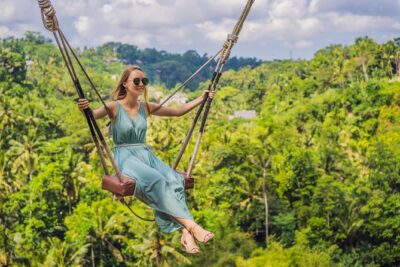
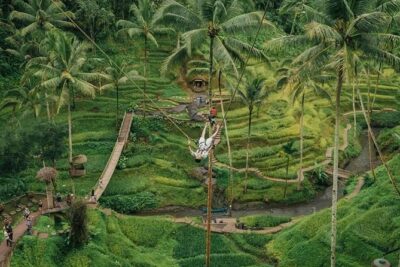
All inclusive Private 3 day tours package : Bali highlights
Read our review →
More Complete: Discover Bali In 3 Days Private Tour Package
Read our review →
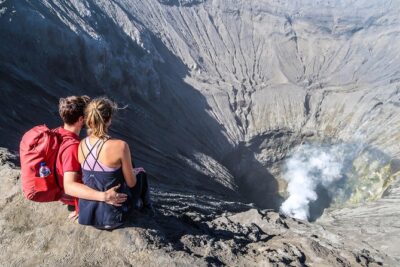
Mount Ijen Bromo Tour from Ubud Bali (3 days 2 nights)
Read our review →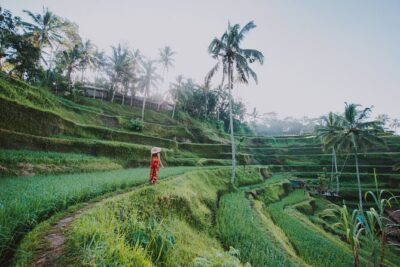
Nusa Penida & Gili Trawangan 3Days 2Night (Snorkeling)
Read our review →Browse the lists this tour appears in