
Reviewed · FOOD TOURS IN SEMINYAK
Taste & Explore Bali: Denpasar Street Food & Historic Sites
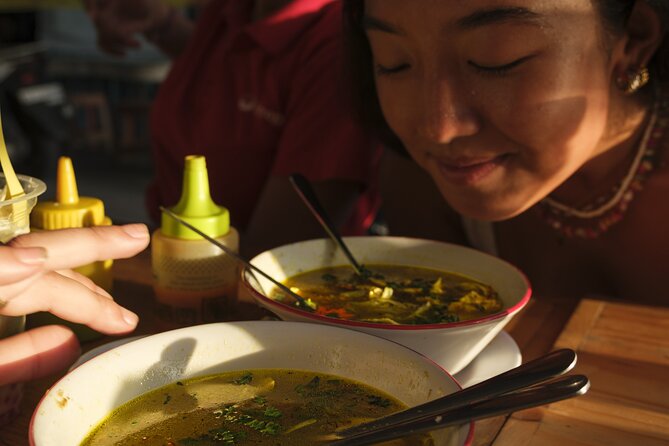
Denpasar tastes better after dark. This three-hour evening tour takes you beyond Seminyak’s resort scene and into central Denpasar, where Hindu temples, colonial landmarks, markets, and local food stalls shape daily life. I like the mix of Babi Guling and Bakso, two dishes that give you a real sense of Indonesian cooking, and I like that your spending reaches four to six local food stalls rather than one large restaurant.
I also appreciate the small maximum of 12 people. Guides such as Putra, Irfan, Lena, and Srix have helped make this experience personal, with food advice and stories about Balinese customs along the way. The main drawback is that this is not a flexible food tour for special diets: vegetarian, vegan, and gluten-free needs cannot be accommodated, and the dishes are not designed for very young children.
In This Review
- Key points to know before booking
- Why leave Seminyak for Denpasar?
- Pura Agung Jagatnatha sets the tone
- Puputan Square and the four-faced Catur Muka statue
- Jalan Gajah Mada mixes old buildings and local eating
- Badung Market brings the strongest food-market atmosphere
- Nadhi Heritage ends the walk with coffee
- What the food says about Balinese culture
- How the small group changes the experience
- Price, value, and practical limits
- Who should book this Denpasar food walk?
- Should you book Taste and Explore Bali?
- FAQ
- Where does the tour start?
- Where does the tour end?
- How long does the experience last?
- What food is included?
- Can vegetarians, vegans, or people with gluten allergies join?
- Can young children participate?
Key points to know before booking
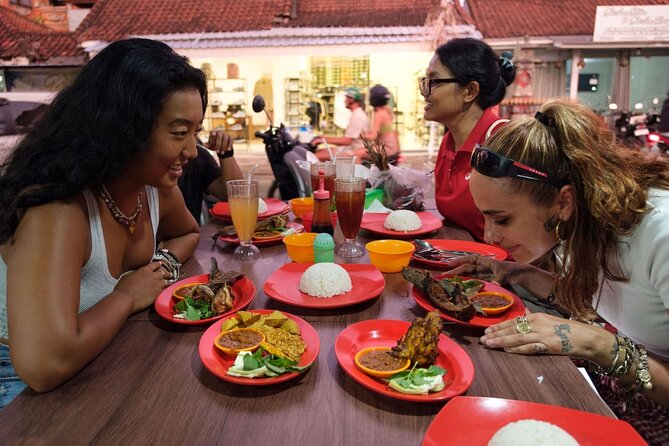
- Ceremonial-style Babi Guling: Try Bali’s famous roast pork, a dish traditionally linked with religious and family ceremonies.
- Two sides of Denpasar: Visit Pura Agung Jagatnatha and historic squares before eating at markets and street stalls.
- A proper local food walk: Sample Bakso, Jaje Bali sweets, market snacks, fruit, soup, and Indonesian Arabica coffee.
- Small-group format: The maximum is 12 people, with private options available.
- Evening timing: The tour starts at 4:00 pm, a useful choice if you want to escape the heat of the afternoon.
- Useful dietary warning: Vegetarian, vegan, and gluten-free diets cannot be catered for on this route.
Why leave Seminyak for Denpasar?
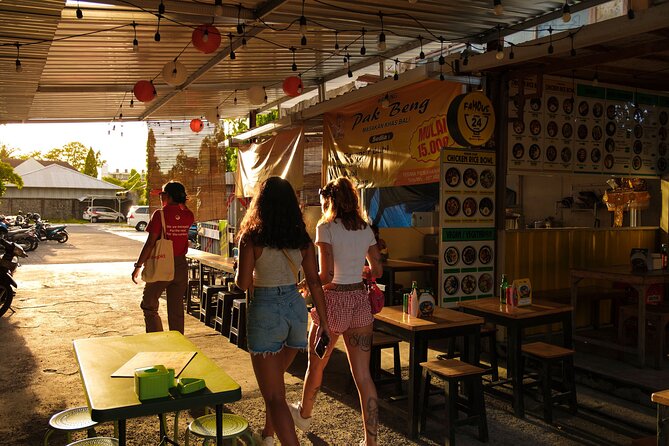
Seminyak is easy to enjoy, but it can also keep you inside a polished tourist bubble. This experience sends you into Denpasar, Bali’s capital, for a short walking tour built around places where local life, public memory, and food meet.
That change of setting is the point. You are not only moving from one restaurant to another. You are seeing a central Hindu temple, a four-faced statue, a former colonial district, traditional markets, and a heritage coffee shop. Food gives the walk its structure, but the city itself is just as important.
The tour begins at 4:00 pm and lasts about three hours. That timing gives you some cooler air and brings you to the market when the evening food scene is getting underway. You should still expect a warm walk, so wear comfortable shoes and bring water. The experience ends at Nadhi Heritage on Jalan Gajah Mada, not back at the temple.
The starting point is Pura Agung Jagatnatha, at Jalan Surapati No. 7. It is close to public transportation, and confirmation is provided when you book. Since the route is in central Denpasar rather than Seminyak, allow time to reach the meeting point.
More Food Tours in Seminyak
- Bali Private Food Walking Tour With Locals: The 10 Tastings
★ 5.0 · 243 reviews - Bali Bites Food Tour with 15+ Tastings
★ 5.0 · 114 reviews - Small-Group Denpasar Night Food Tour
★ 4.0 · 22 reviews
Pura Agung Jagatnatha sets the tone
Your first stop is Pura Agung Jagatnatha, Denpasar’s central Hindu temple. You have about 15 minutes here, enough to take in the setting, hear an introduction to Balinese Hindu practice, and begin to see how religion fits into the city’s public life.
This is a better opening than starting with food. The temple gives context to the dishes that follow, especially Babi Guling, which is often connected with ceremonies. You will not simply hear that a roast pork dish is popular. You will learn that food in Bali can carry social and religious meaning.
Admission is free, though you should follow your guide’s instructions about respectful behavior. Dress modestly for a temple visit, and remember that the stop is brief. This is not a long temple tour with time for every corner, but it is a useful first look at Denpasar’s spiritual center.
Puputan Square and the four-faced Catur Muka statue
The next part of the walk moves into Denpasar’s civic and historic center. At Puputan Square, you learn about the 1906 resistance against colonial rule and the events that made the square an important symbol of Balinese history. The area also marks Bali’s symbolic 0 kilometer point.
That detail gives the tour more weight than a simple market outing. You are walking through a place connected with resistance and public memory, not just passing photo stops on the way to dinner. The guide’s explanation helps connect Denpasar’s monuments with the city you see today.
At Patung Catur Muka, you can photograph the famous four-faced statue and nearby colonial-era landmarks. The statue represents a four-faced form of the Hindu god Brahma and is one of Denpasar’s best-known public markers. You also see the Nederlandsch-Indië Sokkelklok, a colonial-era clock landmark.
The stop lasts about 15 minutes. It is short, so do not expect an in-depth museum-style history lesson. Still, this portion gives you a useful frame for understanding the streets before the food takes center stage.
Jalan Gajah Mada mixes old buildings and local eating
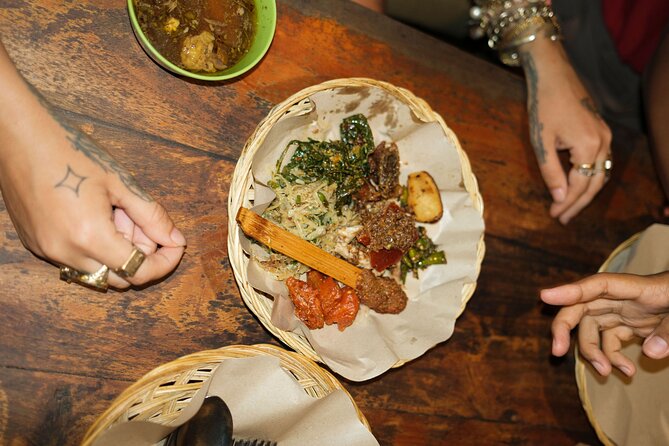
Jalan Gajah Mada brings together heritage streets, old colonial buildings, shops, and food stops. You spend about 30 minutes here, walking through one of central Denpasar’s notable commercial areas.
This is where the tour starts to feel less like sightseeing and more like a guided introduction to everyday Denpasar. Your guide points out places of interest while taking you toward local dishes. The walk also helps you understand that street food is not an isolated attraction. It is part of a working neighborhood where people shop, eat, and run small businesses.
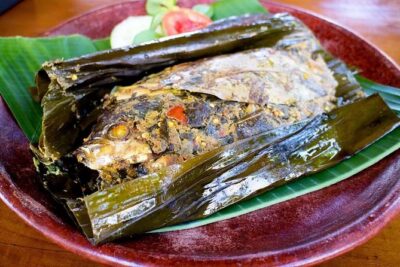
The food focus here includes Babi Guling and Bakso. Babi Guling is Bali’s well-known roast pork, traditionally prepared for ceremonial occasions but also available at local eateries. Expect strong seasoning and a dish that reflects Bali’s love of spice, herbs, and carefully prepared meat.
Bakso is a comforting Indonesian meatball soup. It offers a different experience from Babi Guling, with a warm broth and a familiar, easy-to-eat format. Together, the two dishes show how varied a short food tour can be.
Portions and exact preparations can vary by venue, so do not expect a fixed restaurant-style tasting menu. The tour is built around local stalls and small food businesses. If you want a polished dining room, this is not the right format. If you want to see how popular dishes are served in the city, it makes good sense.
A completely different kind of day out in Seminyak:
- Bali Full-Day Traditional Village Sightseeing Trip All Inclusive
★ 5.0 · 3,069 reviews - Experts Bali Driver : Best Bali Private Driver for Tour in Bali
★ 5.0 · 1,339 reviews - Bali Hai Sunset Dinner Cruise
★ 5.0 · 1,173 reviews - Mount Batur Sunrise Trekking
★ 5.0 · 947 reviews
Badung Market brings the strongest food-market atmosphere
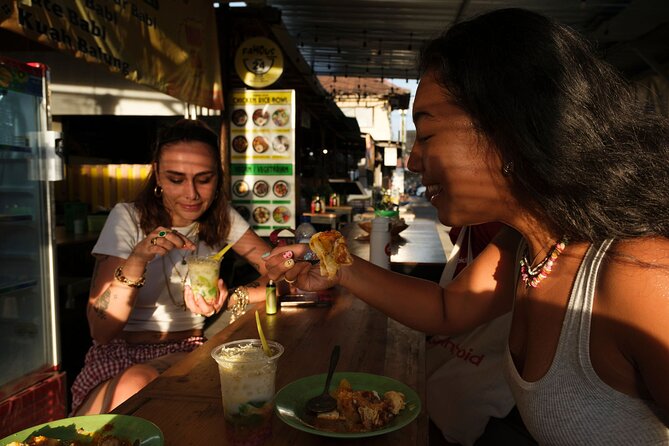
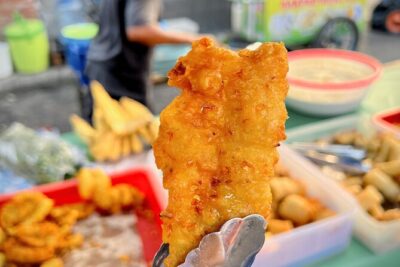
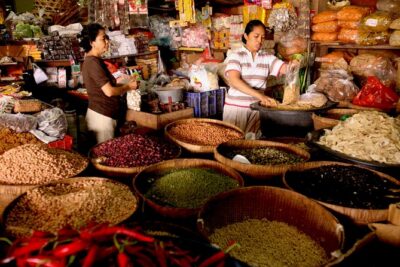
Badung Market is the main food stop, with about 30 minutes set aside for traditional snacks and street food. This is the part that most clearly delivers the local market experience promised by the tour.
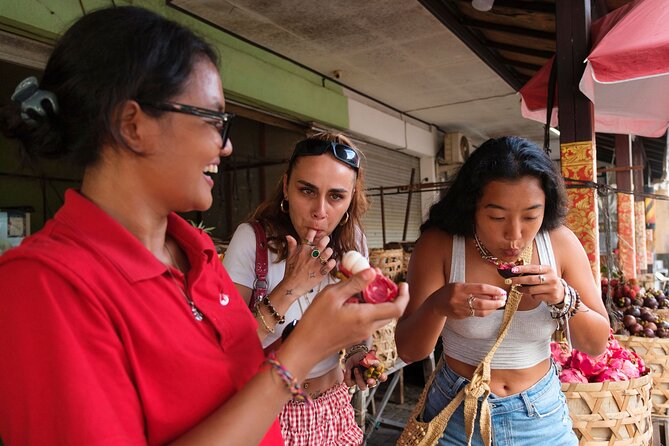
You will sample Jaje Bali, a group of traditional Balinese sweets often made with rice flour and coconut. These snacks can be colorful, soft, sticky, or lightly sweet. They are a useful reminder that Balinese food is not only about roast pork and spicy savory dishes.
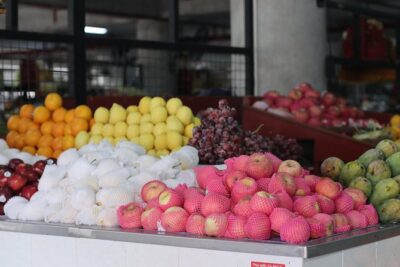
You may also encounter fruit, cakes, and soup during the market visit. Irfan, one of the guides, has helped participants choose kue, or local cakes, and soto, a type of Indonesian soup. That kind of guidance matters. Market food can be unfamiliar, and a guide can help you decide what to try instead of leaving you to guess at every stall.
The vendors here are local people who sell food for a living. The experience is designed to spread purchases among roughly four to six small stalls, so your money supports more than one business. That is a practical benefit, especially if you care about keeping your food spending within the neighborhood you are visiting.
You should keep your expectations realistic. A traditional market is not arranged like a tasting room, and the food may be served simply. There may be noise, heat, crowds, and unfamiliar ingredients. Those conditions are part of the setting, but they may not suit anyone who wants a quiet, controlled meal.
Nadhi Heritage ends the walk with coffee
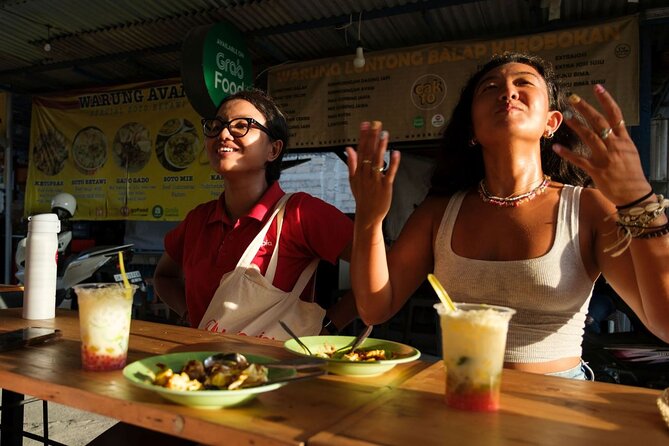
The final stop is Nadhi Heritage at Jalan Gajah Mada No. 122. You spend about 30 minutes here with a cup of Indonesian Arabica coffee, served hot or iced.
This pause is well placed. After temple visits, monuments, walking, and market food, you get time to sit and talk. Coffee also gives the tour a gentle ending rather than sending you straight from a busy market into the night.
The stop is more than a drink included at the end. Indonesian coffee has become an important part of the country’s food identity, and tasting Arabica in a heritage coffee shop adds another layer to the experience. If you do not usually drink coffee, ask for the iced option, but the supplied details do not promise alternate drinks or a full non-coffee menu.
The tour ends here, at approximately Jalan Gajah Mada No. 122. Plan your onward transport from this area. The end point is different from the starting point at Pura Agung Jagatnatha.
What the food says about Balinese culture
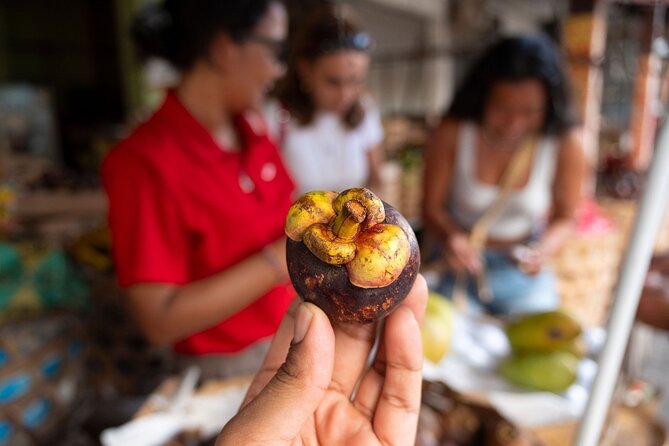
The strongest idea behind this tour is that food is tied to custom. Babi Guling is not presented as just another dish on a menu. It is traditionally associated with ceremonies, which makes it a useful way to discuss family gatherings, religious events, and the place of food in Balinese life.
That context can change how you approach the meal. You may already know roast pork from other cuisines, but the Balinese version has its own cultural setting and preparation traditions. The guide explains the story while you eat, turning a quick sample into something you can remember.
Jaje Bali brings a different lesson. These sweets show the daily side of local food culture, where rice flour, coconut, color, and texture become small snacks sold at markets. Bakso and soto then widen the picture again, showing the Indonesian food traditions found in an urban capital.
I like that the tour does not claim Denpasar food can be reduced to one signature dish. You get a small but varied sample: ceremonial pork, meatball soup, traditional sweets, possible fruit and cakes, and coffee. Three hours cannot cover Bali’s full food culture, but it can give you a useful starting point.
How the small group changes the experience
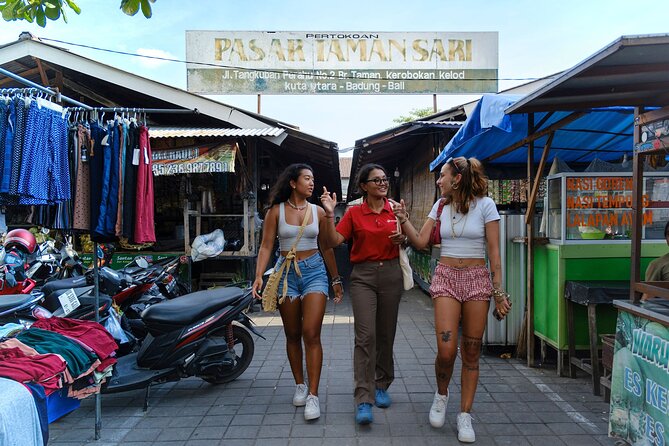
The maximum group size is 12 people, with a private option available. That matters in a market. A large group can crowd a stall, block walkways, and make it hard to hear. A small group gives the guide more room to answer questions and adjust the pace.
The personal quality of the guiding is one of the tour’s strongest features. Putra has been praised for careful attention during market visits. Lena is described as easy to talk to, and Srix has helped connect local customs with the points of interest along the walk. Irfan has offered practical advice on choosing cakes and soup while explaining Indonesian food traditions.
The guide assigned to you may vary, so do not book around one particular person. Still, the pattern is clear: this experience works best when you ask questions. Ask how a dish is made, why it is eaten at a certain time, or what ingredients you are seeing. The more curious you are, the more useful the short walking route becomes.
The tour is designed for adults and older children. Children under six are not permitted, and there are no kids’ meals. Since the route includes authentic local dishes rather than familiar Western options, older children should be comfortable trying new food.
Price, value, and practical limits
At $45 per person, this is not the cheapest way to eat in Denpasar. You could spend far less by visiting a market alone. The value comes from having a guide connect the dishes with temples, monuments, colonial landmarks, and local customs.
You are also paying for several tastings, a guided walk, and coffee, while helping direct spending to multiple local stalls. For a first visit to Denpasar, that can be good value, especially if you would otherwise feel unsure about what to order or where to begin.
The price is less attractive if you mainly want a large meal. Additional food and drinks are not included, and the tour is not a free-for-all tasting session. Come expecting a series of samples and cultural explanations, not an all-you-can-eat dinner.
Gratuities are also not included. If your guide gives you a helpful, personal introduction to the city, budget for a tip at the end.
Free cancellation is available if you cancel at least 24 hours before the 4:00 pm start time. Cancellations or changes inside that window are not refunded or accepted, so check your plans before booking.
Who should book this Denpasar food walk?
I would recommend it to first-time visitors who want to see a side of Bali beyond resort streets. It suits you especially well if you enjoy small food stalls, local history, short walks, and guides who explain the meaning behind what you are eating.
It is also a good choice for anyone nervous about ordering unfamiliar food. The guide can help you choose cakes, soup, fruit, and other market items, which removes much of the guesswork.
You should skip it if you need vegetarian, vegan, or gluten-free food. The tour cannot accommodate those requirements. It is also a poor fit if you want a long temple visit, a formal sit-down dinner, or a route built around children’s meals.
Bring comfortable walking shoes, modest clothing for the temple, and an appetite for unfamiliar flavors. Since the start and end points differ, plan your evening transport in advance.
Should you book Taste and Explore Bali?
Book this tour if you want a compact, well-rounded introduction to Denpasar. The best parts are the cultural explanation around Babi Guling, the local market tastings, the small group, and the way the route supports independent food vendors.
The experience will not satisfy every diet or every appetite. Yet for meat-eaters who want more than a restaurant meal, it offers a useful three-hour snapshot of Bali’s capital. You get temples, public history, local snacks, coffee, and the chance to see how food fits into ordinary city life. That makes the $45 price reasonable for a first taste of Denpasar.
FAQ
Where does the tour start?
It starts at Pura Agung Jagatnatha, Jalan Surapati No. 7, Dangin Puri, Denpasar, at 4:00 pm.
Where does the tour end?
It ends at Nadhi Heritage, Jalan Gajah Mada No. 122, Denpasar.
How long does the experience last?
The tour lasts approximately three hours.
What food is included?
You taste Babi Guling, Bakso, traditional Jaje Bali snacks, and street food at Badung Market. The experience also includes Indonesian Arabica coffee at Nadhi Heritage.
Can vegetarians, vegans, or people with gluten allergies join?
The tour cannot cater for vegetarian, vegan, or gluten-free diets.
Can young children participate?
Children under six are not permitted. The tour is best suited to adults and older children, and no kids’ meals are available.
More Historical Tours
- Bali Unesco World Heritage Sites Tour (Private & All-Inclusive)
★ 5.0 · 91 reviews - Exquisite UNESCO World Heritage Sites in Bali
★ 5.0 · 9 reviews - Full-day Ubud Private tour : Cultural Heritage
★ 5.0 · 5 reviews - Ubud Cultural and Historical Guided Tour with Transfer
★ 5.0 · 4 reviews
Just added around Seminyak
- Facial treatment + Balinese massage at Bali Luxury Spa★ 3.5 · 3 reviews
- Bali Full-Day Private Customize Tour★ 5.0 · 3 reviews
- Telaga Waja White Water Rafting and Besakih Temple Tour★ 5.0 · 3 reviews
- Bali: Private Mount Batur Sunrise Trek with Guide★ 5.0 · 3 reviews
- Airport Transfer Check in OR Check out Seminyak Area★ 5.0 · 3 reviews
- Private Half-Day Tour: Tanah Lot Sunset Tour★ 5.0 · 3 reviews
- Bali Airport Transfers Service To Ubud, Uluwatu, Pecatu★ 3.5 · 3 reviews
- Private Munduk Waterfalls Trekking Tour★ 5.0 · 3 reviews
Food Tours in Seminyak, compared.
Bali Private Food Walking Tour With Locals: The 10 Tastings
Read our review →
Browse the lists this tour appears in