
Reviewed · MOUNT BATUR SUNRISE TOURS
Kintamani Cultural and Nature Cycling Tour ( Manual Bike )
Bali looks different from a bicycle seat. This mostly downhill ride from Kintamani trades Ubud traffic for village lanes, rice terraces, forest paths, and quiet views of daily Balinese life. You stop at a local home, see traditional work, learn how rice-field irrigation functions, and finish with lunch at Greenkubu Restaurant.
I like the small cultural stops, especially the visit to a home in Abuan and the look at village industries such as stone making and woodworking. I also like the value: hotel pickup from Ubud, bikes, guides, coffee breaks, snacks, and lunch are folded into a $33 price.
The main caution is that downhill does not mean effortless. Narrow or uneven stretches still require confidence, and transport or bike equipment has not been flawless for every customer. Bring sunscreen, wear proper shoes, and make sure your gears and brakes feel right before setting off.
In This Review
- Key points to know before booking
- Why this ride gets you beyond Ubud’s busy roads
- Coffee and breakfast at the Balinese plantation
- Tegallalang is a brief photo stop
- Starting the bicycle ride in Abuan, Kintamani
- Abuan village and a look inside local life
- Taro village, coffee, and Gunung Raung Temple
- Bresela rice fields and the irrigation system
- Finishing at Hyang Api Temple in Payangan
- Lunch at Greenkubu Restaurant and Swing
- How much effort should you expect?
- Group size, transport, and small practical risks
- Is $33 a fair price?
- Who should book this Kintamani ride?
- Should you book it?
- FAQ
- How long does the Kintamani cycling tour last?
- Is hotel pickup included?
- Where does the bike ride begin?
- Is the route mostly downhill?
- What food is included?
- What should I bring?
- What ages can join?
- Can I cancel for a full refund?
Key points to know before booking
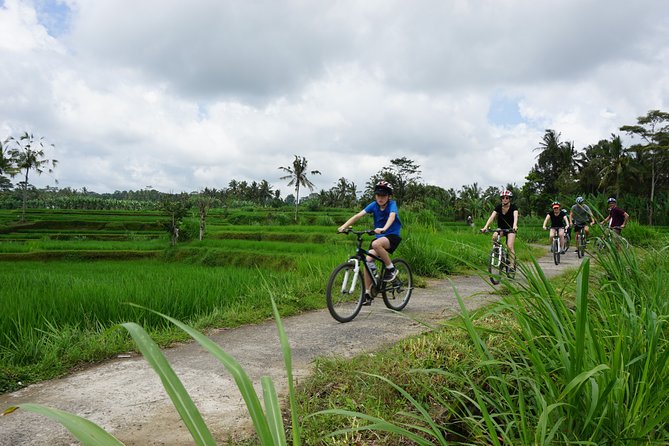
- About 95 percent downhill: The route is gentle overall, but narrow lanes and occasional bumps still demand attention.
- A real countryside route: You pass through Abuan, Taro, Bresela, and Payangan rather than staying on Ubud’s main tourist roads.
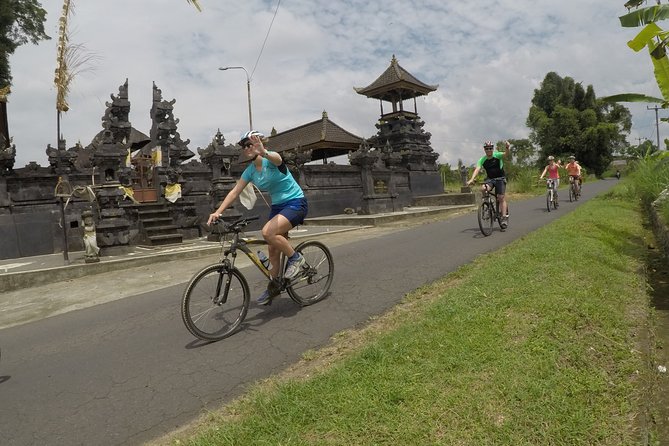
- Culture is part of the ride: Stops include a local home, Gunung Raung Temple, a rice-field irrigation area, and Hyang Api Temple.
- Two guides often improve safety: A lead guide and a rear guide can help with directions, traffic, and riders who need a slower pace.
- Food is included: Expect a plantation coffee stop with pancake or smoothie bowl, another break in Taro, snacks, and lunch at Greenkubu.
- Good value at $33: Included transport and meals make this a strong half-day outing, provided you are comfortable on a bicycle.
Why this ride gets you beyond Ubud’s busy roads
Ubud is a fine base for Bali, but its roads can feel crowded and noisy. This cycling day begins higher up in Kintamani, where the route gradually drops through rural Bali toward Payangan. The change is immediate: fewer cars, more village lanes, and a closer look at how homes, temples, gardens, and rice fields fit together.
The ride takes about seven to nine hours from hotel pickup to return. Much of that time includes driving, food breaks, explanations, and stops, so you are not pedaling continuously for the entire day. That matters if you want an active outing without signing up for an all-day endurance test.
I would describe the cycling as easy to moderate rather than completely effortless. One guide described the route as roughly 95 percent downhill, which explains why families and casual riders tend to manage it well. Still, you need to control your speed, especially on narrow roads, uneven surfaces, and sections where confidence on a bike matters more than fitness.
The guides are one of the strongest parts of the experience. Guides named Gede, Ben, Wayan, Gudday, Yoga, Madi, and Amin have been praised for clear directions, cultural explanations, patience, and attention to safety. When groups include children, the guides may take extra care and help riders stay together.
More Bike Tours in Ubud
- Electric Cycling Tour of Ubud with Free Hotel Transfer and Lunch
★ 5.0 · 1,397 reviews - Ubud: Downhill Cycling with Volcano, Rice Terraces and Meal
★ 5.0 · 536 reviews - Half-Day Ubud Electric Cycling Tour to Tirta Empul Water Temple
★ 5.0 · 315 reviews
Coffee and breakfast at the Balinese plantation
Your day begins with pickup from your hotel in Ubud, followed by a drive toward a Balinese plantation. The first stop is not simply a quick caffeine fix. It gives you time to settle in, eat, and enjoy the cooler upland setting before getting on the bike.
Coffee is served with a pancake or smoothie bowl. A gluten-free request can be accommodated with the smoothie bowl option, according to the tour details. If you need a specific dietary adjustment, it is still sensible to mention it at booking and again when you meet the guide.
This early stop also helps explain the long duration. The experience is built as a full outing, not a two-hour bike rental. You receive food, transport, instruction, sightseeing, and cultural stops along the way.
Tegallalang is a brief photo stop
The vehicle pauses at Tegallalang rice terrace for about 15 minutes. This is a short stop, so treat it as a quick viewpoint and photo opportunity rather than a long walk through the terraces.
Tegallalang is one of Bali’s best-known rice-growing areas, and the stepped fields make an attractive introduction to the day. The drawback is time. You will not have much opportunity to explore, linger, or study the farming system here.
That is not a serious weakness if you already plan to visit Tegallalang separately. The more useful rice-field explanation comes later at Bresela, where the focus is on irrigation rather than photographs.
Starting the bicycle ride in Abuan, Kintamani
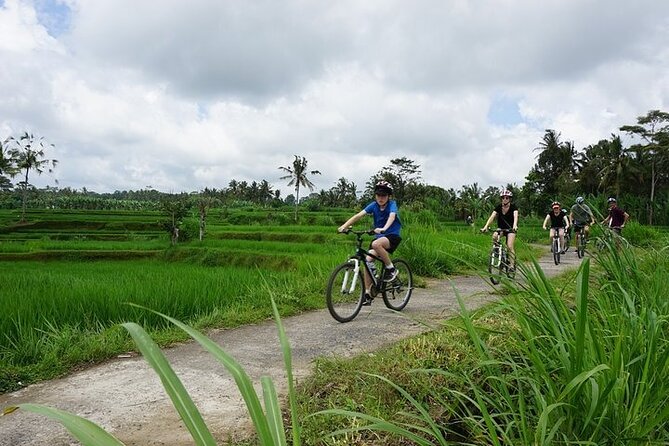
The cycling begins in Abuan village in the Kintamani area. Starting here keeps you away from the heavier traffic and hotter roads around central Ubud at the beginning of the ride.
Before rolling out, check the bike carefully. Test the brakes, shift through the gears, and tell the guide at once if anything feels loose or sticky. Most equipment feedback has been positive, but one customer reported slipping and jamming gears that contributed to a fall. A quick check costs little and gives you peace of mind.
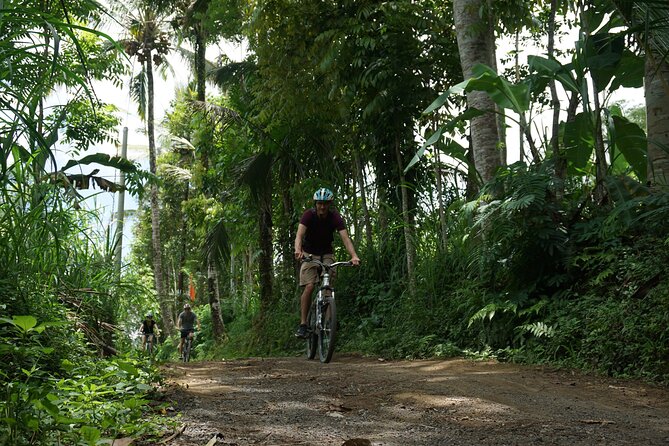
The route may include main roads, back lanes, forested sections, and paths between fields. Two guides can be especially helpful here: one rides ahead to indicate turns and hazards, while another stays behind the group. That arrangement is useful when riders have different speeds or when children are included.
You should know how to ride confidently before booking. This is not a lesson for someone who is still learning balance. It is a guided country ride for people who can steer, brake, and manage a few rough patches without panic.
More Mount Batur sunrise trips:
- Mount Batur Sunrise Hike and Natural Hot Spring Option
★ 5.0 · 1,927 reviews - Mount Batur Sunrise Hike with Breakfast
★ 5.0 · 1,757 reviews - Mount Batur Sunrise Jeep Tour with Optional Activities
★ 5.0 · 1,555 reviews - Mount Batur Jeep Adventure
★ 5.0 · 1,420 reviews
Abuan village and a look inside local life
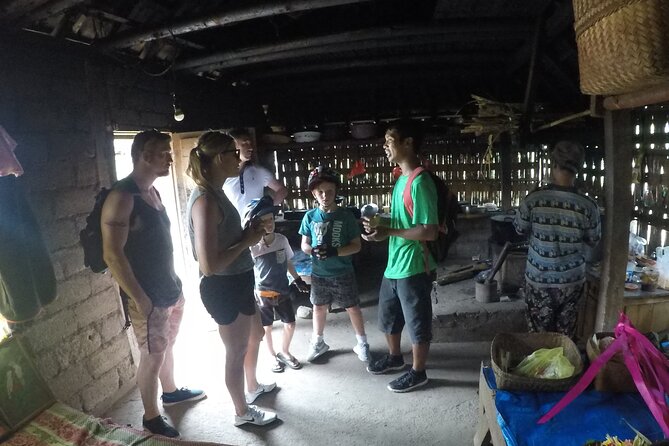
The first major stop is a home in Abuan. This is where the experience moves beyond scenery. You get a chance to hear about ordinary Balinese life and see how a local household fits into the village.
The tour also points out home industries, including stone making and woodworking. These small details are valuable because they show work that is easy to miss from a car window. You are not just passing buildings. You are learning what people make, how village homes function, and how work connects to family life.
Your guide is central here. Ben, for example, was praised for sharing personal cultural context and explaining the role of religion in everyday life. Wayan was noted for answering questions and staying attentive throughout the ride. The quality of this stop depends less on the building itself than on how well your guide explains what you are seeing.
Be polite when visiting a home. Listen first, ask before taking close photographs, and remember that this is a real residential setting, not a stage set.
Taro village, coffee, and Gunung Raung Temple
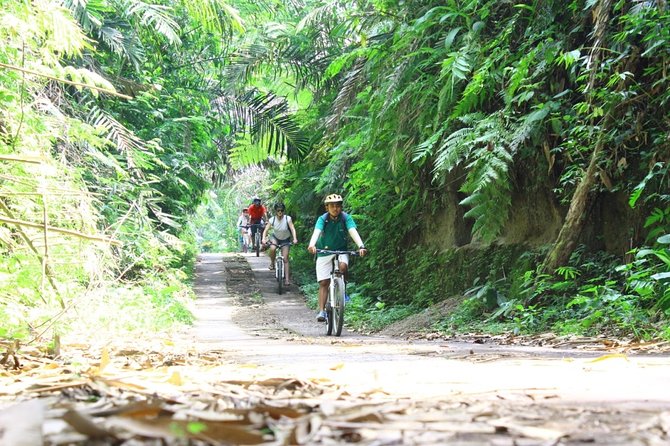
The route continues to Taro village for another coffee break. You also visit Gunung Raung Temple, described as one of Bali’s most unusual temples.
The stop lasts about an hour, giving you more time to pause than at Tegallalang. You can recover from the first section of riding, take in the village setting, and listen to the guide’s explanation of the temple.
Temple visits in Bali call for respectful behavior. Dress neatly, follow the guide’s instructions, and be aware that local religious spaces are active places of worship. The supplied details do not specify a clothing rental or entrance charge, so do not assume either is included beyond the stated tour arrangements.
Taro is also one of the places where you may appreciate the slower rhythm of the day. The cycling is broken into manageable sections, with food and cultural stops keeping the outing from feeling like a race.
Bresela rice fields and the irrigation system
At Bresela, the focus shifts from temple life to agriculture. You stop in the rice fields to see how the irrigation system works.
This is one of the most useful parts of the route because rice farming in Bali depends on shared water management. The stop gives you a better sense of why the terraces are arranged as they are and how water moves through the fields.
The visit lasts about 45 minutes. Depending on conditions, you might find muddy edges, uneven ground, or narrow paths near the fields. Walking or standing here is part of the stop, so sturdy shoes are more useful than sandals.
The countryside views are attractive, but the explanation is the real point. If you want only fast downhill riding, this may feel like a pause. If you want to understand how Bali’s rural communities organize work and resources, it adds substance to the day.
Finishing at Hyang Api Temple in Payangan
The cycling ends at Hyang Api Temple in Payangan after roughly 30 minutes at the final stop. By then, you have traveled through several villages and seen how the route changes from upland Kintamani toward the lower countryside.
Ending at a temple gives the ride a cultural finish rather than leaving you at a generic roadside point. It also marks a clear transition from bicycle time to lunch and transport back toward Ubud.
The overall cycling section is gentle for many riders, but do not let the downhill description make you careless. Keep space between bikes, listen for guide instructions, and slow down on turns or rough ground. Sun, heat, and humidity can still wear you down even when your legs are not climbing.
Lunch at Greenkubu Restaurant and Swing
The final major stop is Greenkubu Restaurant, where lunch is included. The stop lasts about an hour, giving you time to eat and cool down after the ride.
The meal is an important part of the price. At $33 per person, the package includes more than the bike itself: Ubud pickup and return transport, breakfast-style food at the plantation, coffee breaks, snacks, guides, and lunch. For a full day out, that is a fair package.
Greenkubu also has a swing area. The supplied details do not say that a swing ride is included in the tour price, so treat it as an attraction at the restaurant rather than a guaranteed part of your package. Ask the guide or restaurant staff before paying for any extra activity.
The lunch stop is also practical. You are not expected to finish the ride and immediately squeeze into a vehicle. You get time to eat before the return journey.
How much effort should you expect?
The route is designed to be accessible to most people who know how to ride a bicycle. Adults over 12 are listed as the main adult category, while children from 6 to 12 can join under the child category.
The ride is mostly downhill, but you still need basic bike control. The narrow sections and occasional potholes can be more important than the distance. If you are nervous on bikes, have poor balance, or dislike riding near roads, this may not be your best Bali outing.
For everyone else, the workout is moderate and broken up by stops. One rider described it as enough of a challenge to earn a spa treatment afterward, while others found it very easy. That difference makes sense: pace, weather, bike confidence, and group size all affect the effort.
Wear walking or sports shoes. Apply sunscreen before pickup and carry more for later. Bug spray is also a useful suggestion from the experience feedback. A small backpack works well for a camera, phone, water, and personal items.
Group size, transport, and small practical risks
The maximum group size is 50 people, although some departures may be much smaller. A small group makes the stops more personal and reduces delays, while a large group may feel less nimble on narrow village lanes.
Hotel pickup and return transport from Ubud are included. Confirm your pickup time carefully and allow flexibility: one customer reported a driver arriving an hour late, and another said the driver could not drop the group directly at the hotel because of traffic conditions. These appear to be service risks rather than features, but they are worth planning around.
The transport may also be shared. One customer became ill after riding in a vehicle with a visibly sick family. That is not a reason to dismiss the whole experience, but it is a fair reminder to pay attention to your comfort and speak up if the vehicle situation concerns you.
Payment can be made by cash or bank transfer with no extra charge. Visa and Mastercard carry a 3 percent bank fee. Confirmation is provided at booking, and free cancellation is available until 24 hours before the experience starts. Changes or cancellations inside that window are not accepted for a refund.
Is $33 a fair price?
Yes, for most people. You are paying for a seven to nine-hour outing rather than a simple bicycle hire. Transport from Ubud is often a major convenience, especially since the ride starts in Kintamani and ends in Payangan.
The included food also matters. Coffee and breakfast at the plantation, a further coffee stop, snacks, and lunch reduce the need to carry cash or search for food during the day. Add the guide service, safety support, cultural explanations, and several stops, and the price looks sensible.
The value is weaker if your only goal is fast cycling. You spend a good part of the day in the vehicle or at stops, and the ride itself is intentionally gentle. You are paying for access to rural Bali and a guided cultural route, not for a demanding mountain-bike adventure.
Who should book this Kintamani ride?
I would choose this tour if you want to see rural Bali without arranging several separate trips. It suits couples, families with children who can ride, and first-time visitors who want a structured day with food and transport included.
It is also a good fit if you enjoy asking questions. The best parts are the explanations about homes, religion, village work, and rice irrigation. Guides such as Gede, Ben, Wayan, Gudday, Yoga, Madi, and Amin have been praised for making those details accessible.
I would look elsewhere if you need a high-performance bicycle, a fully private departure, or a guaranteed trouble-free transfer. The advertised group limit is 50, and equipment and transport should be checked rather than taken for granted.
Should you book it?
Book this Kintamani Cultural and Nature Cycling Tour if your ideal Bali day combines light exercise, village scenery, local culture, and included meals. The downhill route keeps the physical demand reasonable, while the Abuan home, Taro temple, Bresela rice fields, and Payangan finish give the day real variety.
Before you commit, be honest about your bike confidence. Wear proper shoes, bring sunscreen and bug spray, inspect the bicycle, and allow extra time for pickup and the return drive. If you can accept those small uncertainties, $33 buys a useful and unusually personal way to see the countryside around Ubud.
FAQ
How long does the Kintamani cycling tour last?
The experience lasts approximately seven to nine hours, including hotel pickup, transport, cycling, food breaks, cultural stops, lunch, and the return journey.
Is hotel pickup included?
Yes. Round-trip transport from Ubud is provided as part of the experience.
Where does the bike ride begin?
The cycling starts in Abuan village in the Kintamani area.
Is the route mostly downhill?
Yes. The route is described as approximately 95 percent downhill, although narrow paths, uneven ground, and occasional hazards still require good bicycle control.
What food is included?
The tour includes coffee and a pancake or smoothie bowl at the plantation, another coffee break in Taro, snacks during the day, and lunch at Greenkubu Restaurant.
What should I bring?
Walking or sports shoes, sunscreen, bug spray, and a small backpack for a camera or video equipment are recommended.
What ages can join?
Adults are listed as people over 12 years old. Children between 6 and 12 years old have a child category.
Can I cancel for a full refund?
Yes. You can cancel at least 24 hours before the experience start time for a full refund. Cancellations or changes made less than 24 hours before the start are not accepted for a refund.
Just added around Ubud
- Kintamani Batur Jeep Sunrise Tour★ 5.0 · 3 reviews
- Bali Downhill Cycling and White Water Rafting★ 5.0 · 3 reviews
- Ubud Highlights Rice Terraces, Temple, Waterfall & Monkeys forest★ 5.0 · 3 reviews
- Bali ATV Quad Bike & Ayung River Rafting Combo with Lunch★ 5.0 · 3 reviews
- Half Day Uluwatu Temple Sunset, Kecak Dance and Seafood Dinner★ 3.5 · 3 reviews
- Blue Lagoon Snorkeling and Lunch with Tukad Cepung Waterfall★ 5.0 · 3 reviews
- Full-Day Tour in Nusa Penida Island + Snorkeling Experience★ 5.0 · 3 reviews
- Ancien Wisdom and Culture tour★ 5.0 · 3 reviews
Mount Batur Sunrise Tours, compared.

Mount Batur Sunrise Hike and Natural Hot Spring Option
Read our review →

Mount Batur Sunrise Jeep Tour with Optional Activities
Read our review →
Mount Batur Sunrise Trekking Private All Inclusive
Read our review →Browse the lists this tour appears in