
Reviewed · TEMPLE TOURS
Bali Full Day Tour – Bali Temple Tour
Bali’s sacred side reaches far beyond its beaches. This 11-hour private tour from Kuta links a Barong and Kris dance, village temples, ancient carvings, Mount Batur, and Besakih Temple in one ambitious day. I like the private car, included admission fees, English-speaking driver-guide, and lunch. I also like the chance to see several parts of Bali without arranging separate rides.
The main drawback is the pace. Six major stops, long drives, mountain roads, and a late lunch can make this a tiring outing. The route offers a lot, but you will need stamina and a willingness to accept short visits at several important sites.
In This Review
- Key points to know before booking
- A full day that connects Bali’s many faces
- Batubulan and the dramatic Barong and Kris dance
- Puseh Batuan Temple and the village setting
- Goa Gajah, the Elephant Cave
- Mount Kawi and the long stair descent
- Kintamani, coffee, and Mount Batur
- Besakih Temple on the slopes of Mount Agung
- Lunch, driving, and the real cost of the schedule
- Who will enjoy this Bali temple tour?
- Practical details that affect your decision
- Should you book the Bali Temple Tour?
- FAQ
- Where does the Bali Full Day Temple Tour start?
- How long does the tour last?
- Is this a private tour?
- What is included in the price?
- What places does the tour visit?
- Is the Barong and Kris dance included?
- Can I cancel for a full refund?
Key points to know before booking
- The day begins with a Barong and Kris dance at Batubulan, scheduled for about 9:30 am and lasting roughly one hour.
- The private format gives your group its own car and guide, with only your party participating.
- Besakih Temple and Mount Batur provide the biggest scenery, but reaching them makes the day especially long.
- Admission fees and lunch are included, which makes the $111.85 price easier to assess.
- The itinerary covers six stops, but most temple visits last only 30 minutes to one hour.
- Guide quality may vary, so clear communication about timing and explanations will matter.
A full day that connects Bali’s many faces
This is not a slow temple walk. It is a broad circuit through Bali, moving from the southern area around Kuta toward inland villages, rice-growing country, Mount Batur, and the slopes of Mount Agung.
You begin at 8:00 am, then spend much of the day moving between sites. The route gives you a useful sense of how quickly Bali changes. A village performance leads to a temple courtyard, then to stone carvings, volcanic views, and Bali’s largest temple complex.
I like this format if you have limited time. Instead of spending a full day at one attraction, you get a quick look at several major cultural sites. You also avoid the work of arranging multiple entrance tickets and transport.
The private setup is important. Your group does not share the vehicle with strangers, so you can ask questions, manage your own pace within the fixed schedule, and use the car as a quiet break between stops. Still, private does not mean leisurely. The number of places on the route keeps the day tightly packed.
More Temple Tours in Kuta
- Private Tour Bali Beaches and Uluwatu Temple with Dinner
★ 5.0 · 363 reviews - Tanah Lot Tour: Discover Bali’s Iconic Temple and Stunning Views
★ 5.0 · 109 reviews - Ubud Monkey Forest – Rice Terrace – Jungle Swing – Water Temple
★ 5.0 · 90 reviews
Batubulan and the dramatic Barong and Kris dance
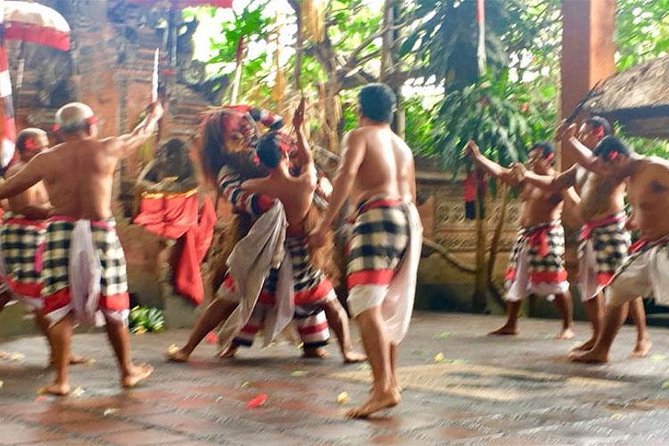
The first stop is Batubulan, where the day begins with the Barong and Kris dance. The performance presents the conflict between Ratu Barong, a protective figure, and opposing forces. The Kris element adds a trance-filled and highly theatrical quality to the show.
The performance lasts about one hour, and the scheduled start is around 9:30 am. This is one of the strongest parts of the outing because it gives you a direct introduction to Balinese performance traditions before the temple visits begin.
You should expect a stage presentation rather than a private village ceremony. That does not make it uninteresting. The costumes, music, movement, and spiritual themes offer useful context for the religious sites you see later.
The early timing also matters. If the first stop runs late, the delay can affect the rest of the day. I would arrive ready to begin rather than treating the 8:00 am pickup as a loose suggestion.
Puseh Batuan Temple and the village setting
The next stop is Puseh Batuan Temple, visited for about 30 minutes. Batuan is known for its temple compounds and its place within Bali’s Hindu religious structure. The temple is connected to the village’s wider network of sacred buildings, reflecting the importance of local worship in daily life.
Half an hour is enough for a first look at the entrance, carvings, courtyards, and layout. It is not enough for a slow architectural study. If you enjoy details, ask your guide to explain what you are seeing rather than trying to take in every carving on your own.
Temple etiquette matters. The supplied details do not spell out a dress code, but this is a functioning religious place, not simply a photo stop. Modest clothing and respectful behavior are sensible choices. If you receive a temple covering or other instruction, follow it.
This short visit helps you see that Bali’s temples are not all the same. Their design and purpose can change from village to village. That distinction is one reason a guide adds value here.
Goa Gajah, the Elephant Cave
Goa Gajah, often called Elephant Cave Temple, comes next. The site is about a mile east of southern Peliatan and is reached near a stone bridge over the Pakerisan River. The cave and carved stone entrance make this one of the more visually unusual stops.
You have about 30 minutes here. That is enough to see the main feature and get a basic explanation, but the visit will feel brief if you want to explore every part of the grounds.
The name can mislead you. The attraction is known as Elephant Cave, but the focus is the carved cave entrance and sacred setting rather than a wildlife encounter. Keep that in mind when setting expectations.
I like this stop because it breaks up the temple sequence. Instead of another large compound, you get a site shaped by rock, water, and carved stone. The river setting also provides a change from the built-up areas encountered earlier.
A completely different kind of day out in Kuta:
- Nusa Penida day trip: boat, 4 snorkeling, Manta rays & Land tour
★ 5.0 · 2,033 reviews - Bali Nusa Penida West Private All-Inclusive Tour
★ 5.0 · 1,277 reviews - Mount Batur Sunrise Trekking Private Tour with Breakfast and Hotel Transfer
★ 5.0 · 885 reviews - Individual Bali Day Trip with Private Driver and Free WiFi
★ 5.0 · 755 reviews
Mount Kawi and the long stair descent
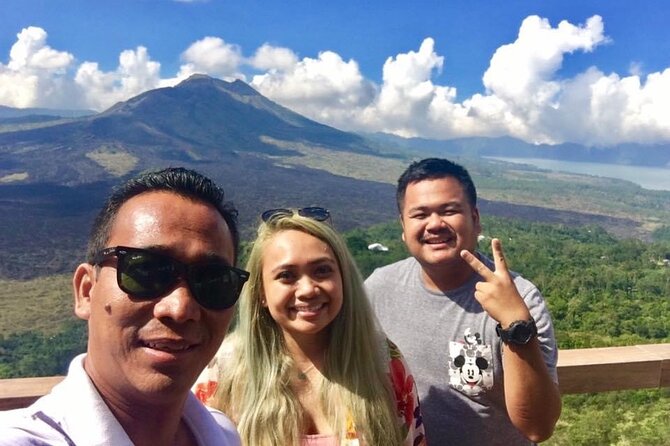
Mount Kawi is a group of 11th-century tombs cut into the rock walls of the Pakerisan River gorge. Reaching them involves a descent by steps through rice-growing scenery. The approach is part of the experience, not just a route to the monument.
The scheduled stop is only 30 minutes, which may feel tight. You need time to walk down, see the carved shrines, and return uphill to the vehicle. If you have trouble with steps, this is the point where the pace may become uncomfortable.
The setting gives Mount Kawi a different character from Goa Gajah and Batuan. The carved tombs are tied to Bali’s earlier royal past, while the gorge and rice terrain make the site feel open and quiet.
Ask your guide to explain the purpose of the tombs and how they relate to Bali’s religious traditions. Without context, you might simply see a set of impressive stone facades. With a clear explanation, the place becomes easier to understand.
Kintamani, coffee, and Mount Batur
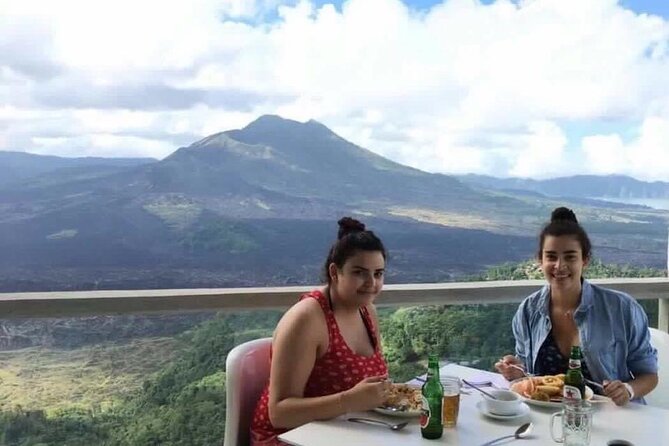
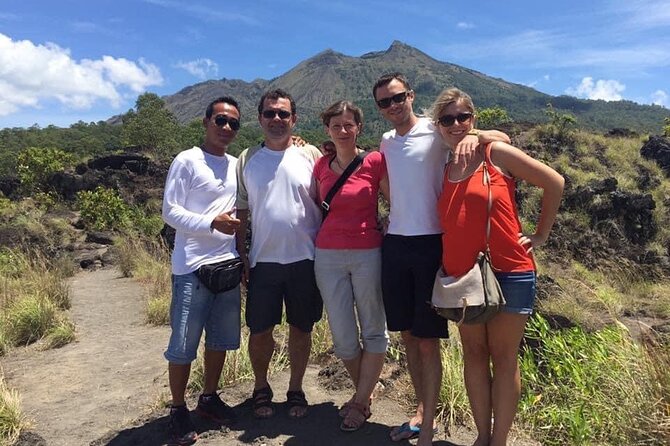
The Mount Batur portion takes about one hour and includes Kintamani, a coffee plantation visit, and views toward Mount Batur and its crater lake. This is one of the major scenic sections of the route.
Kintamani sits at roughly 1,500 meters, so the mountain setting offers a noticeable change from the coastal starting point. The volcano and lake are the main visual rewards, though cloud cover can affect what you see.
The coffee plantation adds another layer to the stop. It gives you a chance to learn about local coffee production, although the supplied information does not specify how long you remain there or what tasting activities are included.
This is also where timing and weather matter most. The tour requires good weather, and mountain views can change quickly. If conditions are cloudy, you may get only partial views of Batur and the crater lake. Even so, the drive helps connect Bali’s coastal resorts with its volcanic interior.
The mountain stop is a good reason to choose this tour over a simple southern temple outing. You are not only checking off religious sites. You are also seeing the volcanic setting that shapes much of Bali’s geography and agriculture.
Besakih Temple on the slopes of Mount Agung
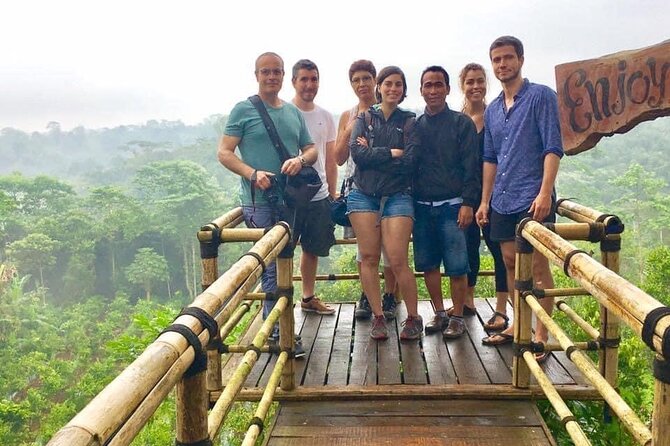
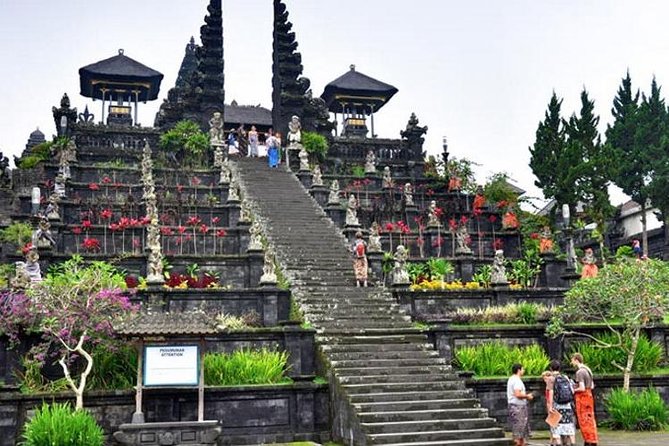
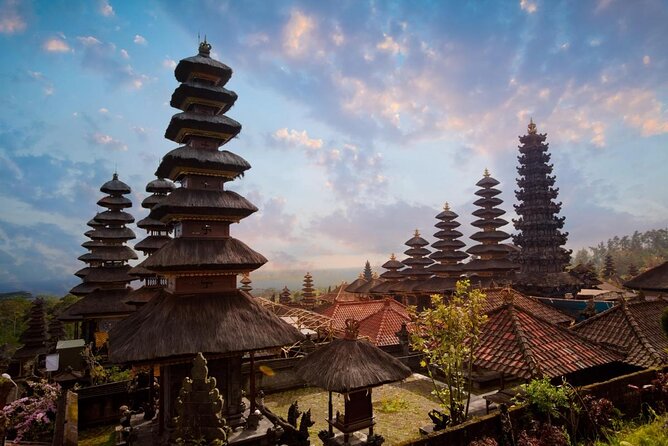
The final major stop is Besakih Temple, often called Bali’s Mother Temple. It is the island’s largest and most famous temple complex, located high on the slopes of Mount Agung. The site is traditionally dated to around 1007 AD.
You have about one hour here, making it the longest temple visit of the day. That extra time is welcome because Besakih is a large complex rather than a single small shrine. Its scale can be difficult to grasp during a rushed visit.
The setting is a major part of the appeal. Besakih sits beneath Mount Agung, Bali’s highest volcano, and the views help explain why this location has such importance. Weather can change the mood of the site, from clear mountain views to misty courtyards.
Do not expect to understand the entire complex in one hour. Instead, use the guide to identify the main areas and explain the role of Besakih within Balinese Hinduism. The visit works best as an introduction, not as a complete study of the temple.
Because Besakih comes late, fatigue may affect your attention. That is the tradeoff built into this route. You get the island’s most important temple, but only after a full day of driving and sightseeing.
Lunch, driving, and the real cost of the schedule
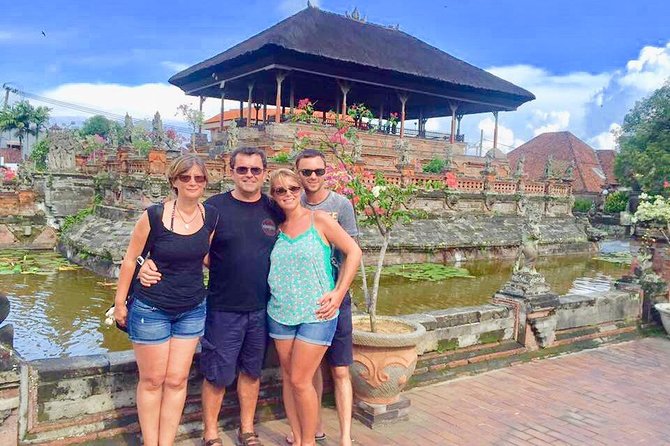
Lunch is included, along with the private car, English-speaking driver-guide, and entry fees. These inclusions make the $111.85 per-person price more reasonable, especially if you value having transport and tickets handled for you.
The price is less attractive if you prefer slow travel. You are paying for coverage and convenience, not for extended time at each location. The itinerary moves through several parts of Bali, and the vehicle becomes almost as important as the attractions.
One practical issue is the late lunch noted in the tour feedback. With an early start and a long sequence of stops, you may feel hungry before the meal arrives. I would eat a proper breakfast and carry a small snack and water, even though lunch is included.
The day lasts about 11 hours, so this is not an easy half-day excursion. The private car helps, but it cannot remove the distance between Kuta, inland Bali, Kintamani, and Besakih.
The guide is another part of the value calculation. One strong account describes the driver and guide as lovely, efficient, and flexible, with a particularly informative day. Another account describes a guide who seemed exhausted and whose English was only fair. That difference suggests that the experience can depend heavily on the individual assigned to your group.
You can help by asking direct questions, confirming the order of stops, and being clear about what interests you most. The private format makes those conversations easier than they would be on a large group coach.
Who will enjoy this Bali temple tour?
I would recommend this tour to you if you want a broad first look at Bali’s culture and major inland sights. It suits someone with limited time who wants to combine performance, temples, volcano views, and a private vehicle in one day.
It also works well for couples, families, or small groups who prefer not to share transport. The private arrangement gives you more privacy during the long drives and may allow some flexibility, though the packed route limits how much extra time you can create.
This is less suitable if you dislike early starts, long rides, steps, or fixed schedules. Mount Kawi requires a stair descent, and Besakih and Mount Batur come after several earlier stops. Anyone hoping for a quiet, reflective temple day should choose a shorter itinerary.
The tour may also frustrate serious photographers. You get many subjects, but not much time at each one. You will need to work quickly and accept that weather and traffic can affect the schedule.
Practical details that affect your decision
Pickup is offered, the start time is 8:00 am, and the experience uses a mobile ticket. Confirmation is provided when you book. Public transportation is nearby, but the tour itself is built around private car travel.
Most people can participate, according to the supplied information. Still, the Mount Kawi steps are worth considering if walking downhill and uphill is difficult for you.
Free cancellation is available if you cancel at least 24 hours before the local start time. Changes or cancellations inside that window are not refunded, and poor weather can lead to a different date or a full refund.
The tour has a 4.6 rating from seven reviews. That is a positive signal, but it is a small sample, so I would treat it as encouragement rather than a guarantee.
Should you book the Bali Temple Tour?
Book it if you want maximum coverage in one private day. The Barong and Kris dance, Goa Gajah, Mount Kawi, Mount Batur, and Besakih give you a strong overview of Bali’s cultural and volcanic interior. Included tickets, lunch, and a private vehicle add real convenience at $111.85 per person.
Skip it if you want a relaxed pace or detailed time at each temple. The route is ambitious, lunch may come late, and the quality of guiding can vary. For the right person, this is an efficient and rewarding introduction to Bali beyond Kuta’s beaches. Just treat it as a long cultural circuit, not a restful day out.
FAQ
Where does the Bali Full Day Temple Tour start?
The tour starts at 8:00 am from Kuta, Indonesia. Pickup is offered.
How long does the tour last?
The experience lasts approximately 11 hours.
Is this a private tour?
Yes. Only your group participates, and the tour includes a private car.
What is included in the price?
The price includes a private car, an English-speaking driver-guide, entry fees, and lunch.
What places does the tour visit?
The route includes the Barong and Kris dance at Batubulan, Puseh Batuan Temple, Goa Gajah, Mount Kawi, Mount Batur and Kintamani, and Besakih Temple.
Is the Barong and Kris dance included?
Yes. Admission for the dance at Batubulan is included, and the scheduled performance begins at about 9:30 am.
Can I cancel for a full refund?
Yes, if you cancel at least 24 hours before the experience start time. Cancellations made less than 24 hours in advance are not refunded.
Just added around Kuta
- Indonesia: Garuda Wisnu Kencana★ 3.5 · 3 reviews
- Bali Full Day Holy Water Tour★ 5.0 · 3 reviews
- ATV Quad Bike and Water Rafting Adventure in Bali★ 5.0 · 3 reviews
- Full Day Kintamani and Penglipuran Village Private Chartered Car Tour from Bali★ 4.5 · 3 reviews
- Bali Full Day Tour – Ubud and Batur Volcano★ 5.0 · 3 reviews
- Romantic Couple Treatment at ANJALI SPA★ 5.0 · 3 reviews
- Seminyak: Spa Treatments at Svaha Spa Seminyak★ 5.0 · 3 reviews
- Thing to do – ATV Quad Bike, River Tubing and Tlaga Singha★ 4.0 · 3 reviews
Temple Tours, compared.
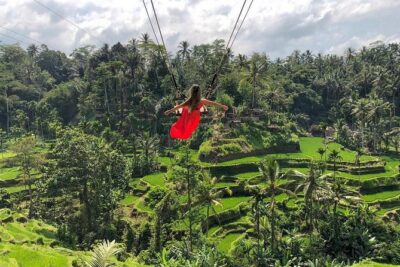
Monkey Forest, Jungle Swing, Rice Terrace, and Water Temple
Read our review →
Full-Day Tour to Water Temples and UNESCO Rice Terraces in Bali
Read our review →Private Uluwatu Temple and Kecak Fire Dance Evening Tour in Jimbaran Bay
Read our review →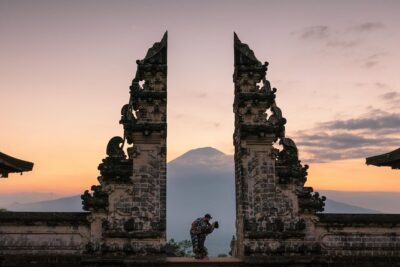

Monkey Forest, Water Temple, Rice Terrace, Waterfall
Read our review →
Ubud Tour with Monkey Forest Waterfalls Temples and More
Read our review →
Uluwatu Temple Entry and Kecak Fire Dance Ticket
Read our review →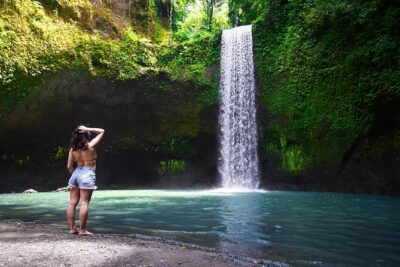
Ubud Top Attractions: Waterfalls, Temples and Rice Terraces
Read our review →Browse the lists this tour appears in